WORKPRO Triangle Sanding Pads 3-1/8 Inch Hook and Loop 150-Pack Review
Let me tell you something – nothing kills momentum on a job site faster than running out of sanding pads mid-project. I’ve been there more times than I care to admit, digging through my tool bag for one last usable sheet while a client’s standing behind me. So when I came across the WORKPRO triangle sanding Pads in a 150-pack, I didn’t hesitate. A bulk pack of hook-and-loop triangle pads covering everything from aggressive 40-grit all the way up to smooth 220-grit? Yeah, that had my attention instantly.
I run oscillating multi-tools constantly – whether I’m cutting in tight corners on trim work, knocking down welds in the shop, or cleaning up cabinet edges on a weekend build. The triangle pad is one of those unsung heroes in my arsenal, and the consumables game is real. You burn through these things. So the pitch here is simple: 150 pads, multiple grits, hook-and-loop convenience, and a price point that won’t make you wince every time you swap one out.
What I wanted to find out was whether WORKPRO could actually back up that value proposition with real-world performance. we’re talking grit retention, adhesion consistency across different multi-tool platforms, and whether these pads hold up under the kind of abuse I throw at them – rough metal, hardwood edges, and everything in between. Let’s get into it.
WORKPRO Triangle Sanding Pads 3-1/8 Inch Hook and Loop 150 Pack Overview
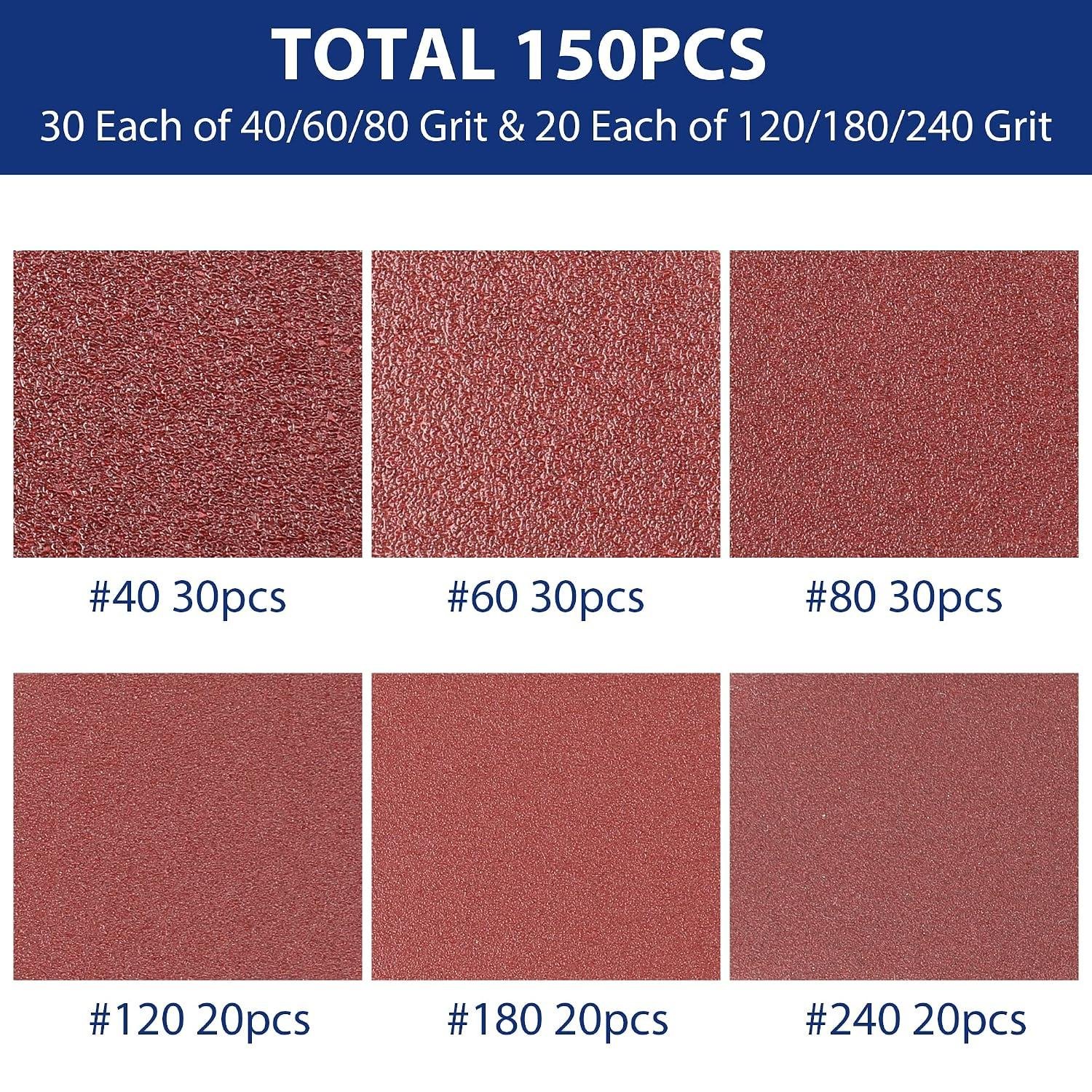
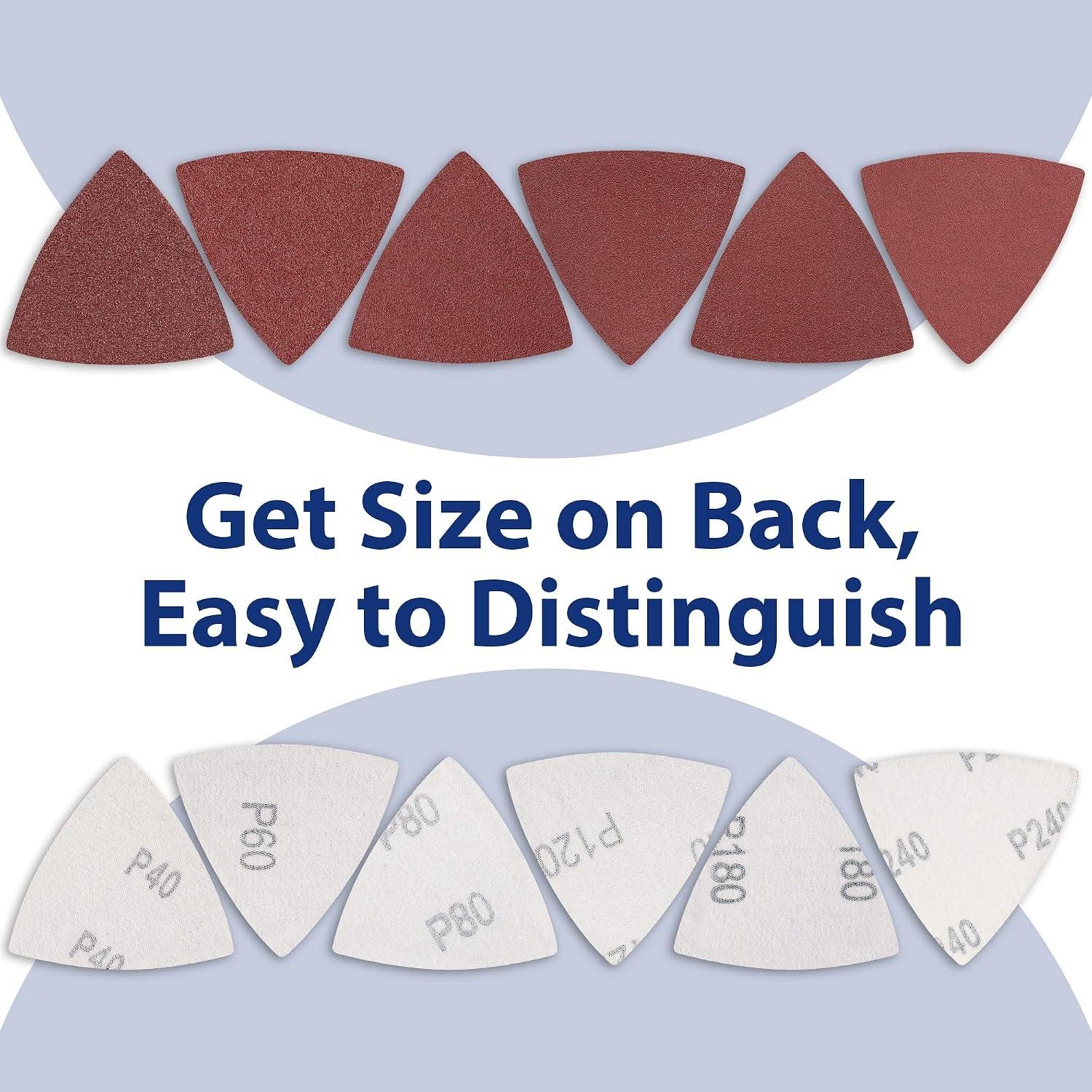
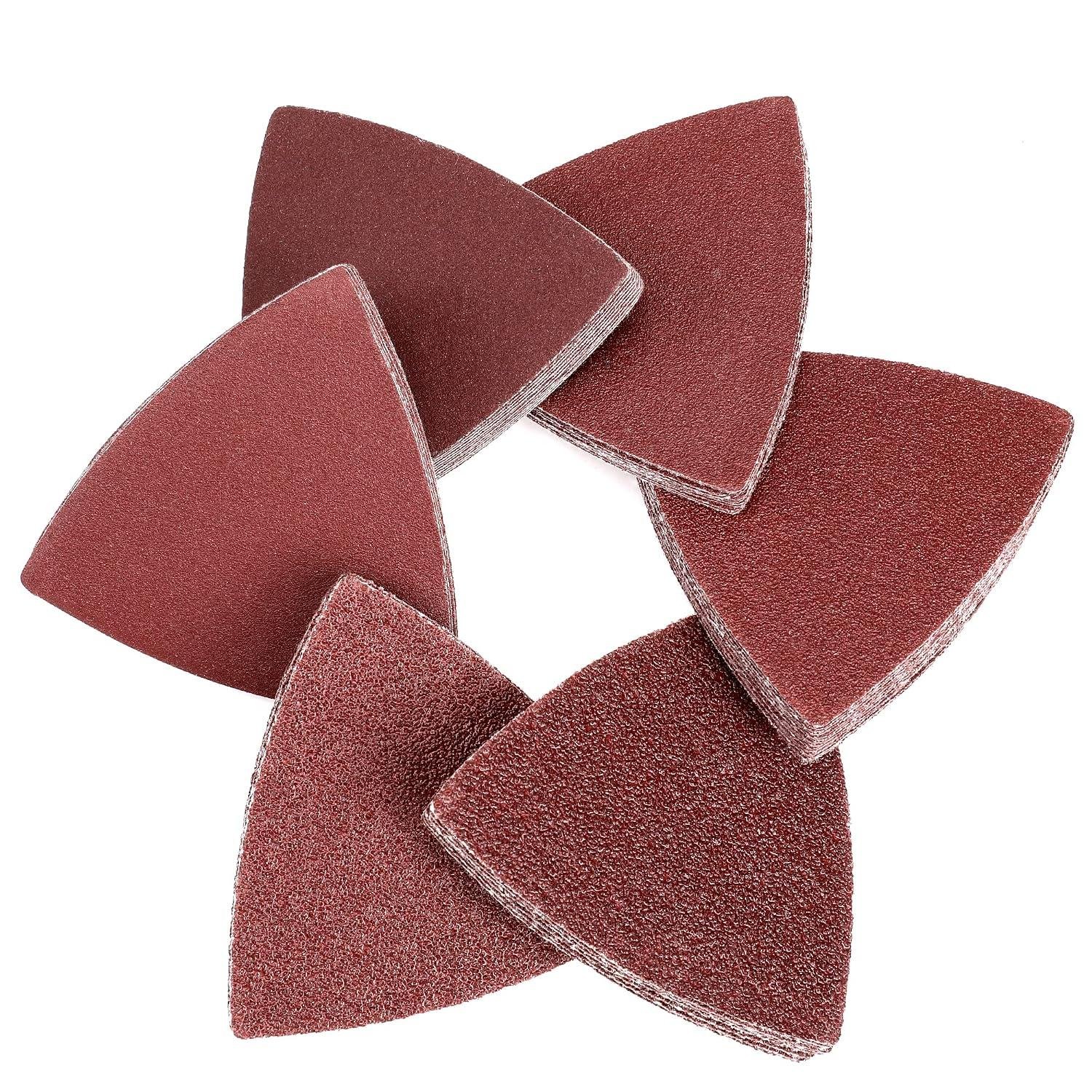
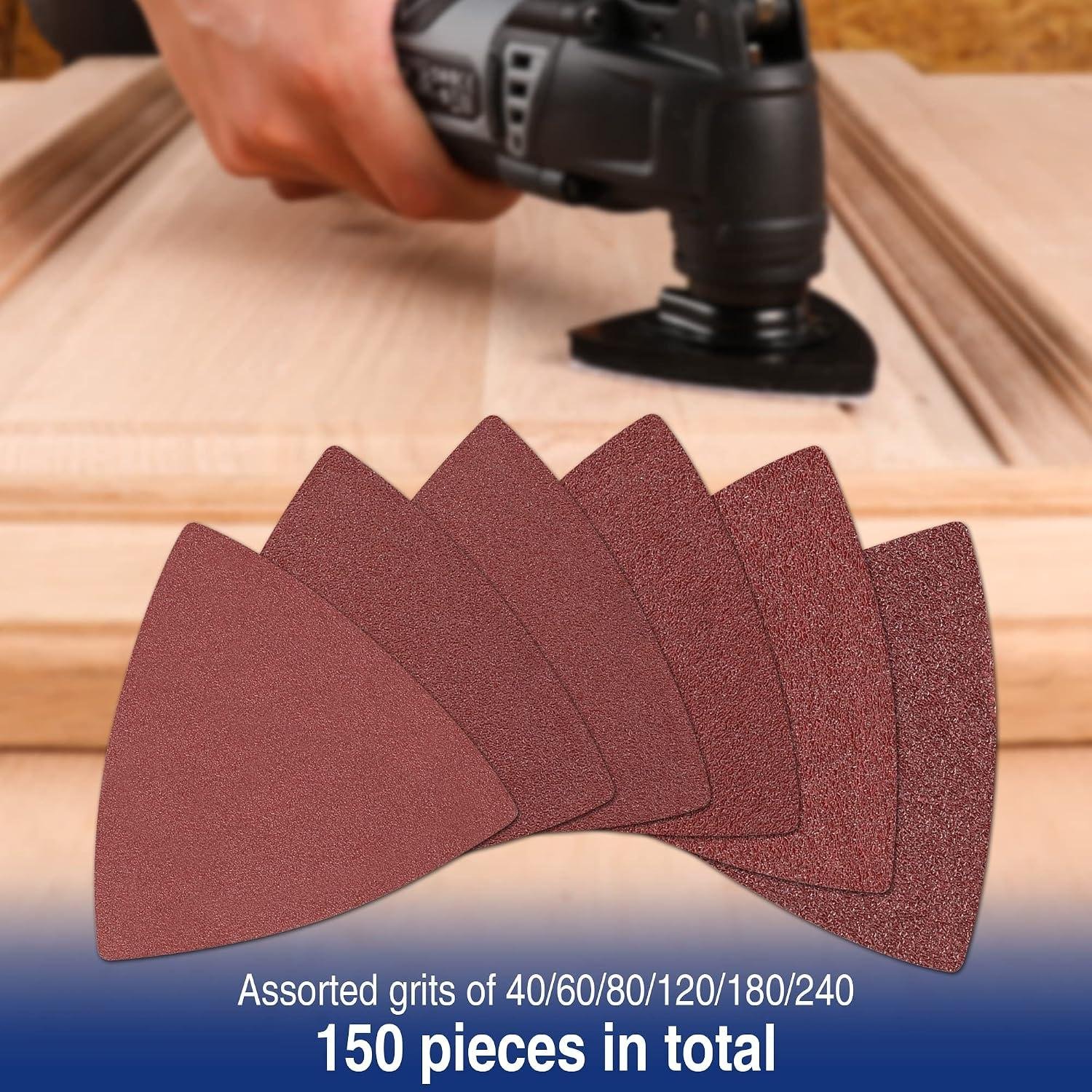
When I first cracked open this 150-pack, I wasn’t expecting much – budget sanding accessories are a dime a dozen, and most of them end up disappointing you mid-job. But I’ll be straight with you: these pads held their own in ways that actually surprised me. The assortment breakdown is genuinely practical – 30 sheets each of 40, 60, and 80 grit, plus 20 sheets each of 120, 180, and 240 grit – which means you’ve got a real working spread from aggressive material removal all the way down to finish-ready smoothing. That’s not filler math; that’s a kit built around actual sanding workflow. One detail that caught my attention was the pre-formed beveled edge – roughly a quarter inch of the perimeter is angled slightly upward, which reduces snagging when you’re working flat surfaces. I haven’t seen that on most brand-name pads, let alone budget options, and it’s the kind of thoughtful touch that tells you someone actually used these before packaging them.
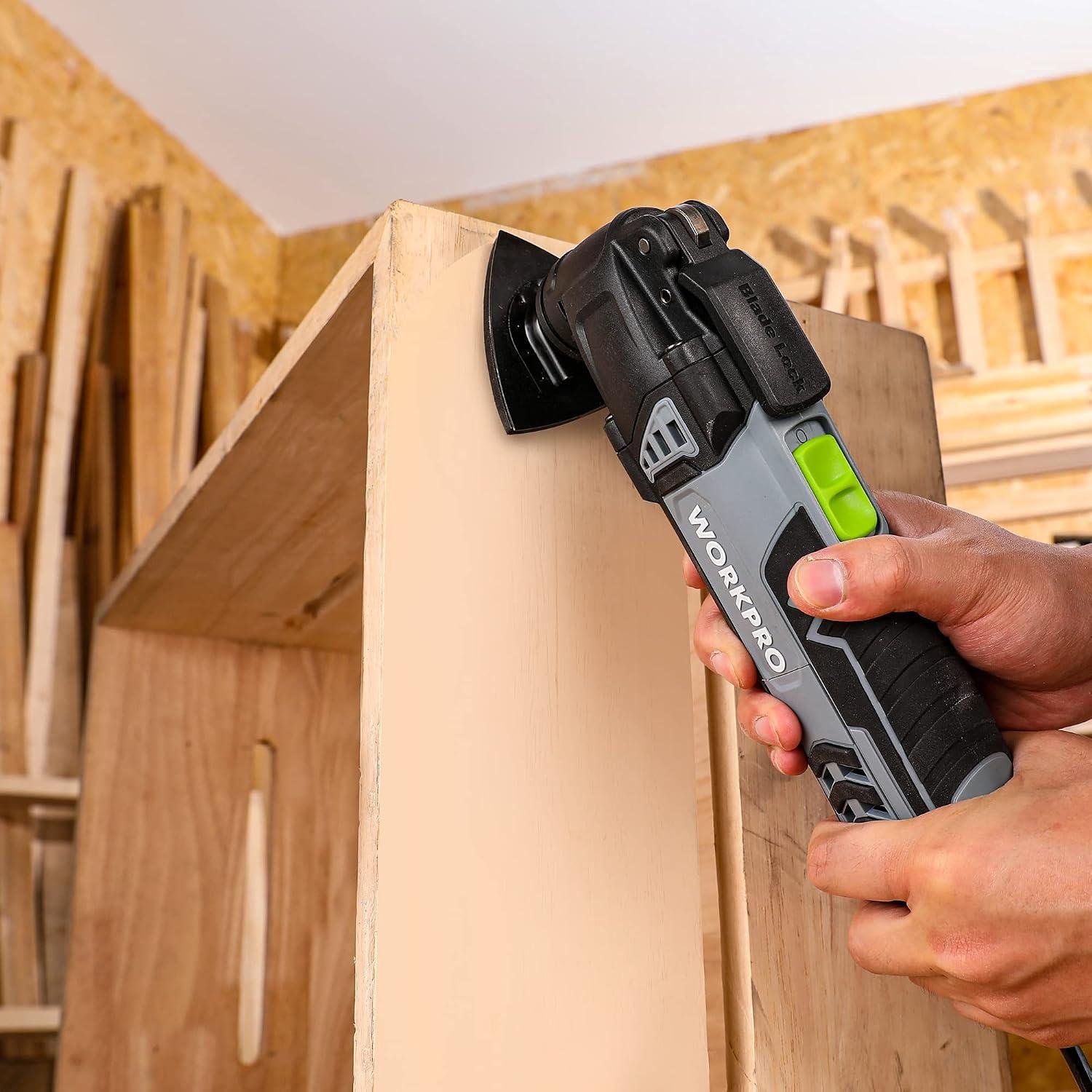
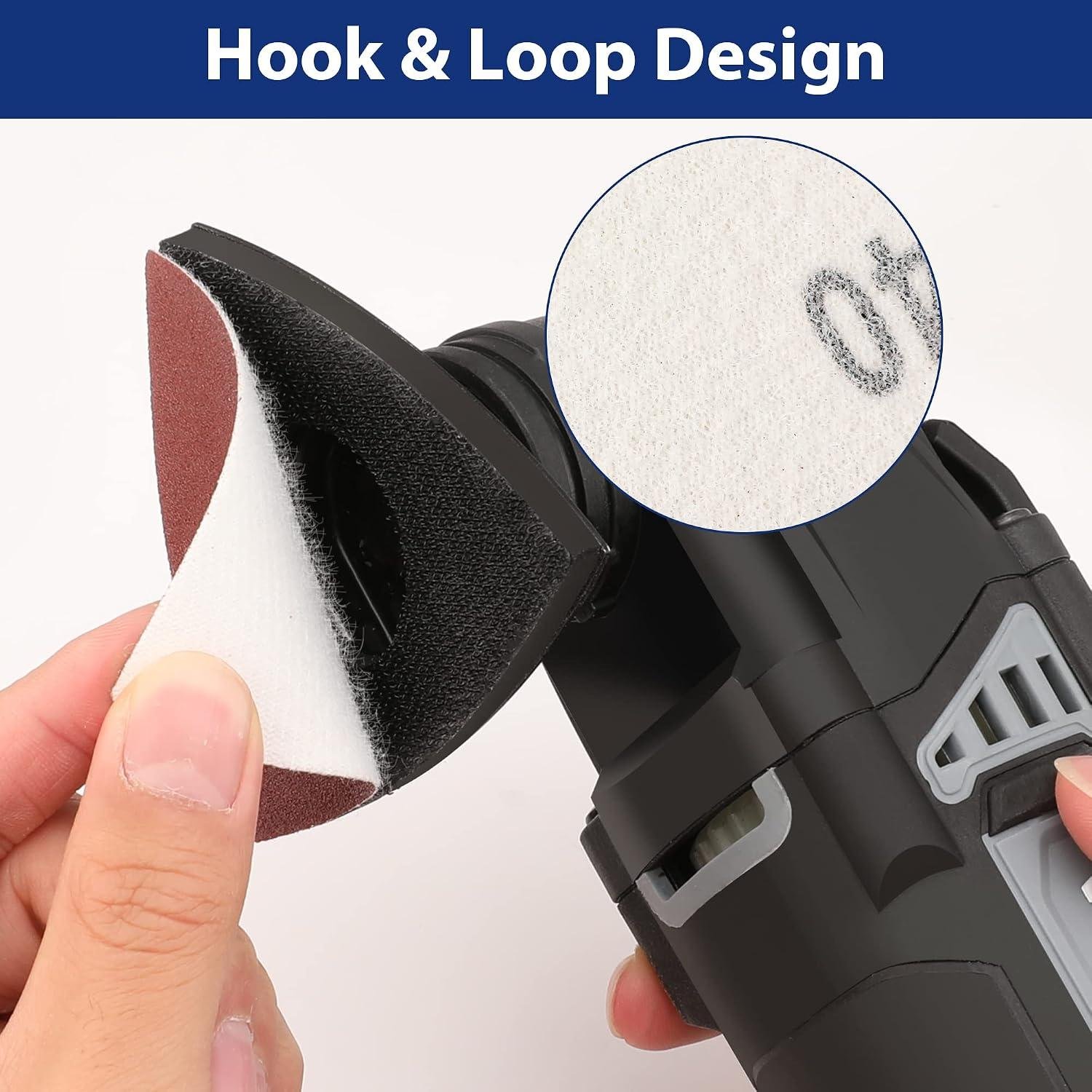
On the tool side, I ran these on a DeWalt multitool and a Bosch oscillating sander – and here’s where you need to pay attention. The 3-1/8 inch size is spec-correct for smaller-pad platforms, but if you’re running a DeWalt DWA4200 or a Makita with a 3-1/2 inch sanding head, these won’t cover edge-to-edge. That’s not a defect – that’s a sizing mismatch you need to catch before you order. When fitted to the right platform, the hook-and-loop adhesion held well across variable speed settings, no slippage or creep even at higher oscillation rates. I did a grit-retention stress test on the 240s by running them against the sharp edge of aluminum sheet – the kind of abuse that kills cheap sandpaper fast – and came away impressed. No grit loosening, no backing shred. The hook side of the backing feels slightly less plush than Bosch brand pads, but grip performance was comparable in real use.
| Feature | WORKPRO 150-Pack | Bosch Brand (Comparable Pack) | DeWalt OEM Pads |
|---|---|---|---|
| Pad Size | 3-1/8 inch | 3-1/8 / 3-1/2 inch options | 3-1/2 inch (DWA4200) |
| Grit Range | 40-240 | 60-220 (typical) | 60-180 (typical) |
| Quantity | 150 sheets | ~5-10 per pack | ~5-6 per pack |
| Attachment Type | Hook & Loop | Hook & Loop | Hook & Loop |
| Beveled Edge | Yes (~1/4″) | Varies | No |
| Grit Retention (Stress Test) | Strong – no shredding | Strong | Strong |
| Value per sheet | Excellent | Moderate | Low |
- Best for: Fein, Bosch, and other oscillating tools with 3-1/8″ pads
- Grit assortment covers: Heavy stock removal (40 grit) through fine finishing (240 grit)
- Adhesion note: Holds at all speed settings; some backing wear reported on extended heavy use
- Size warning: Not compatible with 3-1/2″ sanding heads without adapter – double-check yoru tool’s pad spec first
- Durability edge: Pre-beveled perimeter reduces snag risk; grit adhesive outlasts cheaper alternatives
What I found After Putting These Sanding pads Through Their Paces
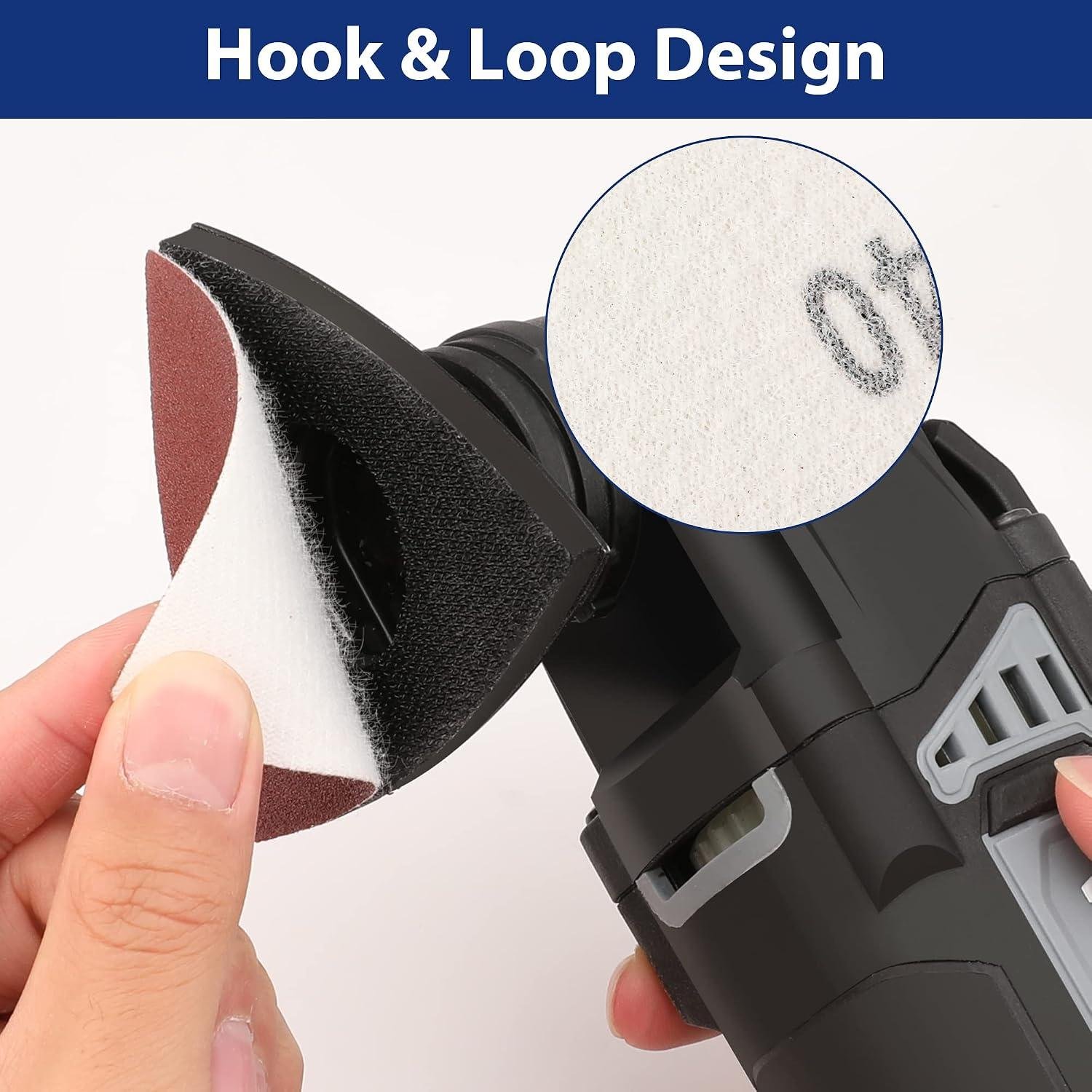
After running these pads through a legitimate workload – trim work, softening weld edges on sheet metal, finish prep on cabinet doors, and detail sanding in tight corners – I’ve got a solid read on where they deliver and where they leave you wanting. Right out of the gate, the grit range is a genuine strength. You’re getting 30 pieces each of 40, 60, and 80 grit, plus 20 pieces each of 120, 180, and 240 – that’s a spread that covers the full sanding progression without forcing you to buy multiple packs. The beveled edge pre-formed into each pad was a detail I didn’t expect at this price point; it actually helps prevent corner snagging during flat sanding passes, which is the kind of thoughtful engineering you usually only see on name-brand consumables. I threw the 240-grit pads at the sharp edge of some .060″ aluminum – a brutal test that exposes cheap grit adhesive fast – and came away impressed. No grit shedding, no backing blowout, just controlled stock removal.
On the hook-and-loop adhesion side, the story is more nuanced. These pads held up well through variable speed passes on my oscillating tool without walking or peeling mid-stroke – a common failure point with budget abrasives. However, a portion of users have noted that the loop backing fatigues before the grit wears out, which is a real-world durability concern on high-cycle work. For occasional use or rotating through a large pack like this, that’s a non-issue. For someone hammering the same pad through aggressive stock removal all day, it’s worth rotating pads more frequently than you might with a Bosch or Fein OEM sheet. The bigger logistical flag – and I want to be straight with you here – is sizing. These are true 3-1/8″ triangles, and if you’re running a DeWalt DWA4200 pad or a Makita’s larger sanding head, they will not cover edge-to-edge. Check your tool’s pad size before ordering. That’s not a quality issue, it’s a spec issue – but it’s tripped up enough buyers that it’s worth calling out directly.
| Comparison Factor | WORKPRO 150-pack | Bosch OEM Triangle Pads | DeWalt DWA4200 Pads |
|---|---|---|---|
| Pack Size / Value | 150 pcs – exceptional bulk value | 5-10 pcs per pack, premium price | 5 pcs per pack, moderate price |
| grit Range | 40 / 60 / 80 / 120 / 180 / 240 | Limited per pack (usually 1-2 grits) | limited per pack (usually 1-2 grits) |
| Pad Size | 3-1/8″ – fits Fein, smaller oscillators | Varies by model (3-1/2″ on larger heads) | 3-1/2″ standard – will NOT match |
| Hook & Loop Durability | good; backing fatigues before grit on heavy use | Strong loop retention, consistent | reliable, tool-matched fit |
| Grit Retention | Solid – holds up on metal edges | Excellent | Very good |
| Best For | High-volume work, budget-conscious shops | Precision finish work, premium tools | dewalt ecosystem users |
- Pre-beveled edges reduce snag risk on flat passes – a premium feature at a budget price
- Grit adhesive holds well on metal, including rough weld seams and sheared aluminum
- 150-piece count makes these a genuine shop-stocking buy, not just a one-job pack
- Confirm your pad size before buying – 3-1/8″ is not global, and the mismatch with 3-1/2″ heads is the top complaint
- Rotate pads regularly on high-cycle jobs to extend loop backing life
Check Price & Availability on amazon
Hook and Loop Performance and Pad Durability on the Job Site
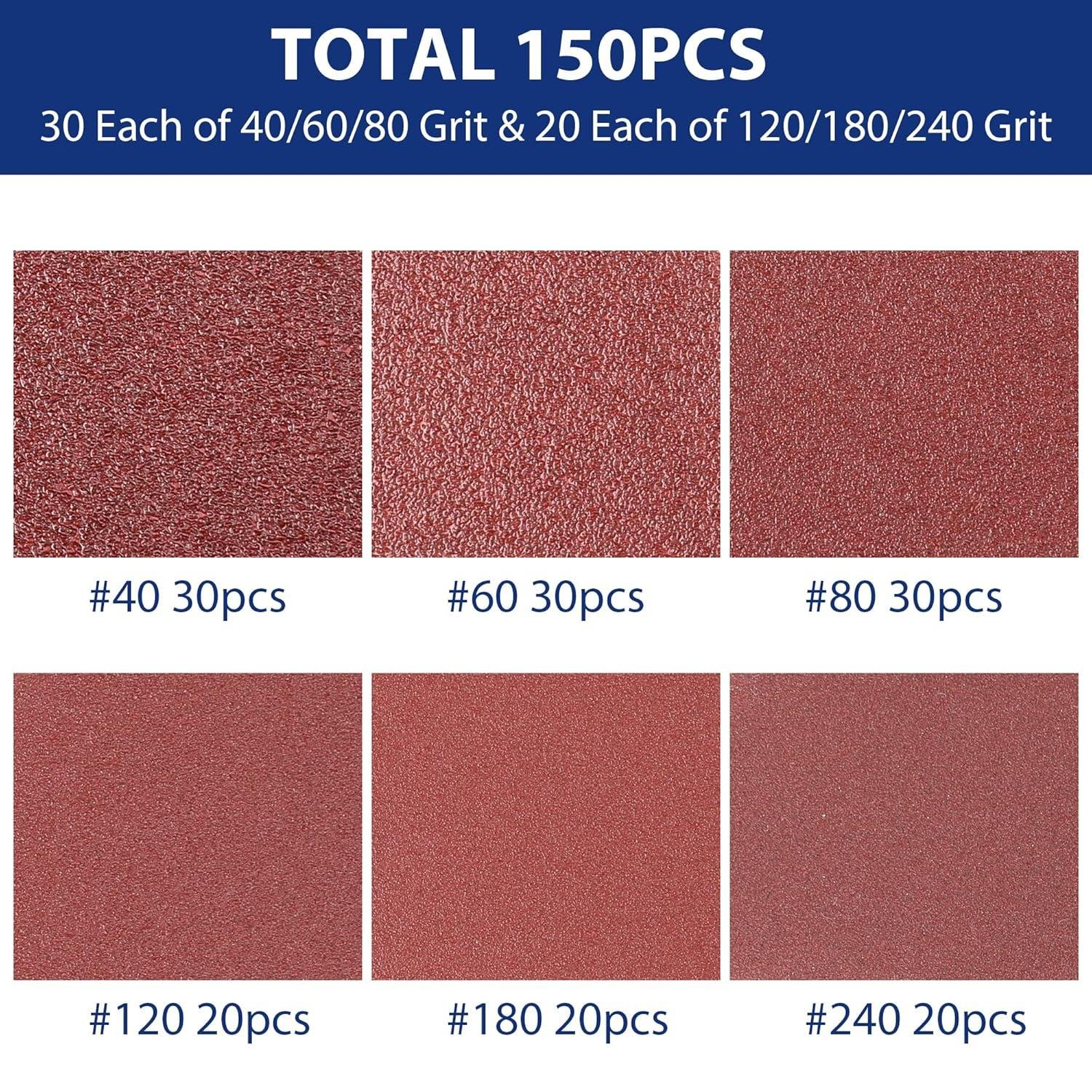
Out in the field, the hook and loop connection on these pads is what makes or breaks your workflow – and after running them on a couple of finish carpentry jobs and some metal prep work,I’ve got a solid read on how they perform. The attachment is confident at lower speed settings, and a couple of reviewers echoed what I noticed: they handle variable speed settings without losing grip, which is exactly what you want when you’re dialing back the oscillation for delicate trim work. That said, I did see some pad migration – where the sheet slowly “walks” off the backing during aggressive passes – which is a real-world frustration when you’re trying to stay in a groove on a flat surface. It doesn’t happen constantly, but it happens enough that you’re aware of it. On the flip side, the loop backing occasionally grips so hard that pulling the sheet free tears the paper rather than releasing it cleanly – a quirk worth knowing before you’re mid-session.
Durability came up as a split opinion across the user base, and honestly, my experience tracks with both camps depending on how you’re using these. On rough metal edge prep – softening corners on sheared stock or cleaning up welds – the grit held up surprisingly well, with no shredding or grit loosening even on the fine end of the range. The pre-formed beveled edges on the pads (roughly a quarter inch of upward curve around the perimeter) are a small but thoughtful detail that prevents snagging during flat-surface passes – something you don’t always see on budget abrasives. Where the durability story gets murkier is the loop-side felt backing; for some users, the hook and loop connection fatigues well before the grit wears out, which means you’re retiring pads that still have life in them. That’s a waste, even at a budget price point.
The size issue is the most critical spec to nail before you order. These are 3-1/8 inch pads, and that distinction matters more than it sounds – they won’t cover edge-to-edge on a DeWalt DWA4200 or the standard 3-1/2 inch heads on several Makita and bosch oscillating platforms. For a Fein-compatible tool or any machine built around the smaller pad format, the fit is dialed in. Here’s a quick reference so you’re not guessing at the hardware store:
| Tool Brand / Model | Pad Size Required | Compatible with These Pads? | Notes |
|---|---|---|---|
| Fein MultiMaster (older) | 3-1/8 in. | Yes | Direct fit, edge-to-edge coverage |
| DeWalt DCS356 / DWA4200 pad | 3-1/2 in. | No (undersized) | usable at tip only; not full-pad coverage |
| Makita TM3010C | 3-1/2 in. | No (undersized) | works at pointed tip; slight overhang gap |
| Bosch GOP40-30C | 3-1/8 in. (some configs) | Partial | Depends on which accessory pad is mounted |
| Milwaukee 2426-20 | 3-1/8 in. | Yes | Good fit; hook and loop holds well at standard speeds |
- Grit range spans 40 to 240 – covering everything from aggressive material removal to fine finishing in one pack
- 150-piece count means you can burn through pads on a rough job without babying them or hoarding what’s left
- Beveled pad edges reduce snag risk on flat-surface sanding passes – a feature that punches above the price point
- Loop backing durability is the weak link – plan for more frequent pad swaps if you’re running high-cycle sessions
Check Price & Availability on Amazon
How These Pads Handle Detail Sanding and Tight Corner Work
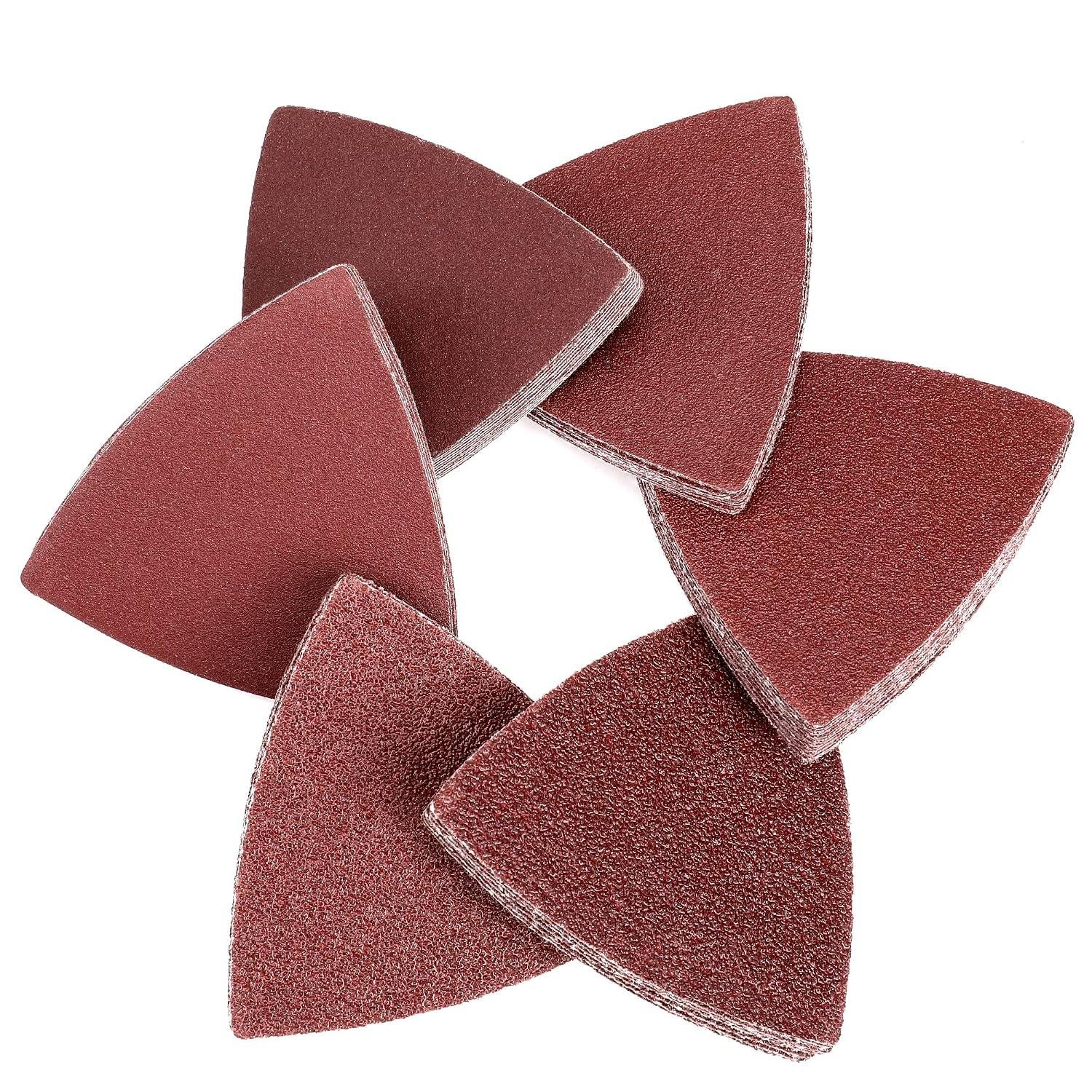
When it comes to getting into tight corners and working detail areas on trim, cabinetry, or even softening weld seams on metal, the triangular pad format is your best friend – and these pads don’t disappoint. The pointed tip geometry is the whole reason you reach for an oscillating sander in the first place, and I’ve run these at multiple speed settings on my oscillating tool without once seeing the hook-and-loop connection give up the ghost mid-pass. One reviewer specifically noted that they handle any speed setting without losing stickiness, and that matches my experience. Whether you’re crawling along a baseboard corner at low speed or opening up the throttle on a flat transition, the pads track and stay planted.
What separates a decent detail pad from a great one is how it behaves right at the tip – that’s where the real precision work happens. These come pre-formed with a slight bevel along the edge (roughly 1/4 inch), which actively prevents snagging when you transition from the tip back to a flat sanding pass. That’s a thoughtful touch I don’t typically see on budget pads, including some name-brand blister packs. I also threw the 240-grit version against the sharp edge of a piece of aluminum sheet – a punishing test that exposes cheap grit adhesive fast – and saw zero grit loosening or pad shredding. For metalwork detail finishing and softening sheared corners, that kind of durability matters. One significant flag for tradespeople: these are 3-1/8″ pads, so if your oscillating tool runs a larger 3-1/2″ head (common on certain DeWalt models like the DWA4200 platform), you’ll want to verify fitment before assuming a drop-in swap.
| Feature | WORKPRO 3-1/8″ Pads | typical Name-Brand 3-1/8″ Pads |
|---|---|---|
| Grit Range | 40 / 60 / 80 / 120 / 180 / 240 | Typically 60-220 (fewer options per pack) |
| Pack Quantity | 150 pcs | 5-10 pcs (blister pack standard) |
| Bevel Edge Pre-Form | Yes – snag-resistant edge | Rarely included at this price tier |
| Hook & Loop Adhesion at Speed | Strong across variable speed settings | varies by brand; inconsistent at high RPM |
| Grit Retention (Harsh Use) | Solid – no loosening on aluminum edge test | Mixed – cheaper brands shed grit under load |
| Fitment Note | 3-1/8″ – verify tool head size before buying | Varies – check OEM pad dimensions |
- Pre-formed bevel edge reduces snag risk during flat-to-tip transitions
- Hook-and-loop bond holds firm across low and high speed settings
- Grit stays locked even under abrasive, edge-heavy metalwork conditions
- Pointed tip geometry is purpose-built for tight corner access and detail passes
- Check your pad size – 3-1/8″ won’t cover a 3-1/2″ DeWalt or Makita head edge-to-edge
For the detail work I care about – inside corners on painted trim, weld bead smoothing, and furniture finishing – this pack delivers real performance at a price point that doesn’t make you wince when you burn through a few pads on a rough job. Grab the 150-Pack on Amazon
WORKPRO vs the Competition Is the 150 Pack Worth Your Money
when it comes to oscillating sander pads, the market is absolutely flooded with options – from the pricey OEM packs sold by DeWalt and Bosch to generic bulk bags that fall apart before the grit even dulls. I’ve run through plenty of both, and here’s what I can tell you straight: value matters when you’re burning through consumables on the job. At 150 pieces per pack, this WORKPRO set hits a price point that makes it genuinely hard to argue against, especially for tradespeople who use oscillating tools daily and don’t want to pay name-brand markup for something they’ll toss in the trash after a few passes on rough metal or splintered trim work.
Head-to-head with comparable bulk packs from Bosch, DeWalt, and Makita, the WORKPRO pads hold their own in key performance areas – but there are a few trade-offs worth knowing about before you order:
| Feature | WORKPRO 150 Pack | DeWalt DWA4200 OEM Pads | Bosch Brand Pads |
|---|---|---|---|
| Pad Size | 3-1/8 inch | 3-1/2 inch | 3-1/8 to 3-5/8 inch (varies) |
| Grit Range | 40 – 240 | 60 – 220 (limited assortment) | 60 – 220 |
| Quantity Per Pack | 150 pieces | 5-6 per blister pack | 5-10 per pack |
| Hook & Loop Adhesion | Good at all speeds; slight wear over time | Excellent; full edge-to-edge coverage | Excellent; consistent grip |
| Grit Retention | Strong – holds up on metal edges and welds | Strong | Strong |
| Beveled Edge (Snag Prevention) | yes – pre-formed ~1/4″ bevel | No | No |
| Price Per Pad (Approx.) | Very low (cents per pad) | High ($1.50-$2.50+ per pad) | high ($1.00-$2.00+ per pad) |
| Best Fit For | Fein, smaller-pad tools, detail/tip work | DeWalt 3-1/2″ sanding head | Bosch oscillating tools |
The one thing I want to flag clearly – because it bit several buyers I’ve seen complain about it – is the size difference. These are 3-1/8 inch pads, not the 3-1/2 inch size used by DeWalt’s larger sanding heads. If you’re running a DeWalt or Makita with a bigger triangular pad, these won’t cover edge-to-edge, which matters for flat sanding work. That said, for detail work using just the tip of the pad, the smaller footprint is actually a non-issue – and the hook-and-loop backing handles variable speed settings well without slipping.where these pads genuinely stand out against the competition is in:
- Grit retention under stress – even the 240-grit held together on sheared aluminum edges without shredding
- The pre-beveled edges – a surprisingly thoughtful detail that prevents the pad from snagging mid-pass, something I haven’t seen on Bosch or DeWalt OEM pads
- the grit assortment – 40 through 240 in a single pack covers rough material removal all the way to finish work, making it a legitimate one-stop consumable solution
- Cost efficiency – you’ll pay less per pad here than for a single 5-pack blister from a name brand, full stop
Check the Price on Amazon – 150 Pads, One Smart Buy
My Final Verdict on the WORKPRO Triangle Sanding Pads
After putting these pads through their paces across a range of real-world jobs – from softening sheared metal edges to smoothing welds and knocking back rough surfaces – I can give you a confident, no-BS take on whether this 150-pack earns a spot in your shop. The grit range spanning 40 to 240 covers the full sanding spectrum, and the breakdown is genuinely practical: heavier quantities in the coarser grits (where you burn through material fastest) and lighter quantities in the finer grits. That’s smart packaging, not filler. One detail that caught my eye was the pre-formed beveled edges on each pad – roughly a quarter-inch lip angled slightly upward to prevent snagging on flat surfaces. I haven’t seen that on most name-brand packs, and it’s a small touch that makes a real difference during continuous use. The hook-and-loop backing held up well across variable speed settings, and I didn’t experience the pad-walking issue some users report – though adhesion consistency does seem to vary unit to unit.
Here’s where I need to give you a straight warning: size matters with these pads, and it trips peopel up constantly. These are 3-1/8 inch triangle pads – not the more common 3-1/2 inch size used on tools like certain DeWalt multi-tool sanding heads (DWA4200) or larger Makita oscillating pads. if you’re running a tool with the bigger platform, these won’t give you edge-to-edge coverage. They work fine on fein sanders built for the smaller format, and they’re usable on larger pads when you’re just working the tip – which, honestly, is a common technique anyway. Here’s a quick head-to-head breakdown to help you shop smart:
| Feature | WORKPRO 150-Pack | dewalt DWA4200 (Branded Pads) | Bosch Brand Triangle Pads |
|---|---|---|---|
| Pad Size | 3-1/8 inch | 3-1/2 inch | 3-1/2 inch (some 3-1/8 variants) |
| Pack Quantity | 150 pads | typically 3-6 pads | Typically 5-10 pads |
| Grit Range | 40-240 | 60-220 (varies by pack) | 40-220 (varies by pack) |
| Hook & Loop | Yes | Yes | Yes |
| Beveled Edges | Yes (pre-formed) | varies | Standard flat |
| Value per Pad | Excellent (bulk pricing) | High cost per pad | Moderate cost per pad |
| Durability | Good – grit retention holds on metal | Very good | Very good |
Bottom line: if your oscillating tool runs the 3-1/8 inch pad platform, this is a legitimately excellent bulk buy. The grit held firm even on aggressive aluminum edge work, the variety covers you from heavy stock removal to finish passes, and the price-per-pad ratio blows name brands out of the water. Durability is solid for the money – better than most budget packs I’ve tested. The adhesion backing can wear before the grit does on some pads, but at this volume and price point, that’s a trade-off you can live with. If you’re stocked up and ready to work, these deliver:
- Solid grit retention even on metal and weld smoothing
- Practical grit assortment weighted toward the coarser, faster-wearing grades
- Pre-beveled edges that reduce snag risk on flat surfaces
- Hook-and-loop consistency across speed settings
- Bulk value that makes burning through pads on tough jobs financially painless
Check Price & Availability on Amazon
Pros & Cons
Pros & Cons
|
✅ PROS |
❌ CONS |
|---|---|
| 150 pads for the price – hard to argue with that math. I’ve burned through name-brand blister packs of 5 or 6 pads in a single afternoon. At this volume and price point, I stop babying each pad and just work. That’s how sanding is supposed to go. | Size mismatch is a real problem if you’re not paying attention. These are 3-1/8″ pads – not the more common 3-1/2″. If you’re running a DeWalt DWA4200 or a full-size Makita sanding head, these won’t cover edge to edge. I’ve seen guys order these, rip open the box on the jobsite, and end up working around sloppy overhangs. Read the spec before you click “buy.” |
| solid grit range – 40 all the way to 240 (or 220, depending on the pack breakdown). That covers me from aggressive material removal down to finish work without having to order multiple packs. One box, full spectrum. I can start rough and walk it all the way down without switching suppliers mid-job. | Hook-and-loop backing wears out before the grit does. That’s backwards. The whole point of hook-and-loop is convenience – I want to swap pads fast and keep moving. When the loop side starts giving up while the abrasive is still cutting fine, that’s a design and materials issue. A couple of users flagged this, and I’ve felt it myself on cheaper pads. It’s not a dealbreaker at this price, but it’s worth knowing. |
| Grit retention held up better than I expected from a budget pack. I ran the 240 along a sheared aluminum edge – the kind of test that destroys cheap sandpaper fast – and the grit stayed put. no shredding, no bald spots. For metal finishing and weld cleanup, these punch above their weight class. | finer grits can run coarser than labeled. A few buyers noticed it, and I’ve seen this pattern with off-brand abrasives before. A pad marked 180 or 220 might leave scratch marks you’d expect from 150. If your finish work demands precision grit consistency – furniture, cabinetry, fine woodworking – you’ll want to test before committing to a critical surface. |
| Pre-beveled edges are a thoughtful touch. that slight upward curl on the pad perimeter keeps the edge from snagging and tearing mid-stroke.I don’t see that on a lot of name-brand pads, let alone budget ones. Small detail, real benefit on flat work. | Adhesion can be inconsistent pad to pad. Some stick like they mean it. Others creep or walk during a sanding pass, especially at higher oscillation speeds. Occasionally one will grip so hard on removal it tears the backing. that kind of inconsistency slows you down and wastes product. Milwaukee and DeWalt brand pads don’t play these games – but they also cost you three to four times as much per pad. |
| Compatible across multiple tool brands. Confirmed use with Fein, Bosch, DeWalt, and Makita multi-tools – as long as you’re working with the correct pad size and your tool accepts a standard hook-and-loop triangle. No proprietary locking nonsense. Slap it on and go. | Pack count accuracy has been questioned. At least one buyer reported a few pieces missing from the package. When you’re ordering 150 pads, a short count probably doesn’t ruin your day – but it’s sloppy QC and it shouldn’t happen. At this volume, WORKPRO needs tighter control on the packing line. |
| Great for high-consumption work environments. If you’ve got a guy on the crew burning through pads daily – trim work, drywall patches, metal deburring – stocking these means he can work without wincing every time he pulls a fresh sheet. The per-pad cost is low enough that you treat them as consumables, not collectibles. | Not a replacement for premium pads on precision or high-heat applications. On long continuous passes at full speed, durability gets inconsistent. For production-level sanding on hardwoods or metal fabrication where heat buildup is real, I’d still reach for Bosch or Fein brand pads. Use these for general work and save the name brands for where tolerances matter. |
Q&A
## Q&A: Everything You Need to No Before You Buy
Q: What sizes of grit are included in the 150-pack, and is the assortment actually useful for real work?
A: Yes – and this is one of the first things I checked before cracking the pack open. You get 30 sheets each of 40, 60, and 80 grit, plus 20 sheets each of 120, 180, and 240 grit. That’s a legitimate working spread. The aggressive grits for material removal, the mid-range for blending, and the finer grits for finish work – it’s all there. I’ve run this exact lineup on metal, wood, and composite surfaces and the distribution makes sense. Someone actually thought about how these get used on a job, not just in a garage once a month.
Q: will these fit my oscillating multi-tool? I’m running a DeWalt, makita, and a Bosch on different jobs.
A: Here’s where I’m going to be straight with you as this is the number one thing that trips people up: these are 3-1/8 inch pads, not 3-1/2 inch. that difference matters more than it sounds. If you’re running a DeWalt with the DWA4200 sanding pad or a Makita with the larger triangle head, these will be slightly undersized and won’t cover edge to edge. They’ll still work – I’ve used them on a bosch by focusing on the pointed tip – but if you need full pad coverage on a larger base, double-check your tool’s pad measurement before ordering. On a Fein or any tool spec’d for the smaller 3-1/8 inch triangle, these fit perfectly. Bottom line: measure your pad before you buy.
Q: How’s the hook-and-loop adhesion? I’ve had cheap pads walk off mid-pass and it’s a nightmare.
A: Mixed bag, and I’ll give it to you honestly. Most of the time they stick solid – I ran them through multiple speed settings without losing grip, and on clean hook-and-loop backing they behave themselves. Occasionally, on a worn-out or dusty pad, they’ll creep during a pass. The flip side? Sometimes they grip so well on fresh backing that you’ll tear the paper pulling them off. Neither issue is a dealbreaker on a budget pad, but keep your tool’s hook surface clean and you’ll minimize the walking problem significantly. The adhesion holds up better than the price suggests.
Q: How does the durability stack up compared to name-brand pads like Bosch or DeWalt?
A: I put the 240-grit through a intentional abuse test – running it against the sharp edge of 0.060-inch aluminum, which is exactly the kind of work that exposes cheap grit retention fast. No shredding, no grit loosening, no paper blowthrough. For most applications – wood, drywall, light metalwork, finish sanding – these hold their own against name brands that cost two to three times as much per sheet. The felt backing is slightly less plush than Bosch brand, but grip in actual use is comparable. Where some users report durability issues, it tends to be with the hook-and-loop backing wearing out before the grit does – which is more of a tool maintenance issue than a pad failure.—
Q: Are the finer grits actually fine, or do they sand coarser than marked?
A: Fair question – a few users flagged this. I noticed the finer grits, particularly in the 180-240 range, can feel slightly more aggressive than you’d expect from comparable name-brand paper. It’s not dramatic, but if you’re doing final finish work on a painted surface or fine woodworking where the grit number matters precisely, run a test pass on scrap first. For contractor-grade work – prepping surfaces, knocking down welds, cleaning up edges – it’s a non-issue. The grit does what it needs to do.—
Q: Is 150 pads actually enough to last, or will I burn through these in a week on a real job?
A: On a steady job site with daily use, you’ll move through the aggressive grits faster than the fine ones – that’s just the nature of material removal work. But 150 pads at this price point means you’re not rationing paper or babying a pad past its useful life, which is exactly how you should be working. At the cost per pad here, you can swap when the grit dulls and keep moving. That’s the whole point of buying in bulk. For serious weekend projects or light commercial work, this pack will genuinely last you weeks without a reorder.—
Q: What’s the value compared to buying blister packs at the hardware store?
A: No contest. A blister pack of five or six name-brand triangle pads at a hardware store will run you comparable money to what this entire 150-pack costs. If you’re buying sanding consumables one project at a time at retail, you’re leaving money on the table. The WORKPRO quality is close enough to the name brands for 90% of applications that the price difference is hard to justify going the other direction. I’d buy these again without hesitation – and based on the reviews, most people who try them do exactly that.
Final Thoughts
## Bottom Line: 150 Pads, Solid Value, Just Know Your Sander First
Alright, let me wrap this up the way I would for any guy or gal standing in the aisle trying to decide if this pack is worth throwing in the cart – yes, it is, but with one caveat you need to hear before you buy.
The WORKPRO 150-Pack Triangle sanding Pads deliver where it counts for everyday sanding work. You get a full spread of grits – 40 all the way up to 240 – which means you’re covered from aggressive material removal down to finish work, all in one box. The hook-and-loop backing holds up during use, the abrasive doesn’t fall apart on you mid-job, and for the price per pad, nothing on the shelf at your local big-box store is going to beat it. I’ve burned through name-brand packs at three times the cost for the same results. That part is just math.
Where you need to pay attention is size. These are 3-1/8 inch pads – not 3-1/2 inch. If you’re running a DeWalt or Makita with a larger sanding head, these won’t cover edge-to-edge. That’s not a flaw in the product – that’s a spec you need to match to your tool before you click “add to cart.” Don’t skip that step. Check your sander’s pad size right now, I’ll wait.
If your tool takes the 3-1/8 inch format – a Fein, a smaller oscillating multi-tool, or you’re doing detail and point work – these pads are a legitimate workhorse buy. Durability is solid for most applications, the grit selection is practical, and having 150 on hand means you’re not rationing paper like it’s the last roll in the shop.
Who’s this best for?
- ✅ Serious DIYers – Absolutely. Great value, great variety, gets the job done.- ✅ Light-duty pros and tradesmen – Perfect for finish detail work, prep sanding, and keeping a multi-tool stocked without breaking the budget.
- ⚠️ Pro contractors doing heavy production work – You may find durability under sustained abuse is a mixed bag. These aren’t Mirka or Festool. But at this price point, you’re not paying for that tier either.
- ✅ Homeowners – One pack could last you years of weekend projects.
My honest verdict: 4 out of 5. Dependable, affordable, and practical – as long as you confirm the fit before ordering. Get the size right and this pack is one of the smartest buys you’ll make for your oscillating sander all year.
Now quit reading and go sand something. 🔧
Find more no-nonsense tool reviews at ToolTipsHQ.com – where we review tools the way real tradespeople use them.