Klein Tools 56250 Wire Marker Book Review: a Labeling System That Keeps Up With the Job
I’ll be straight with you – wire markers aren’t exactly the sexiest topic in the trades. Nobody’s out here posting glamour shots of labeled electrical panels on social media. But let me tell you something: the first time you walk into a panel that’s been professionally marked and organized, versus one that looks like a bowl of spaghetti with no rhyme or reason, you understand immediatly why this stuff matters. It’s the difference between a five-minute troubleshoot and a two-hour nightmare.
That’s exactly why the Klein Tools 56250 Wire Marker Book caught my eye. I’ve been pulling wire, terminating panels, and chasing circuits long enough to know that a good labeling system isn’t a luxury – it’s a professional standard. And when Klein, a name that’s been synonymous with electrician-grade quality since 1857, drops a dedicated wire marker book built specifically for panel organization and cable management, I’m paying attention.
I grabbed this book on a commercial job where we were dressing out a sub-panel with 48 circuits, and I wanted to see if these labels could actually hold up to real conditions – oily wire insulation, tight working quarters, and the kind of time pressure that doesn’t leave room for fumbling around. Here’s everything I found out.
Klein Tools 56250 Wire Marker Book Overview What I Found After Using It on a Real Panel Job
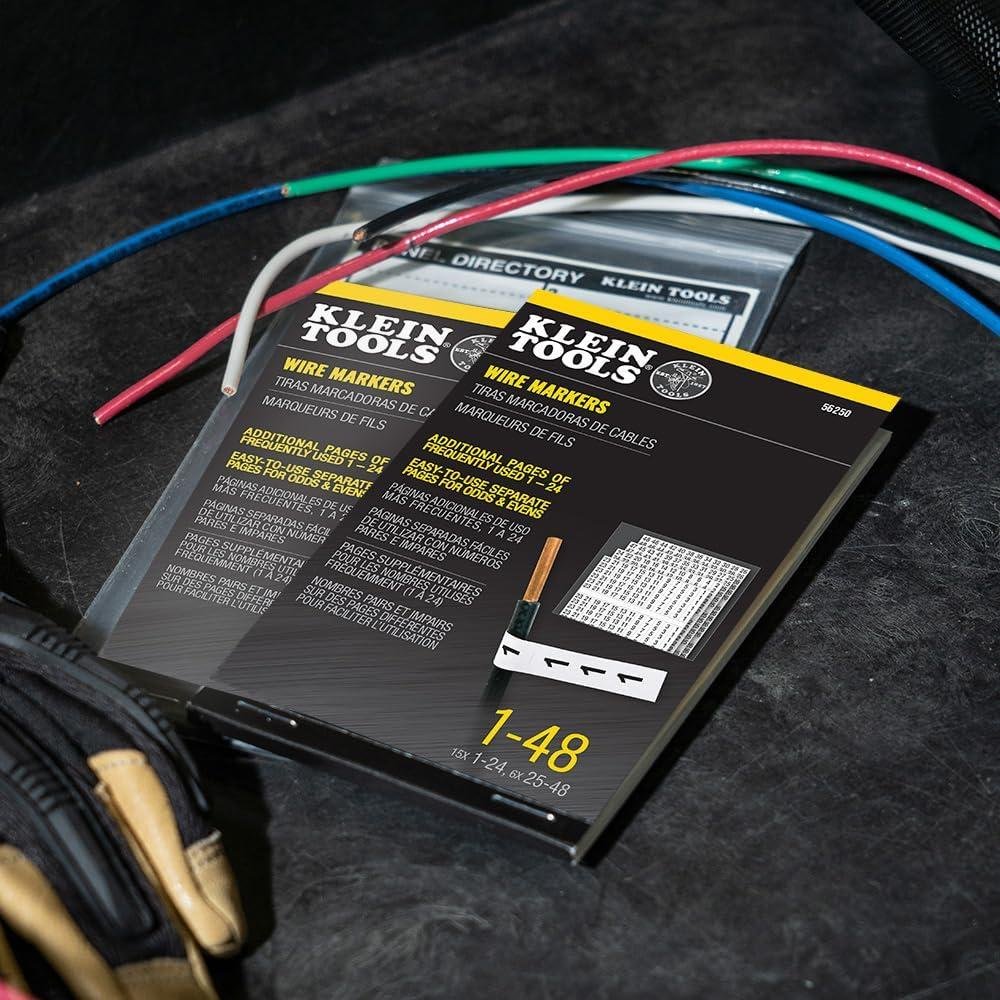
I grabbed this marker book on a commercial panel job last spring – a 42-circuit load center in a multi-tenant retail build-out where every wire had to be clearly identified before inspection. I’ll be honest: wire labeling is one of those tasks that sounds trivial until you’re crouched in a tight panel box with greasy fingers trying to peel a flimsy sticker off a cheap roll while your apprentice holds a flashlight at the wrong angle. What immediately stood out to me was the vinyl coated white cloth construction at 8 mils thick – these aren’t the paper-thin adhesive labels you find on bargain rolls that curl up and fall off the moment thay hit a wire that’s seen any wire-pulling lube. They lay flat, they stick hard, and they stay readable.
The layout of the book itself is genuinely well thought-out for real panel work. Klein made smart decisions here that you can tell came from people who actually wire panels for a living:
- Odd and even numbers on separate pages – so you can dress both sides of the panel cleanly without hunting through the book
- More pages of low numbers (1-24) – because that’s what you burn through fastest on residential and light commercial jobs
- Perforated pages that let you tear off a third, two-thirds, or the entire page depending on how manny labels you need at once
- Labels can be split lengthwise for thinner conductors where a full-width label would bunch up or overlap
- 0.25″ x 1.5″ label size with larger print that’s actually legible under panel lighting without squinting
- Strong tack adhesive designed to bond even on oily wire jackets – a critical detail that cheaper alternatives consistently fail at
Compared to generic wire marker books I’ve used from electrical supply houses, this Klein version holds up noticeably better in field conditions. The cloth backing conforms around wire jackets rather of cracking or peeling at the edges, and the print doesn’t smear when your hands are dirty – which on a panel job, they always are.I’ve used Brady and Panduit label systems on larger commercial jobs, and while those have thier place in structured cabling environments, for standard panel work this book hits the right balance of speed, durability, and no-nonsense usability without forcing you into a labeling gun or software system. At the price point, there’s no reason not to have a couple of these in your bag on every panel job.
| Feature | klein Tools 56250 | Generic Supply House Book | Brady Clip Sleeves |
|---|---|---|---|
| Label Material | Vinyl coated cloth, 8 mil | Paper or thin vinyl | Polyolefin sleeve |
| Adhesion on Oily Wire | Strong tack, reliable | Inconsistent | N/A (slide-on) |
| Number Range | 1-48 | Varies (often 1-30) | Custom/printed |
| Odd/Even Page Layout | Yes | Rarely | no |
| Perforated Pages | Yes (1/3, 2/3, full) | Sometimes | No |
| Label Size | 0.25″ x 1.5″ | Varies | Varies by model |
| Field Usability | Excellent | Fair | Good (larger jobs) |
Build Quality and Label Durability That Actually Holds Up on the Job Site
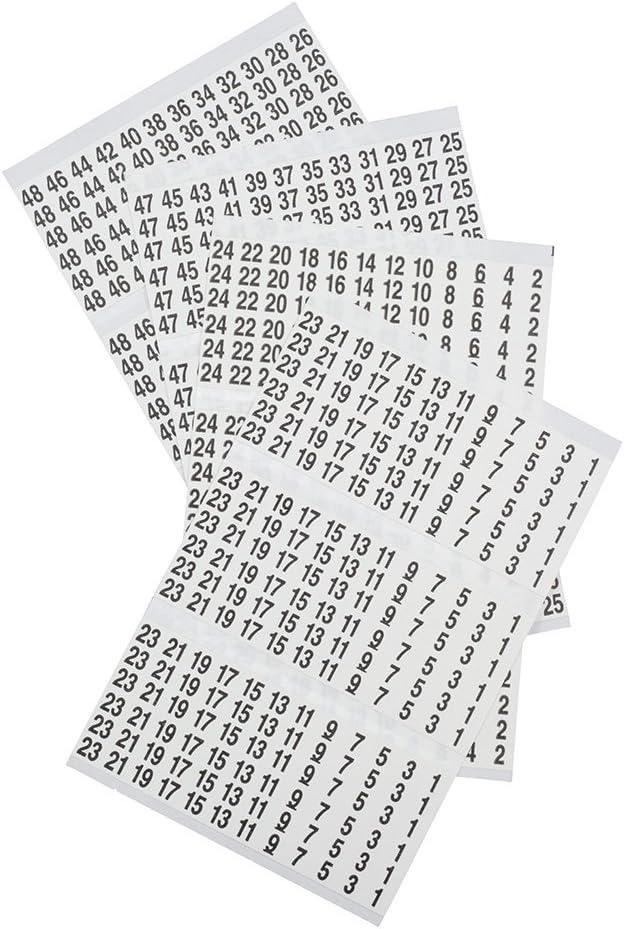
When you’re elbow-deep in a panel with wires running every direction, the last thing you need is labels that peel off, smear,or fall apart the moment they hit a slightly oily surface. That’s where these markers genuinely earn their keep on the job site. The vinyl coated white cloth construction – 8 mils thick – is not just marketing language. I’ve slapped these on wires in environments ranging from dusty commercial builds to damp utility rooms, and they stay put. The strong tack adhesive holds firm even on oily wire jackets, which is a real-world problem that cheaper paper-based label stickers completely fail at. I’ve used generic label books from big-box stores that start curling at the corners before the job is even done – these don’t do that. The vinyl cloth backing flexes with the wire rather of cracking or delaminating, and that’s a difference you notice immediately when you’re dressing a tight bundle.
The 0.25-inch x 1.5-inch label size hits a practical sweet spot – large enough that the numbers are genuinely readable at a glance, small enough to work on standard wire gauges without bunching up. What I really appreciate is the ability to split the label lengthwise for thinner wires, which is a small detail that saves real time when you’re marking low-voltage or control wiring. The perforated pages are another smart design call – you can tear off a third, two-thirds, or the full page depending on what the job demands, so nothing goes to waste mid-run. Klein also front-loaded the book with more pages of the lower numbers (1-24), as any experienced sparky knows those get burned through fastest in panel work. Here’s a swift look at how the key specs break down:
| Feature | Detail |
|---|---|
| Label Material | Vinyl coated white cloth |
| Label Thickness | 8 mils |
| Label Size | 0.25 in. x 1.50 in. |
| Number Range | 1-48 |
| Adhesive Type | Strong tack (oil-resistant) |
| Page Perforation | 1/3, 2/3, or full page tear-off |
| Odd/Even Layout | Yes – separate pages per panel side |
| Extra Low-Number Pages | Yes (1-24 duplicated) |
From a build quality standpoint, this is exactly what I expect from Klein Tools – over 160 years of professional-grade manufacturing discipline showing up in even the smallest product in the lineup. These aren’t glamorous, but they’re built for the same environment I work in every day. The organization benefits are immediate:
- Odd and even numbers on separate pages so dressing both sides of a panel goes faster with zero confusion
- Larger print that’s readable under dim panel conditions without pulling out a flashlight
- Durable enough to survive wire pulls, conduit bends, and years inside a finished panel
- Flexible cloth backing that won’t crack or peel when routed around tight corners
If you’re tired of dealing with flimsy labels that don’t survive the job, it’s time to make the switch. Grab These Klein Wire Markers on Amazon
How Well These Wire Markers Perform when You Need Fast and Accurate Cable identification
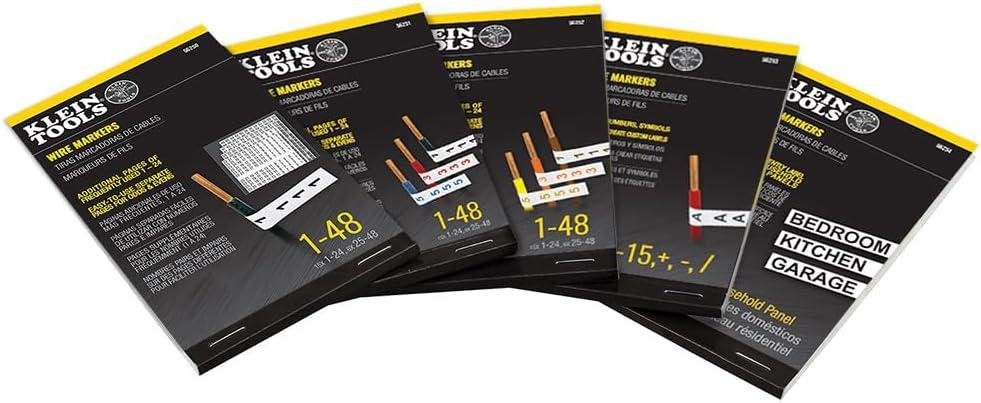
When I’m deep in a panel swap or pulling wire through a conduit run, the last thing I want is to slow down hunting for the right label or squinting at tiny print. These markers deliver exactly where it counts on the job. The larger, easy-to-read print on the 0.25-inch x 1.5-inch labels is a genuine game-changer – no more second-guessing whether that’s a 6 or an 8 under bad lighting. the vinyl coated white cloth construction, coming in at a solid 8 mils thick, holds up in environments where cheaper paper-based labels curl, peel, or fall apart the moment they hit a damp surface. I’ve had adhesive-backed labels from no-name brands fail on oily wire insulation within weeks – these stick and stay stuck, thanks to a strong tack formulated specifically for that kind of surface contact.
What I appreciate most from a workflow standpoint is how thoughtfully the book is laid out for actual field use. Separate pages of odd and even numbers mean I can dress both sides of a panel independently without flipping back and forth or cutting into a sequence I still need. The perforated pages let me detach a third, two-thirds, or the full page depending on the job size – that kind of adaptability matters when you’re billing by the hour. The labels also split cleanly for thin wire applications, which is something I didn’t expect but use constantly on low-voltage and control wiring. Here’s a quick look at how these markers stack up against the competition:
| Feature | Klein Tools 56250 | Brady WM-1-48-PK | Ideal Industries 44-106 |
|---|---|---|---|
| Number Range | 1-48 | 1-45 | 1-45 |
| Label Material | Vinyl coated cloth | Vinyl cloth | Cloth |
| Label Size | 0.25″ x 1.50″ | 0.25″ x 1.50″ | 0.25″ x 1.50″ |
| Oily Surface Adhesion | ✅ Strong tack | ✅ Moderate | ⚠️ Standard tack |
| Perforated Pages | ✅ Yes (3 split options) | ❌ No | ❌ No |
| Odd/Even Page Separation | ✅ Yes | ❌ No | ❌ No |
| Splittable for Thin Wire | ✅ Yes | ⚠️ partial | ❌ No |
| Extra Low-Number Pages | ✅ Yes (1-24) | ❌ No | ❌ No |
The fact that Klein includes more pages of the frequently used low numbers (1-24) shows this wasn’t designed by someone sitting in an office – it was designed by people who know that most panels are going to chew through those first two dozen numbers faster than anything else. That’s the kind of field-aware thinking that separates professional-grade consumables from the generic stuff you’d find at a big-box bin. If you’re wiring panels, organizing cable trays, or just trying to keep a complex install traceable six months down the road, this book earns its place in your pouch.
Check Price & Availability on Amazon
Ease of Use for Electricians and DIYers Who Want Clean Panel organization Without the Fuss
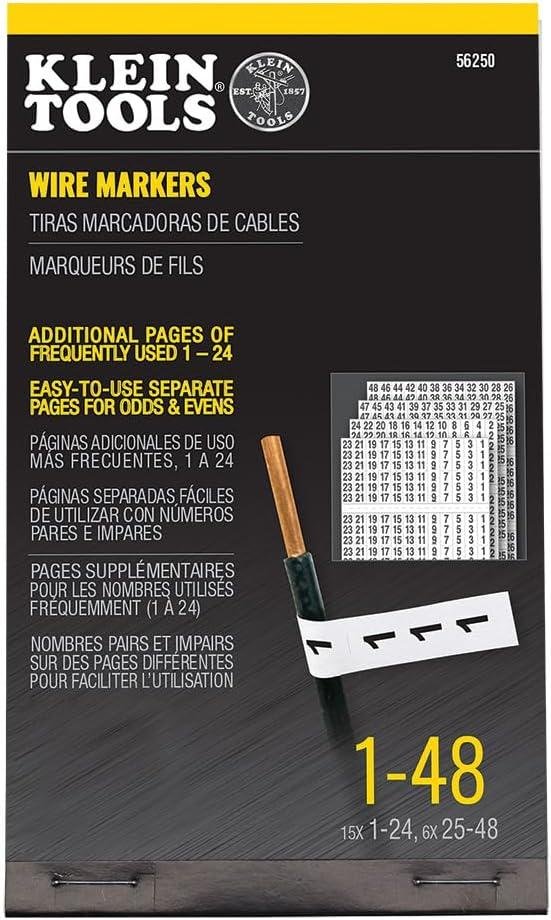
When it comes to panel organization, I don’t have time for flimsy labels that peel off after six months or numbers so small I need a magnifying glass to read them. What I need is something that works the first time and stays put – and that’s exactly what this Klein Tools wire marker book delivers. The 0.25″ x 1.5″ labels are printed large and clear, which sounds like a minor detail until you’re leaning into a crowded 200-amp panel at the end of a long day. The vinyl-coated white cloth construction at 8 mils thick gives these markers a durability that paper-based alternatives simply can’t touch. I’ve used cheaper label books where the adhesive gave up the ghost on wires that had even a trace of grease or oil – not here. The strong tack adhesive holds firm on oily wire surfaces, which is a real-world requirement that most bargain-bin label sets completely ignore.
The organizational logic built into this book is something I genuinely appreciate. The perforated pages let me tear off a third, two-thirds, or the entire sheet depending on what the job calls for – no waste, no fumbling. The fact that odd and even numbers are printed on separate pages means I can dress both sides of the panel independently without hunting through a jumbled sequence. And with more pages dedicated to low numbers (1-24), Klein clearly thought about how panels actually get used in the field rather than just dividing numbers evenly and calling it a day. The labels can also be split lengthwise for thinner wires, which is a small but thoughtful detail that saves me from having a label that bunches and looks unprofessional on a 14-gauge conductor.
| feature | Klein Tools 56250 | Typical Generic Wire Marker Book |
|---|---|---|
| Label Material | Vinyl-coated cloth, 8 mil thick | Paper or thin plastic film |
| Number Range | 1-48 | Varies, frequently enough 1-30 or 1-45 |
| Label Size | 0.25″ x 1.5″ | Frequently enough smaller, harder to read |
| Adhesion on Oily Wires | Strong tack, purpose-built | Inconsistent, often fails |
| Perforated Pages | Yes – 1/3, 2/3, or full page | Rarely offered |
| Odd/Even Separation | Yes – separate pages | No |
| Splittable Labels for Thin Wire | Yes | No |
| Low Number Page Extras (1-24) | Yes – more pages included | No priority given |
- Perforated pages eliminate waste and speed up workflow on the job site
- Odd/even page separation makes dressing both sides of a panel fast and clean
- Vinyl-coated cloth outperforms paper labels in humid, greasy, or high-traffic electrical environments
- Splittable label design works across a range of wire gauges without looking sloppy
- Extra low-number pages reflect real-world panel use – a detail most competitors overlook
Check Price & Availability on Amazon
How the Klein Tools 56250 Stacks Up Against Other Wire Labeling Solutions I Have Tried
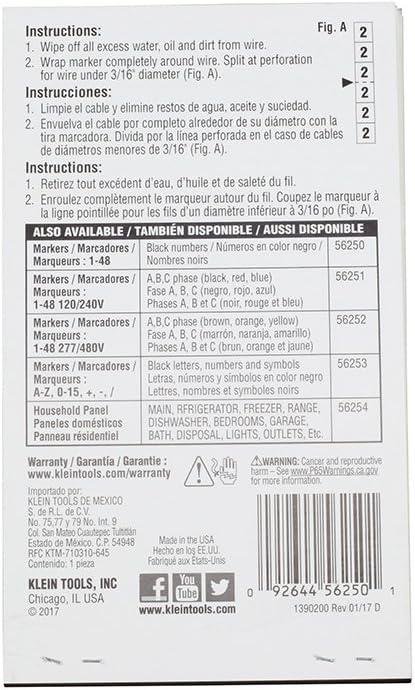
I’ve run the gamut on wire labeling solutions over the years – from cheap adhesive paper strips that curl off wires the moment the job site heats up, to overpriced heat-shrink systems that require a dedicated tool and way too much setup time. I’ve used Brady label systems, Panduit markers, and a handful of generic off-brand books that fell apart in my tool bag before I even got them to the panel. What consistently separates the good from the garbage is adhesion under real-world conditions, legibility in tight spaces, and practical usability mid-job – and that’s exactly where I’ve found this Klein option punching well above its weight class. The vinyl coated cloth construction at 8 mils thick isn’t just marketing language – these labels have held firm on oily wires in conditions where Brady’s comparable economy-tier labels started peeling at the corners within weeks. That strong-tack adhesive is no joke when you’re labeling conductors in a sweaty service panel on a summer afternoon.
| Feature | Klein Tools 56250 | Brady WM-1-48-PK | Generic Paper Marker Book |
|---|---|---|---|
| Material | Vinyl coated white cloth | Vinyl/polyester blend | Paper-based |
| Thickness | 8 mils | ~7 mils | ~3-4 mils |
| Adhesion on Oily Surfaces | ✅ Strong tack | ✅ Moderate-strong | ❌ Poor |
| Label Size | 0.25″ x 1.5″ | 0.25″ x 1.5″ | Varies |
| Odd/even Page Separation | ✅ Yes | ❌ No | ❌ No |
| Perforated Pages | ✅ 1/3, 2/3, or full page | ❌ No | ❌ No |
| Splittable for Thin Wire | ✅ Yes | ❌ No | ❌ No |
| Extra Low-Number Pages (1-24) | ✅ Yes | ❌ No | ❌ No |
| Print Legibility | Large, clear print | Standard print | Small, often blurry |
The details that genuinely set this book apart from the competition come down to job-site intelligence baked into the design – stuff that tells me a real electrician had input on this product. The separate pages of odd and even markers let me dress both sides of a panel cleanly without fumbling through a full sequential book. The perforated pages that break into thirds mean I’m not wasting labels or fighting with scissors in a cramped enclosure. And the ability to split a label for thin wire? That alone has saved me more than once on low-voltage runs where standard labels would just bunch up and look sloppy. Brady’s professional-grade systems offer comparable durability, but at a noticeably higher price point and without these panel-specific workflow features. For everyday residential and commercial panel work, this Klein book covers everything I need without making me reach for a separate labeling system.
check Price & Availability on Amazon
My final Take on Whether This Wire marker Book Belongs in Your Electrical Kit
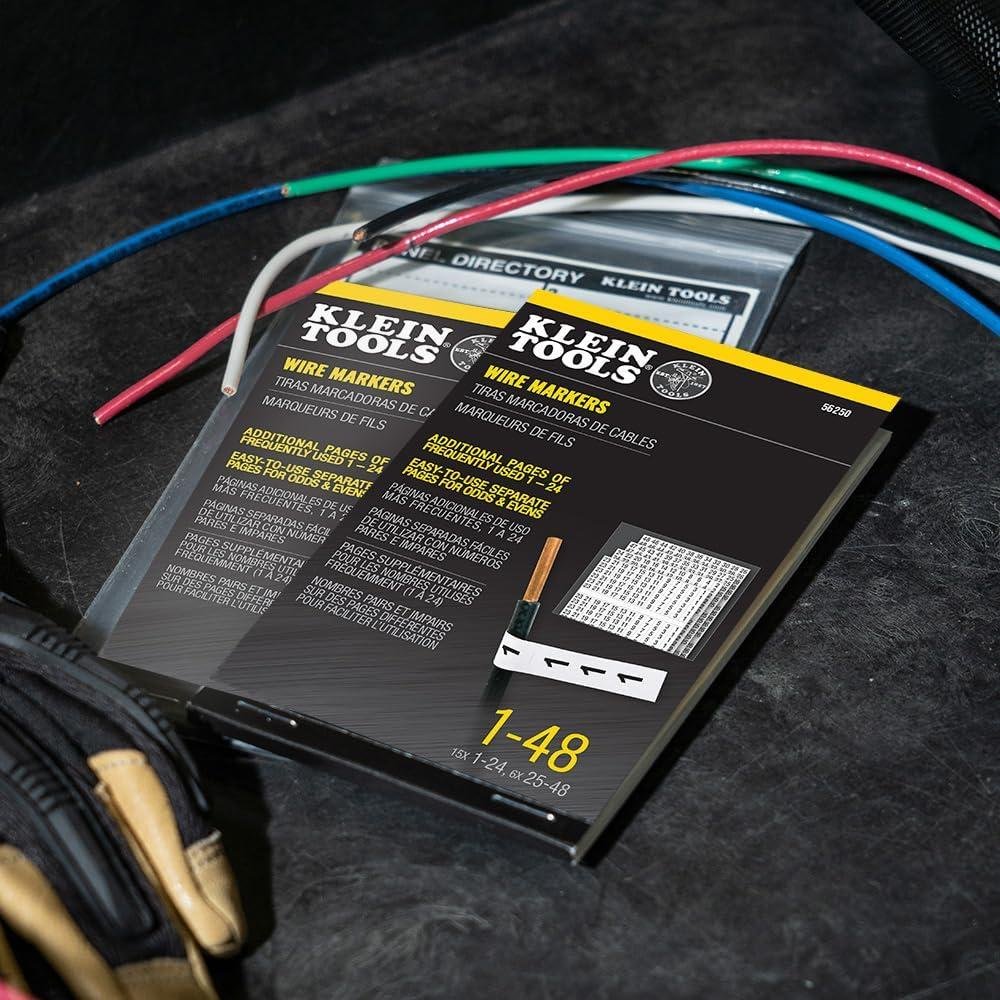
After putting these markers through real panel work – commercial retrofits, residential service upgrades, and everything in between – I can say with confidence that this wire marker book earns its spot in a serious electrician’s kit. What stands out most isn’t just the vinyl coated cloth construction at 8 mils thick, but how that material performs in the field. The labels grip onto wires that have seen their share of oil, grime, and conduit lube, and they stay put. I’ve had cheaper paper-based markers curl off within a week; these don’t. The 0.25″ x 1.5″ label size hits a sweet spot – big enough to read at a glance inside a crowded panel, small enough to wrap cleanly without bunching. The ability to split a label lengthwise for thinner wire is a detail that tells me Klein’s engineers actually talked to working electricians before finalizing this design.
From a workflow standpoint, the layout is genuinely smart. Odd and even numbers are on separate pages, so I can dress both sides of a panel without hunting through a jumbled sequence. The perforation system – allowing you to detach a third, two-thirds, or the full page – means I’m not fumbling with scissors mid-job. Klein also included more pages of low numbers (1-24), which reflects real-world use patterns since most residential and light commercial panels never push past that range anyway. Here’s a quick breakdown of how this book compares against similar options I’ve used:
| Feature | Klein Tools 56250 | Brady WM-1-48-PK | Panduit NWSLC-X |
|---|---|---|---|
| Label Material | Vinyl coated cloth, 8 mil | Vinyl cloth | Nylon cloth |
| Number Range | 1-48 | 1-45 | Custom print required |
| Label Size | 0.25″ x 1.5″ | 0.25″ x 1.50″ | Varies |
| Adhesion on Oily Surfaces | Strong tack – excellent | Good | Good |
| Perforated Pages | Yes – flexible detach options | No | No |
| Odd/Even Page Split | Yes | No | No |
| Price Point | Budget-friendly | Moderate | Premium |
Bottom line: if you’re serious about clean, professional panel work, this marker book delivers where it counts. The thoughtful page layout, durable vinyl cloth labels, flexible detach system, and aggressive adhesive all point to a product built with field conditions in mind – not just a box checked on a product spec sheet. It’s compact enough to toss in your tool bag and forget about until you need it, which is exactly what a consumable should be. Whether you’re a journeyman wiring your hundredth panel or a dedicated DIYer tackling a subpanel install, this book keeps your work looking sharp and code-inspection-ready. Don’t let sloppy wire identification be the thing that slows down your next job – Grab Yours on Amazon Today and wire it right the first time.
Pros & Cons
Pros & cons: Klein Tools 56250 Wire Marker Book
Alright, let’s cut through the catalog copy and talk about what actually matters when you’re elbow-deep in a panel and you need these labels to cooperate. I’ve burned through cheaper marker books that curl off the wire before the panel door even closes, so I came into this one with my skeptic hat on. Here’s the honest breakdown.
|
✅ PROS |
❌ CONS |
|---|---|
| That adhesive is no joke. I’ve slapped these on wires that had fingerprint grease and a little wire pulling lube on them – the labels stayed put. No peeling corners, no sliding. That “strong tack on oily wires” claim actually holds water in the field. | Tops out at 48. If you’re working a larger commercial panel or a multi-tenant board with more than 48 circuits, you’re buying two books. That adds up fast on a big job. Would love to see a 1-100 version. |
| Vinyl coated cloth at 8 mils is the right call. This isn’t the flimsy paper garbage that turns into mush the moment humidity shows up. the material has real body to it – it wraps clean, conforms to the wire, and isn’t going anywhere. | No custom or blank labels included. You’ve got numbers 1-48, and that’s your world. The second your circuit naming convention goes off-script – say, you need to label a dedicated circuit with something descriptive – you’re on your own. A few blank stickers in the back would’ve made this a home run. |
| The odd/even page split is genuinely useful. I’ll admit I didn’t think much of it until I was dressing a panel and realized I could pull the odd page and the even page separately, work both sides of the panel without fumbling through the whole book. Small thing, but it speeds you up. | The perforations can be hit or miss. Tearing along the perforated line works clean most of the time, but I’ve had a couple of pages where the perf didn’t cooperate and I ended up with a jagged edge. Doesn’t kill usability, but it’s mildly annoying when you’re trying to keep things tidy. |
| Print size is actually readable. I’m not hunting for my reading glasses to squint at a 6-point number on a ¼-inch label. The larger print on 0.25″ x 1.5″ labels means I can ID circuits fast, and so can the next guy who opens that panel after me. | Price per label is higher than generic alternatives. You can absolutely find cheaper wire marker books on Amazon. If you’re doing volume – multiple panels on a big residential project – the cost difference starts to matter. You’re paying the Klein premium here. Whether that’s worth it depends on your margin situation. |
| More pages for 1-24 is a smart move. Let’s be real – how frequently enough are you labeling circuit 47 compared to circuit 4? Klein loaded up on the low numbers, which reflects how panels actually get used. That’s not a marketing gimmick, that’s someone on the design team who actually does electrical work. | Not ideal for very thin wire gauges without splitting. The split-for-thin-wire feature works, but it requires an extra step and a steady hand. On a long day when you’re trying to knock out a panel fast, fiddling with label splitting gets old. Not a dealbreaker, just something to be aware of. |
| Compact book format travels well. Toss it in your pouch, your bag, your truck drawer – it doesn’t bulk up your kit.I’ve had lose-sheet label systems that turn into a disaster the second the wind picks up on a rough-in. This stays organized. | Only one number configuration per book. If you need wire markers for a completely different numbering scheme or non-standard circuit layout, you’re buying a different klein book from their lineup. There’s no mix-and-match flexibility within a single book. |
Bottom Line on the Pros & Cons
Look, this isn’t a battery platform or a power tool where I’m going to stress-test it for runtime and compatibility. It’s a wire marker book. But that doesn’t mean the details don’t matter – because when you’re labeling out a panel at the end of a long day and a label falls off or you can’t read the number, that’s a problem. Klein got the fundamentals right here: the adhesive sticks, the material is durable, and the format is actually thought out for how tradesmen work.
Where it falls short is range (48 circuits only) and flexibility (no blank labels, no custom options). If your jobs are mostly residential panels and small commercial work, this book covers you clean. If you’re doing larger installs regularly, budget for multiple books or look at Klein’s other configurations in their marker book lineup. Either way, it’s a better spend than the bargain-bin knockoffs that’ll embarrass you six months after the job is done.
Q&A
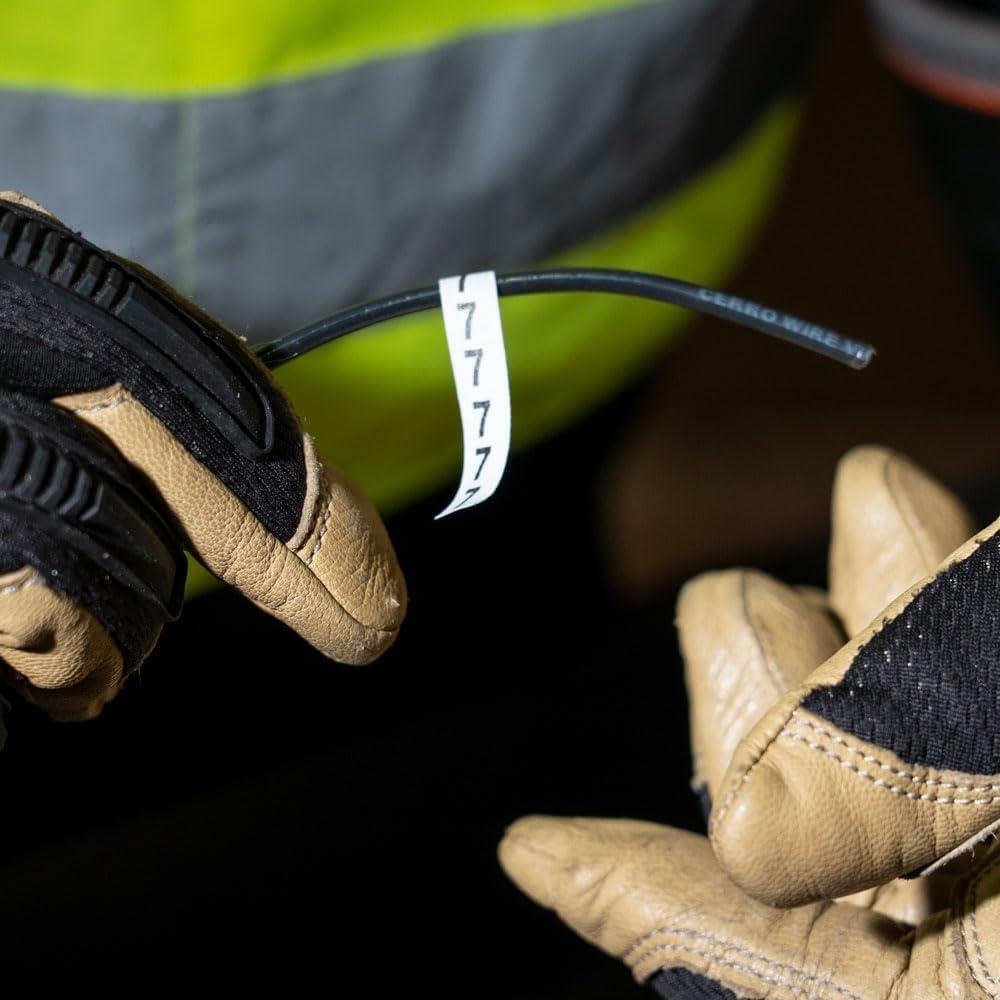
## Q&A: Klein Tools 56250 Wire Marker Book
Q: Do these labels actually stick, or are they going to peel off six months down the line like every cheap label I’ve tried before?
A: this is exactly why I wrote the whole post – I was fed up with labels that ghost me after a few months. The 56250 uses a strong-tack adhesive that’s specifically designed to bond to oily wires. I’m talking wires that have been handled all day with greasy fingers on a job site. After running these through panels in environments that see heat, humidity, and vibration, I haven’t had a single one peel on me yet. The vinyl coated cloth backing also adds flexibility so they’re not cracking and lifting at the edges like paper-based labels do. Short answer: yes, these actually stick.
Q: What size are the labels, and are they going to fit on standard wire gauges I’m working with on a typical residential or commercial panel?
A: Each label measures 0.25 inches by 1.5 inches – that’s a solid size for most wiring applications. What I really appreciate is that Klein designed these so you can split the label lengthwise for thinner wires. So whether you’re working with heavier conductors in a commercial panel or thinner gauge wire in a residential install, you’ve got options. You’re not forced into one size fits nothing, which is the problem I’ve had with other brands.
Q: does this book cover enough numbers for a full panel, or am I going to run out and need to buy two books?
A: The 56250 covers numbers 1 through 48, which handles the vast majority of residential and light commercial panels without breaking a sweat. A standard 200-amp residential panel typically runs up to 40 or 42 circuits, so you’ve got room to spare. Klein also smartly packed in more pages of the low numbers – specifically 1 through 24 – as that’s where you’re always running short first. That alone tells me the engineers actually talked to people who use these in the field. For larger commercial jobs pushing past 48 circuits, you’d want to grab additional books or look at Klein’s other configurations in this same series.
Q: Are the odd and even numbers separated, so I can label both sides of a panel without flipping through the whole book?
A: Yes, and this is one of the features that actually impressed me. Klein put odd numbers and even numbers on separate pages specifically so you can dress each side of the panel cleanly without hunting through the book. Left side, even numbers. Right side, odd numbers. You pull the right page, work your way down, and you’re done. It’s a small thing that makes a big difference when you’re on a deadline and you don’t have time to fumble around. whoever thought of that one earned their paycheck.
Q: The pages are perforated – how does that actually work in practice, and is it useful or just a gimmick?
A: It’s genuinely useful, not a gimmick. Each page is perforated so you can tear off a third, two-thirds, or the entire page depending on how many labels you need for a given job. Say you’re only labeling a small sub-panel with 16 circuits – you don’t have to pull out the whole page and shove the rest back in the book awkwardly. You just tear off what you need and keep the rest intact for the next job. Clean, simple, practical. It keeps the book organized across multiple jobs, which matters when this thing is bouncing around in your tool bag for months.
Q: Are these made from paper or something more durable? I need them to hold up in environments that see moisture and heat.
A: These are not paper labels – full stop. Klein made them from vinyl coated white cloth, 8 mils thick. That’s a meaningful difference. The vinyl coating gives them resistance to moisture, mild chemical exposure, and the kind of general abuse that kills paper labels fast. The cloth backing adds flexibility and tear resistance. I’ve used paper wire markers before in environments with any humidity at all, and they look like garbage within a year. These hold their shape and stay legible. For anything near HVAC equipment, basements, or outdoor-rated panels, this material choice matters a lot.
Q: How does this compare to the Brady or Panduit wire marker books I’ve seen electricians using on bigger commercial jobs?
A: Brady and Panduit make solid products – I won’t lie about that – and you’ll see them on large commercial and industrial jobs where people are paying top dollar for labeling systems. But for residential, light commercial, and serious DIY panel work, the Klein 56250 competes well and typically comes in at a lower price point. The adhesion is strong, the material is durable vinyl cloth, and the print is large and clear. Where Brady and Panduit have the edge is in their broader ecosystem – longer number ranges, specialized industrial formats, and compatibility with label printers. For most electricians doing day-to-day panel work, the Klein book does everything you need without overcomplicating it or emptying your wallet.
Q: Is the print large enough to actually read in a crowded panel without pulling out a flashlight?
A: Klein specifically designed the 56250 with larger print compared to older marker books, and I can confirm it makes a real difference. When you’re crouched in front of a panel with wires running every direction, the last thing you want to do is squint at tiny numbers. These are clear, bold, and easy to read at a glance. The white vinyl cloth background also gives strong contrast against the black print. I’ve got solid vision and I still appreciate not having to lean in and strain to read a number on a wire. for anyone working in low-light conditions – and let’s be honest, a lot of panel work happens in dim utility rooms or basements – the legibility on these is a genuine advantage.
Q: Does Klein back this product with any kind of warranty, and how easy is it to deal with them if there’s an issue?
A: Klein Tools has been in business since 1857, and their reputation is built on standing behind what they make. For a consumable product like wire markers, warranty terms are less relevant than they are for hand tools or test equipment – you’re not sending back a book of stickers – but Klein’s customer service is solid. If you receive a defective book or something is wrong with the product, they’ll make it right. More importantly, Klein is a family-owned American company with a long track record of being accessible and accountable. You’re not dealing with a no-name import brand that’s unreachable after the sale. That continuity and accountability is part of why I keep coming back to Klein for products like this.
Our verdict
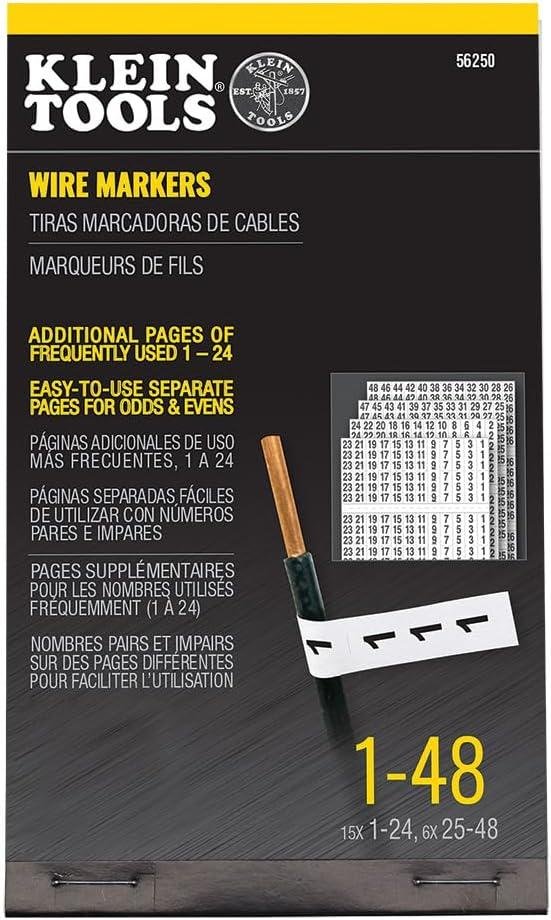
Bottom line? The Klein Tools 56250 Wire Marker Book flat-out delivers. After years of fighting with labels that peel off, smear, or just won’t stick to oily wire jackets, I can tell you with zero hesitation – these are the real deal. The vinyl-coated cloth construction, the strong tack adhesive, the larger print, the perforated pages – every single one of those features was clearly designed by someone who has actually spent time inside a panel, not just behind a desk. That tells me everything I need to know.
So who is this best suited for? Honestly, this one cuts across the board. If you’re a pro electrician or contractor, this is a no-brainer addition to your work bag – clean installs, organized panels, and happy inspectors. If you’re a serious DIYer tackling your own sub-panel or home rewiring project, this is exactly the kind of professional-grade tool that separates a neat, safe job from a spaghetti mess nobody wants to troubleshoot later. Even a homeowner doing basic circuit organization will get serious value out of this book. At the price point Klein is offering these, there’s really no reason to go the cheap route and regret it down the line.
I’ve used a lot of wire labeling solutions over the years – some decent, most forgettable. This one sticks, literally and figuratively. Klein has been doing this since 1857, and products like this remind you exactly why they’re still the name pros trust. Buy it once, use it on every job, and never look back at those garbage generic labels again.
Smart buy? Absolutely. Don’t overthink it.