The WORKPRO O2 Oxygen Sensor Socket 3/8″ Drive x 7/8″ 22mm is an offset oxygen sensor removal tool for techs and DIYers who change O2 sensors. Most reviewers call it good quality and easy to use. Some report a loose fit on 22mm sensors, so fit is the one thing to check.
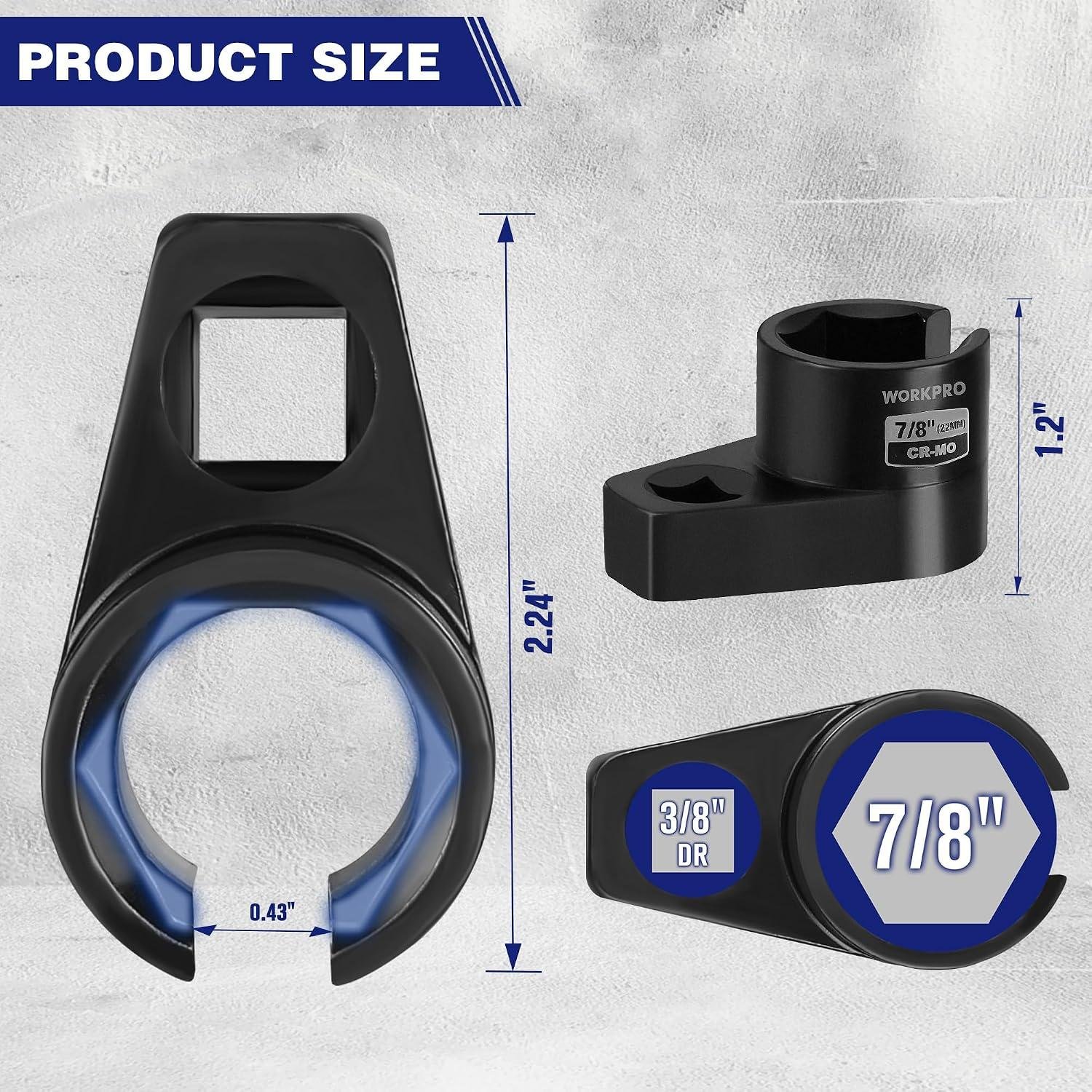
It is a 6-point socket with a 3/8″ square drive, so it runs on a standard ratchet or breaker bar. The offset design helps in tight spots and the 0.43 inch (10.9mm) wire gate lets you work with the harness still connected. It is heat-treated alloy steel with phosphating, which matters on a seized sensor.
Quick verdict: A simple, focused O2 socket that works if the fit is snug on your sensor.
- Best for: Changing 22mm O2 sensors with 3/8″ drive tools.
- Skip it if: Your sensors are badly seized or you need zero play.
- Key spec: 7/8″ (22mm) 6-point socket with a 10.9mm wire gate.
WORKPRO O2 Oxygen Sensor Socket Specs and Box Contents
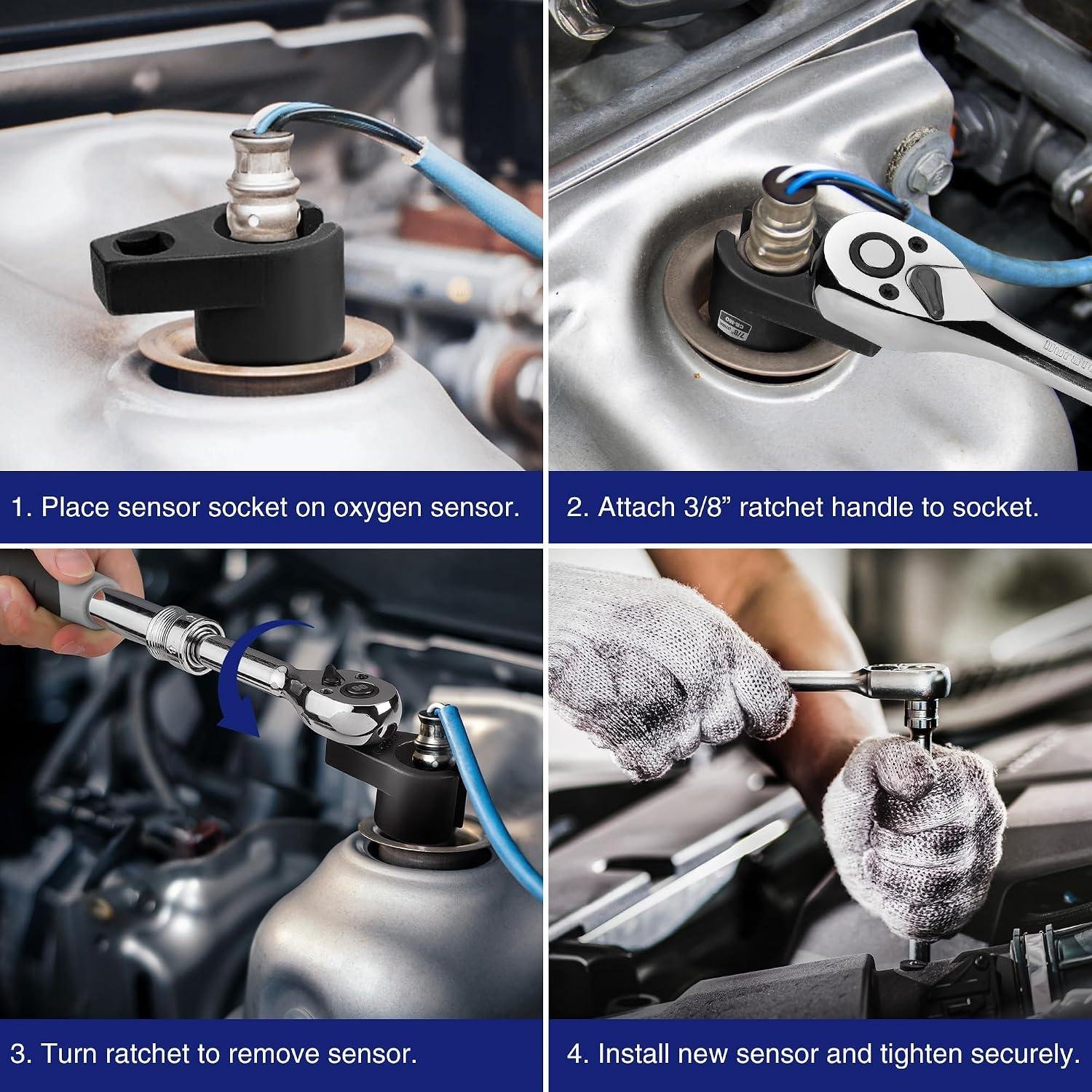
The key number is 7/8″ (22mm), a standard 6-point socket that the listing says fits most oxygen sensors. It takes a 3/8″ drive ratchet or breaker bar. The slot cut in the side is what makes it a real O2 tool, since it lets you pass the sensor wire through.
- Socket size: 7/8″ (22mm), 6-point
- Drive: 10mm (3/8″) square hole
- Wire gate: 0.43 inch (10.9mm) wide
- Design: offset, for tight access
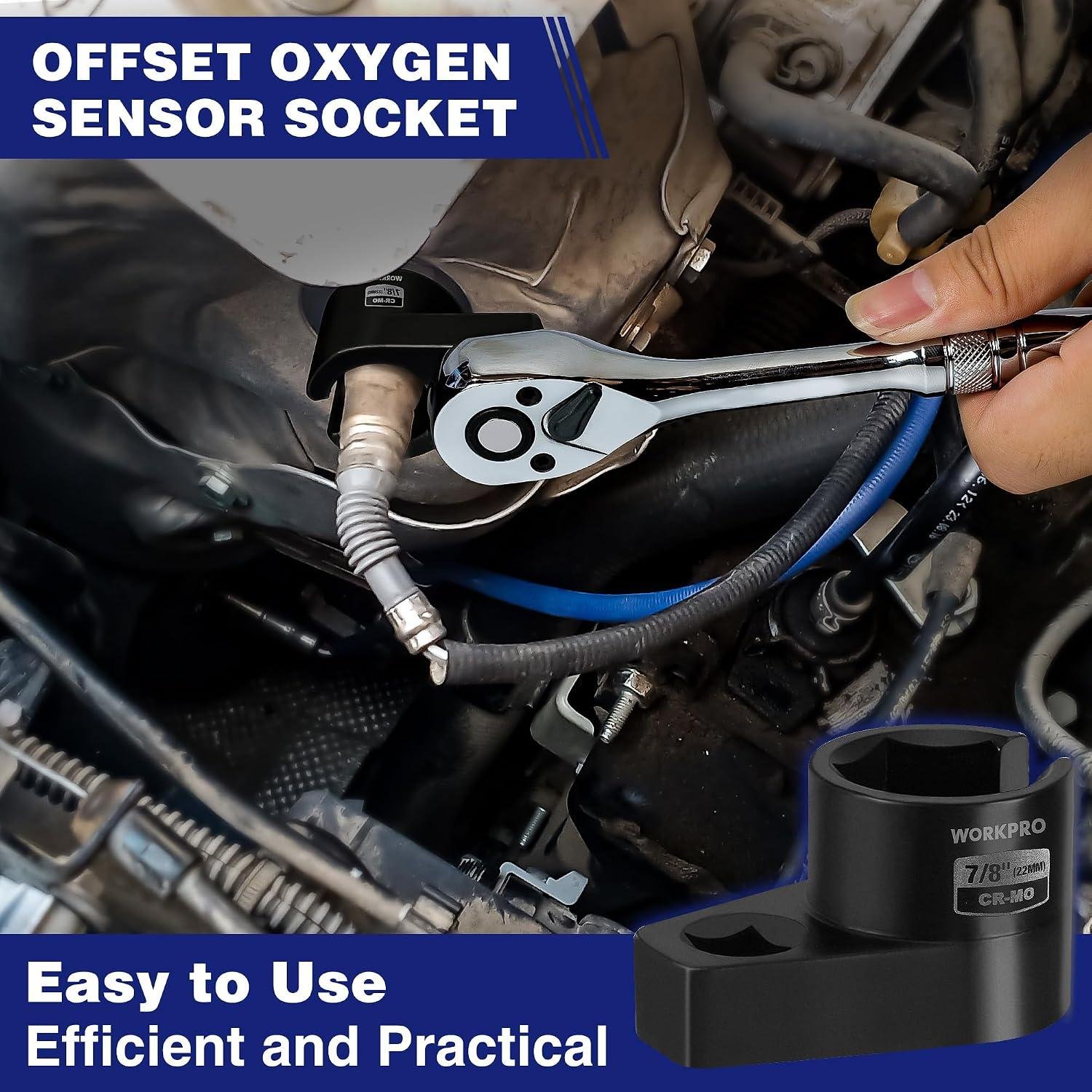
- Material: heat-treated alloy steel with surface phosphating
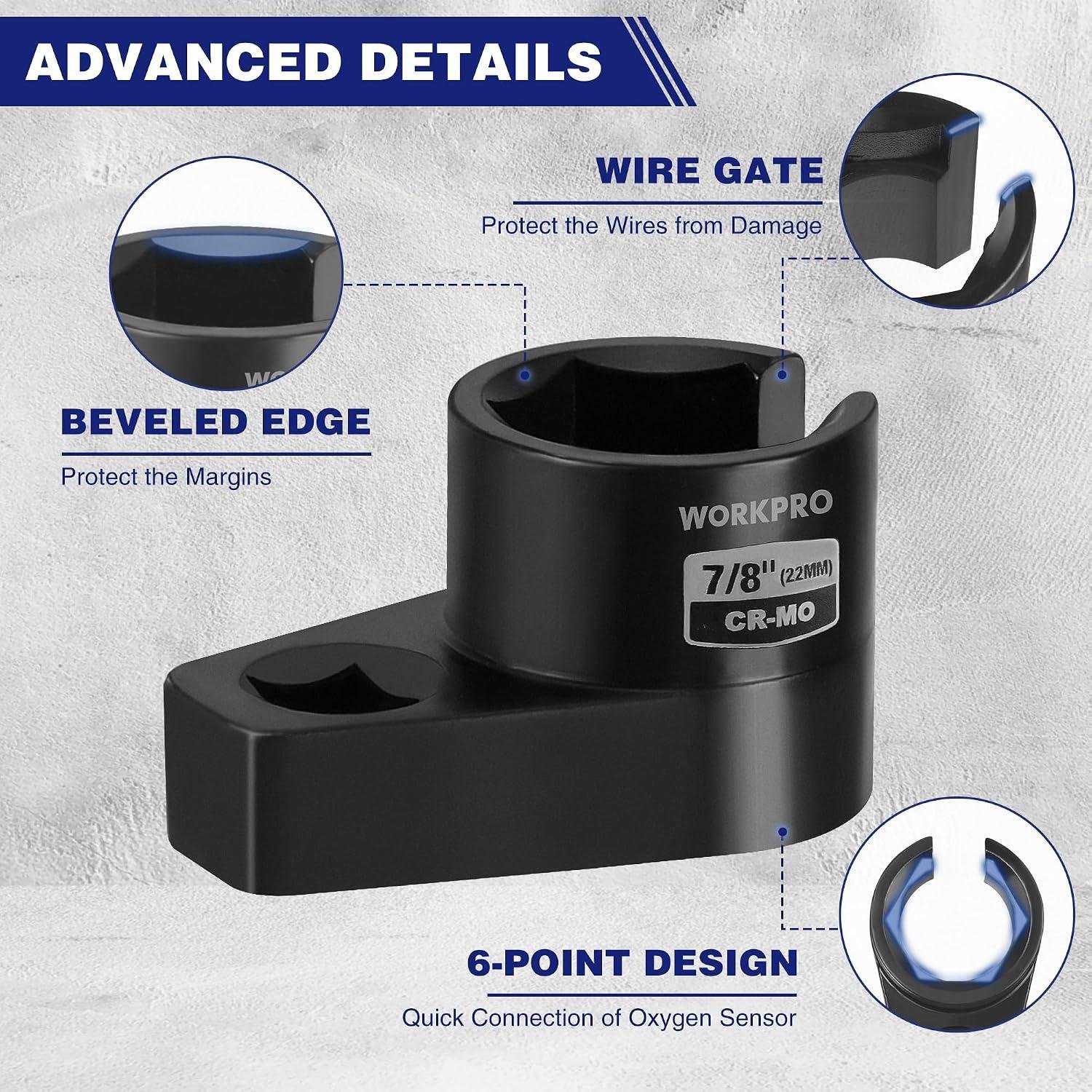
A 6-point grips the flats instead of the corners, which matters on a sensor that has sat in an exhaust for years. The wire gate means you can leave the harness connected while you work. The offset body helps in tight spots, but it changes how torque reaches the sensor, so account for that when you tighten on install. Heat-treated alloy steel is the right material for this class. Thin walls and a loose fit are where these tools usually fail, so check the fit on your sensor before you lean on it.
The listing does not clearly state what ships in the box beyond the socket itself. Some of the wording refers to a set, so confirm the exact variant and piece count before you order.
How Does the Slotted Wall Protect Sensor Wiring?
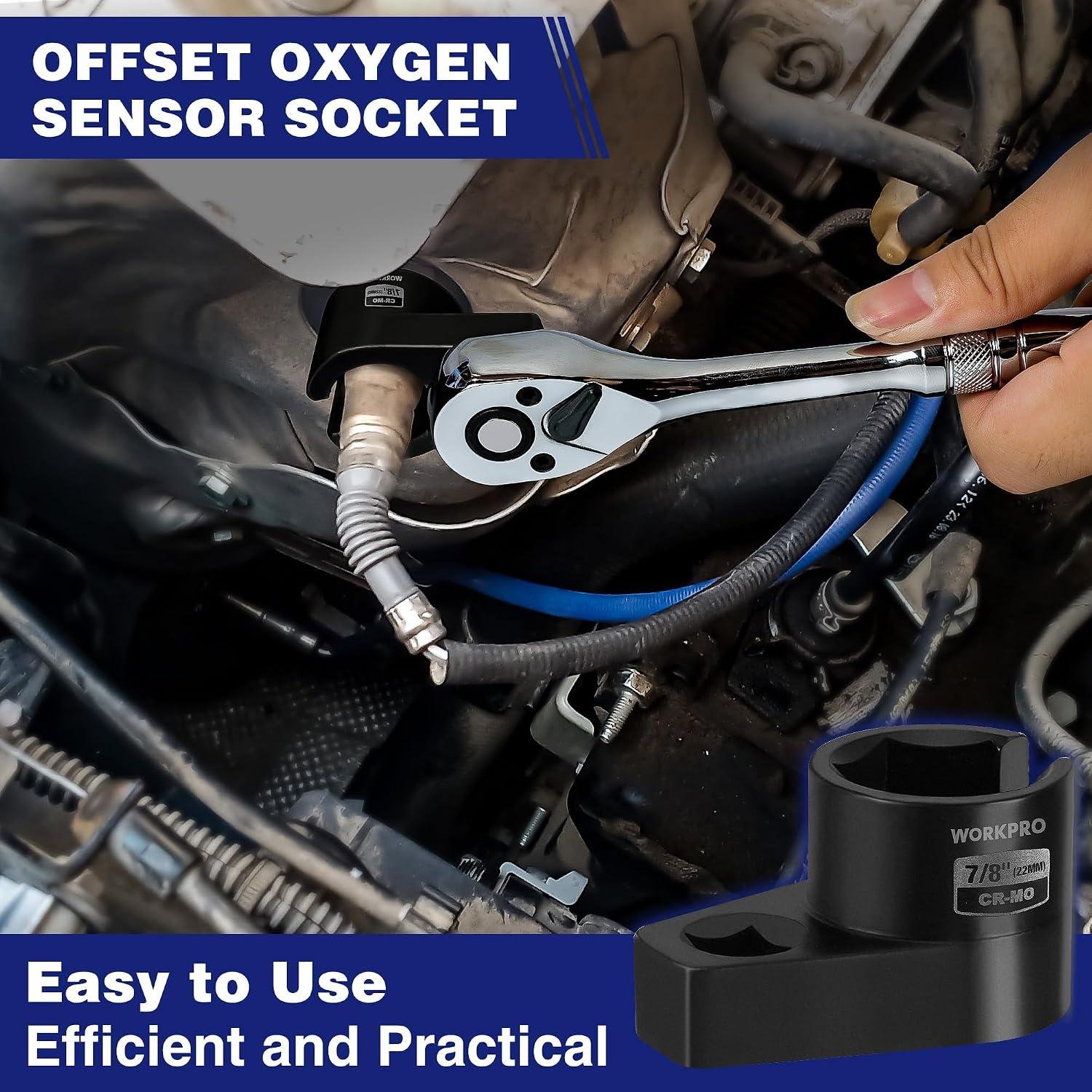
The wire gate lets the sensor wire slip through the side of the socket, so you can break the sensor loose with the harness still connected. On this socket the gate is 0.43 inch (10.9mm) wide. That is enough room to feed the wire in without pinching it or dragging it over a sharp edge.
This matters because a closed socket can only go over the sensor if the connector is unplugged first. Connectors tend to be buried, brittle or both. Leaving the plug alone means less handling of old plastic and less chance of a cut or crushed wire. The 6-point, 7/8″ (22mm) body still grips the hex on all sidesand the 10mm (3/8″) square drive takes a standard ratchet or breaker bar.
A slot has a cost. It opens up the walland an open wall can flex or spread when you put heavy torque on a stuck sensor. Some reviewers report the socket feeling loose on 22mm sensorsand one said it flexed on a stubborn one. A few suggest wrapping a hose clamp around the socket to keep it from spreading. I would treat that as a sensible precaution on any slotted socket when the sensor is seizedand I would use steady pressure instead of a sudden hard jerk.
Is the WORKPRO O2 Socket Built for Daily Shop Use?
Fit is the first thing to settle. Of the 8 reviewers who mention sensor removal, 5 were negativeand several said the socket runs loose on 22mm sensors. A loose 6-point socket rounds hex corners instead of turning them, which is a real risk on a seized sensor.
On paper the build suits shop work. It is heat-treated alloy steel with a phosphate finishand the offset helps in tight spots. Here is what the listing and reviews say about daily use:
- 6-point socket, 7/8″ (22mm), with a 3/8″ drive square.
- 0.43 inch (10.9mm) wire gate, so you can work with the harness still connected.
- Durability is split, with 8 positive and 4 negative mentions, including reports of the socket breaking.
- One reviewer said a hose clamp over the gate keeps it from spreading on a stuck sensor.
Any slotted socket gives up some strength at the gate, so spreading under load is what I would watch. One reviewer said it handled a 1/2″ breaker bar with a 2′ cheater. Another said it flexed and would not loosen the sensor. Reviewers also noted that the offset changes your torque spec, so adjust for it on installs.
Which 3/8-Inch Drive Ratchets and Extensions Fit It?
The drive end is a 10mm (3/8″) square hole, so any standard 3/8″ drive ratchet or breaker bar fits. A 3/8″ extension will fit the same square. Other drive sizes would need an adapterand none is listed in the description.
- Ratchets: Any 3/8″ drive ratchet works. A slim head helps in tight spots, since the offset body already limits your swing.
- Breaker bars: The description calls out 3/8″ breaker bars as suitable. Use one on a stuck sensor instead of forcing a small ratchet.
- Extensions: Length is up to you. Check the distance to your sensor before you pick one.
- Wire gate: The 0.43 inch (10.9mm) gate passes the wire through the socket. Route the harness out of the gate before you attach a ratchet or extension so nothing pinches.
Because the socket is offset, the force you apply is not in line with the sensor. One reviewer says to adjust your torque spec for the offset when tighteningand that is sound advice with any torque wrench. A few reviewers also report the socket feeling loose on 22mm sensors. If that happens, a longer bar is not the fix. Extra leverage on a loose 6-point fit rounds off the hex.
WORKPRO vs a Standard Deep Socket or Open-End Wrench
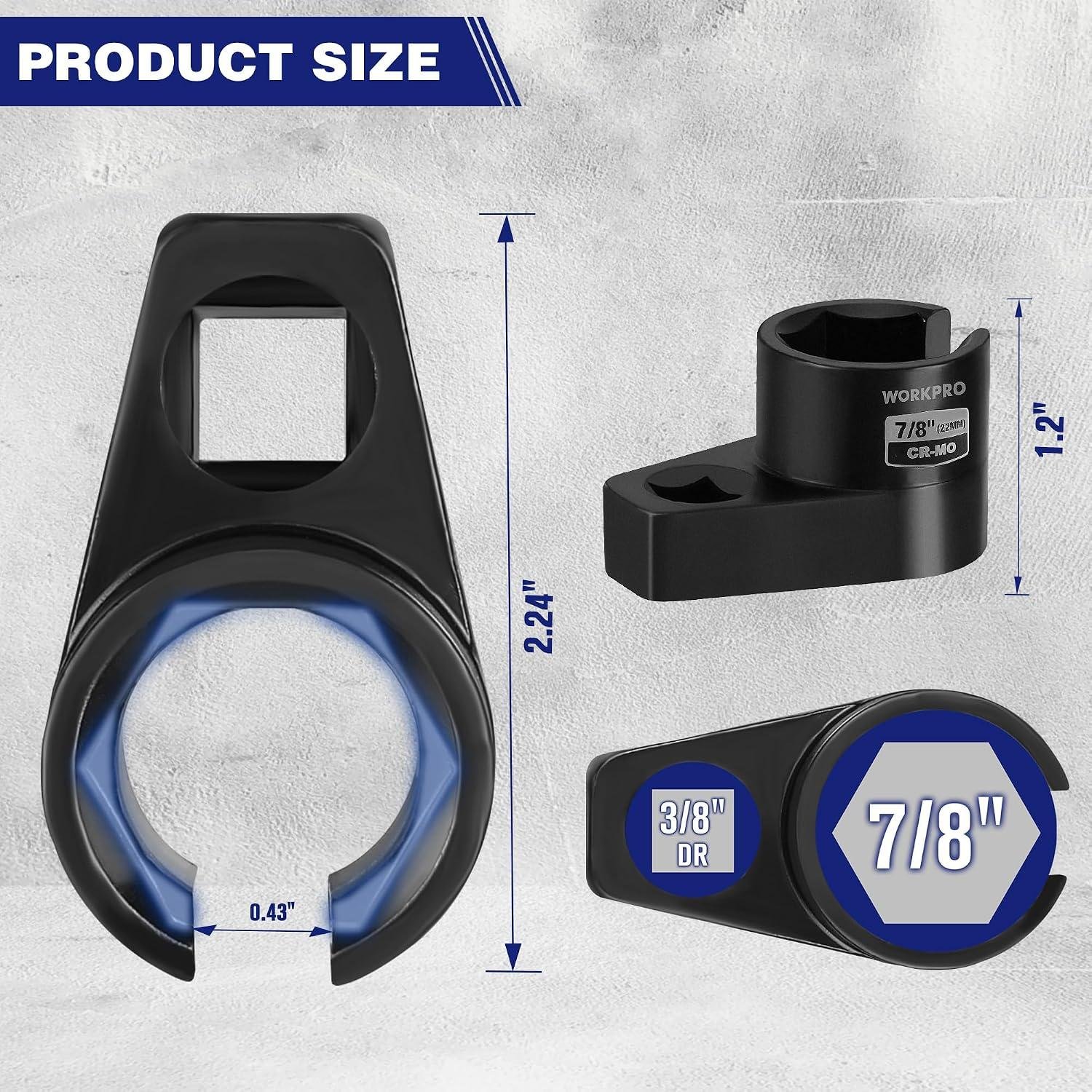
The biggest difference is the wire gate. A standard deep socket can’t pass over the sensor pigtail, so you end up cutting the wire or using a poor workaround. The WORKPRO O2 Oxygen Sensor Socket 3/8” Drive x 7/8” 22mm has a 0.43 inch (10.9mm) slot that lets the wire through with the harness still connected. An open-end wrench can reach from the side, but it only contacts two flats.
- Grip: The 6-point 7/8″ (22mm) socket holds all six flats. That beats an open-end wrench on a stuck sensor.
- Access: The offset design helps in tight spots where a deep socket and ratchet won’t line up.
- Drive: The 3/8″ square drive takes a ratchet or breaker bar. An open-end wrench gives you no drive options.
- Material: It is heat-treated alloy steel with a phosphate finish for rust resistance.
The tradeoff is rigidity. A slot weakens any socket compared to a solid deep one. Some reviewers report it fits loose on 22mm sensors and one reports a break. One reviewer suggests a hose clamp around the socket to keep it from spreading. Offset tools also change your leverage, so adjust torque when you install the new sensor.
Best Jobs and Users for a 22mm O2 Sensor Socket
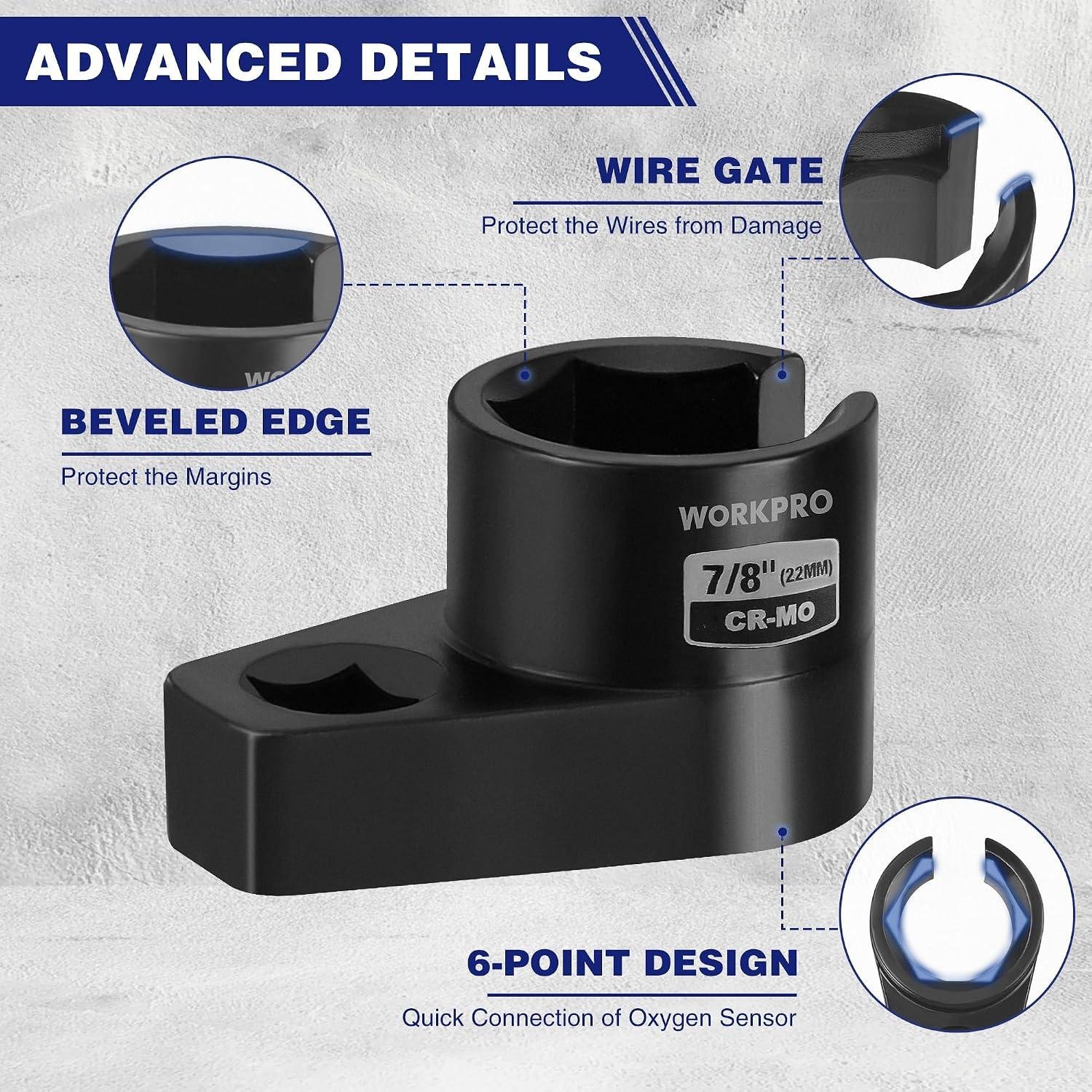
This socket suits jobs where you pull or install a 7/8″ (22mm) oxygen sensor with the wire still attached. The wire gate is 10.9mm wide, so the harness passes through and you don’t have to cut or unplug anything. The offset body helps where a straight socket won’t sit.
- Routine O2 sensor swaps on vehicles that use a 22mm sensor.
- Tight spots where the offset gives you room to swing a 3/8″ ratchet or breaker bar.
- Pros and DIYers who change sensors now and then and want a low cost, single purpose tool.
- Light to moderate stuck sensors, with a hose clamp around the slotted section to keep it from spreading.
I would not lean on it for badly seized sensors. Some reviewers report it fitting loose on 22mm sensorsand a few say the socket flexed or broke under load. A slotted socket can open up when you push itand a loose fit rounds the hex. Soak a rusted sensor first and use steady pressure. Also remember an offset tool changes the effective torque, so adjust your torque spec when you install the new sensor.
Pros & Cons
Pros and Cons
| Pros | Cons |
|---|---|
| Offset design reaches sensors in tight spots. | Several reviewers say it fits loose on 22mm sensors. |
| 0.43 inch wire gate lets you work with the harness connected. | Some reviewers report the socket breaking or flexing on stuck sensors. |
| Heat-treated alloy steel with phosphating for rust resistance. | Seized sensors may need a hose clamp to keep the socket from spreading. |
| Standard 6-point 22mm socket on a 3/8 inch drive. | Offset shape means you must adjust torque spec when installing. |
| Reviewers call it good value and easy to use. | Only 22mm, so other sensor sizes need a different socket. |
Skip it if: you pull seized sensors daily and need a socket with a proven tight fitor you work on sensors that are not 22mm.
Frequently Asked Questions
What size is the WORKPRO O2 oxygen sensor socket and what drive does it use?
It is a 7/8 inch (22mm) socket with a 3/8 inch square drive. The square hole is 10mm, so it fits a 3/8 inch drive ratchet or breaker bar. It has a standard 6-point shape and an offset design. The description says it fits most oxygen sensors, so confirm your sensor’s hex size first.
Does the WORKPRO 22mm oxygen sensor socket have a wire gate?
Yes, it has a wire gate that is 0.43 inch (10.9mm) wide. That gap lets you pass the sensor wire through the socket. The description says this allows removal while the wire harness stays connected. That means you can work the sensor out without disconnecting anything just to get the socket on.
Is the WORKPRO O2 sensor socket strong enough for a stuck sensor?
It is made from heat-treated alloy steel, but reviews on stuck sensors are mixed. Some reviewers say it worked well. Others report the socket flexed, broke or could not loosen a sensor. A rusted sensor is hard on any tool in this class. Soak seized threads first and use steady pressure, not sudden jerks.
Why do some reviews say the WORKPRO O2 sensor socket is loose?
Several reviewers say it fits loose on 22mm sensors. One reviewer warns that poor fitment can damage a sensor instead of removing it. A few reviewers mention putting a hose clamp around the socket to keep it from spreading. Check the fit on your sensor before you put real force on it.
Does the WORKPRO 22mm O2 sensor socket come with a warranty?
The product description does not give a warranty length, so check the listing or WORKPRO directly. Do not assume any coverage. Also confirm exactly what ships with it, since reviews mention a set in a case while this listing names a single 22mm socket. Match the listing to your sensor size before ordering.
Final Verdict
My bottom line: this is a sensible, low cost O2 sensor socket for occasional work. It is a 6-point, 22mm (7/8″) offset socket on a 3/8″ drive, with a 10.9mm wire gate so you can remove a sensor with the harness still connected. Of the 27 reviewers who mention value, 25 are positive. All 11 who mention utility are positive. The listing says heat-treated alloy steel, which is what you want in this class.
It fits the serious DIYer and the homeowner doing a sensor swap or two. A working pro should be cautious. Some reviewers report a loose fit on 22mm sensors. Others say it flexed or broke on a stuck sensor. Of 8 who mention sensor removal, 5 are negative. On a rusted, seized sensor, a loose fit rounds the hex fast. If you wrench daily, look at a name brand socket. For occasional jobs, it is fair value.