The DEWALT 20V MAX XR Cordless Polisher, model DCM849B, is a 7-inch rotary polisher sold as a bare tool. It suits anyone polishing cars, headlights, windshields or fiberglass who already runs DEWALT 20V MAX batteries. For those users, it looks like a sensible way to go cordless.
The brushless motor is made for efficient performance and runtime. No-load speed is 800 to 2200 RPM with variable speed on the trigger and dialand that control matters on a rotary because a fast pad can burn finish. You can hold it by the front grip or side handle.
Quick verdict: A sensible cordless rotary for 20V MAX owners who polish more than just paint.
- Best for: Polishing cars, headlights, glass and fiberglass with batteries already on hand.
- Skip it if: You need a battery and charger included or want a beginner friendly tool.
- Key spec: 800 to 2200 RPM no-load speed with trigger and dial control.
DEWALT DCM849B Specs and What Is in the Box
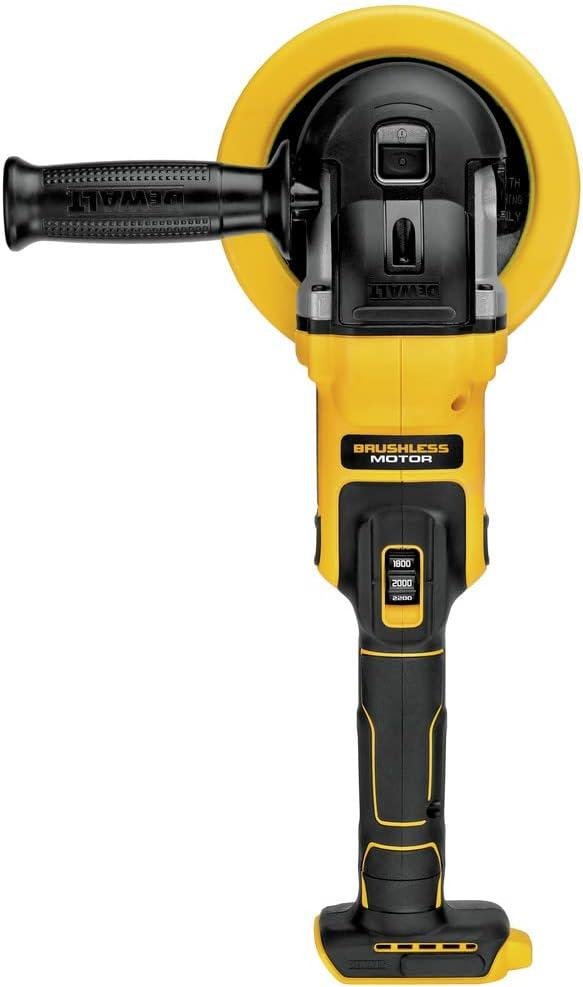
The DCM849B is sold tool only, so the battery and charger are not in the box. What the description confirms is the polisher and a 7-inch (180 mm) backing plate, which DEWALT recommends for most applications. If you already run 20V MAX batteries, you are covered. If not, add a battery and charger to your cost before you buy.
- Type: 20V MAX XR rotary polisher
- Motor: brushless
- No-load speed: 800-2200 RPM
- Speed control: variable-speed trigger plus a dial
- Handling: front grip or side handle, with a rubber gear case overmold
The speed range is the part that matters on the job. Cars, headlights, windshields, fiberglass, gelcoat and glass all need different speedsand the dial plus trigger lets you set the pace instead of running wide open. A brushless motor also removes carbon brushes, which are a common wear item on tools in this class.
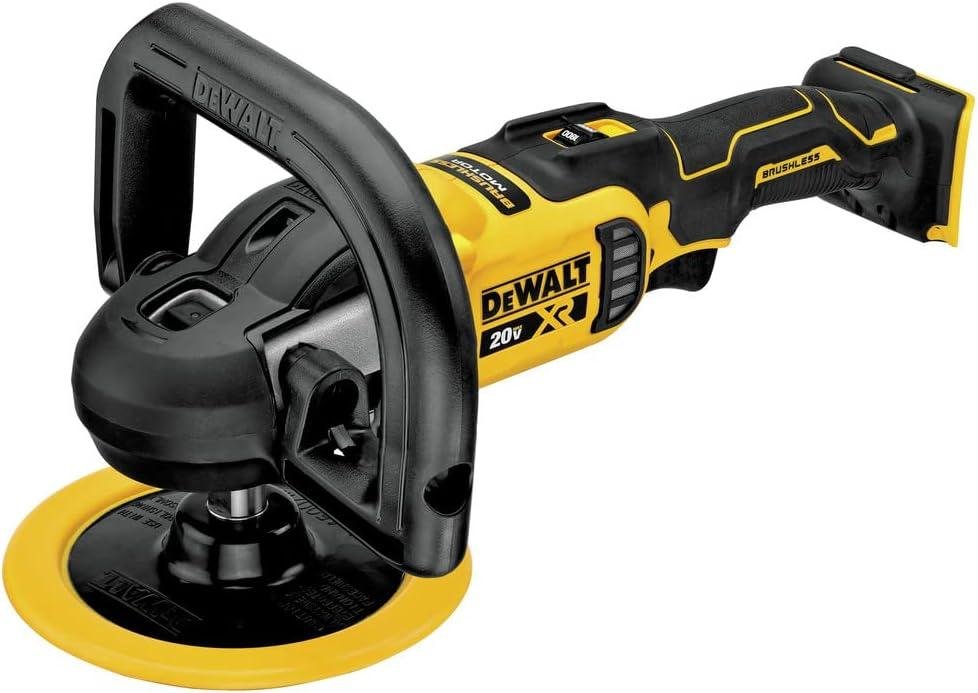
The rubber overmold on the gear case is meant to reduce surface imperfections and give you a better gripping surface. Two hand positions help too, since you can hold the front grip or use a side handle. Check that the side handle is in the box when it arrives, because the description does not list it as included.
Variable Speed Performance on the DCM849B Rotary Polisher
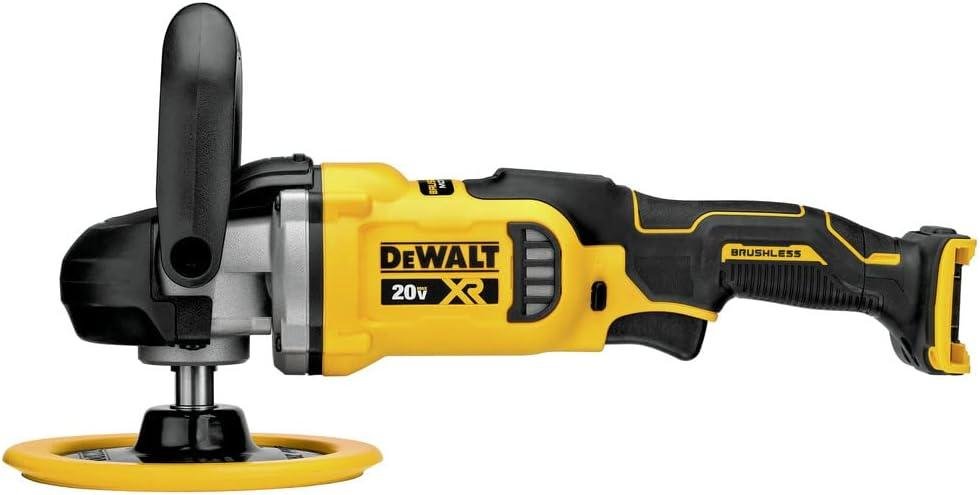
The speed range is the main thing on this polisher: 800 to 2200 RPM at no load. That is a wide spread for a rotary. Low speed suits spreading product and working near edges. High speed is for cutting when the surface calls for it.
Control comes from two places. The trigger gives you speed on demand and the dial sets the working range. That pairing matters on a rotary, because a pad running too fast on a curved panel or thin finish can do damage in a hurry. Start low on any new surface and work up.
- Listed uses: cars, headlights, windshields, fiber glass, gelcoat and glass polishing.
- Why that matters: each of those materials handles heat and pad speed differently, so one fixed speed would not cover them.
- Rated speed: the 800 to 2200 RPM figure is no-load. Pressing hard on the pad will pull the speed down.
The 7-inch backing plate is included and is the recommended size for most applications. The brushless motor is described as built for efficient performance and runtime. You can hold the tool by the front grip or a side handle, which helps keep it steady when you are running slow.
Build Quality and Jobsite Durability for Daily Use
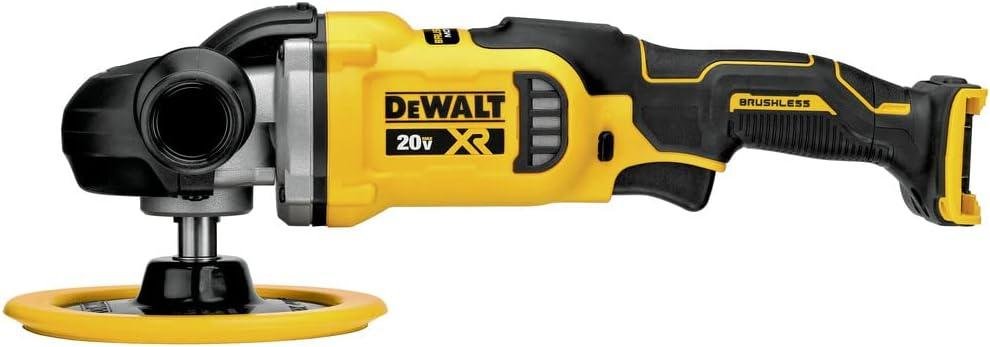
The most useful durability feature here is the rubber overmold on the gear case. The description says it improves the gripping surface and reduces surface imperfections. On a polisher, the gear case is the part that gets set down, bumped and leaned on, so protection there counts for more than a good paint job on the housing.
The motor is brushless. On tools in this class, that removes brushes as a wear itemand brushes are a common thing to fail on a rotary tool that runs hard. The description gives no duty rating or ingress protection rating, so I wouldn’t assume this is built for abuse. Treat it like a finishing tool and keep it clean and dry between uses.
Daily use is also hard on the controls and handle mounts. You can run it from the front grip or the side handle, so those threads and mounts take real load. Here is what I would check when it comes out of the box:
- The overmold sits tight on the gear case with no gaps or lifted edges.
- The side handle threads seat firmly and don’t wobble under pressure.
- The trigger and speed dial move cleanly across the 800 to 2200 RPM range.
- The included 7-inch backing plate seats flat and spins true.
This is sold as tool only, so batteries and charger are separate and are not part of this build assessment.
Which 20V MAX Batteries Work With This Tool-Only Polisher?
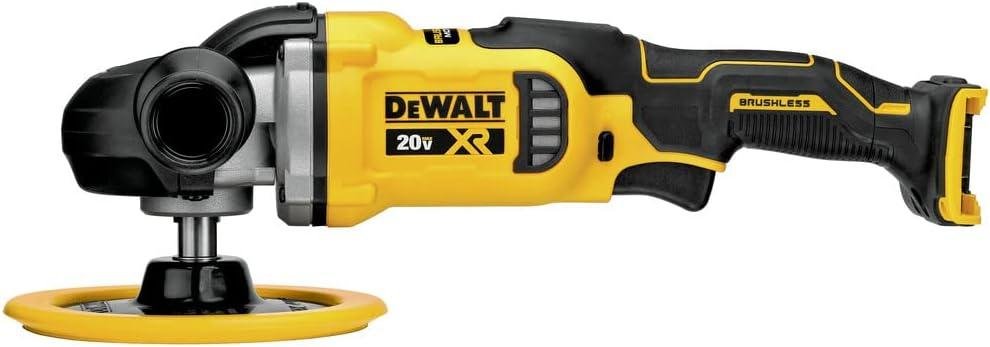
This polisher is sold tool only, so it ships without a battery or charger. The listing says it runs on DEWALT’s 20V MAX platformand that is the only battery detail it gives. It does not name specific pack models or amp-hour ratings, so I won’t guess at them.
Here is what to check on any pack you already own:
- The label should say 20V MAX, matching the tool’s name.
- The pack should slide in and lock in the battery port without forcing it.
- If the pack is old or unusual, confirm compatibility with DEWALT before you buy anything.
- Match pack size to the job. A larger capacity pack generally runs longer but adds weight to a tool you hold out in front of you.
Polishing is steady, continuous work, not short bursts. The brushless motor is made for efficient performance and runtime, which helps whatever pack you use. Working at the upper end of the 800 to 2200 RPM range will likely drain a pack faster than working low, so plan your pack count around the size of the job. If you already have 20V MAX packs and a charger, tool only makes sense. If you don’t, budget for both separately.
How Does a Cordless Rotary Polisher Compare to a Corded One?
The main tradeoff is freedom versus unlimited run time. A corded polisher keeps going as long as it has an outlet and a decent extension cord. This DEWALT DCM849B runs on 20V MAX batteriesand it is sold tool only, so you need to have a battery and charger on hand already.
What you gain is no cord dragging across a panel. A loose cord can snag mid pass or scuff paintand that is a real risk on a car. It also helps on fiberglass or gelcoat work where the nearest outlet is far off. The brushless motor is described as made for efficient performance and runtime, but no run time figure is given, so I won’t guess. On bigger jobs I would plan on a spare battery.
The working features are what you would want from a corded rotary too:
- No-load speed of 800 to 2200 RPM, set with the variable-speed trigger and dial
- 7-inch backing plate included, recommended for most applications
- Rubber gear case overmold for a better gripping surface
- Front grip or side handle for holding it the way the job needs
Who Should Buy a 7-Inch Cordless Rotary Polisher?
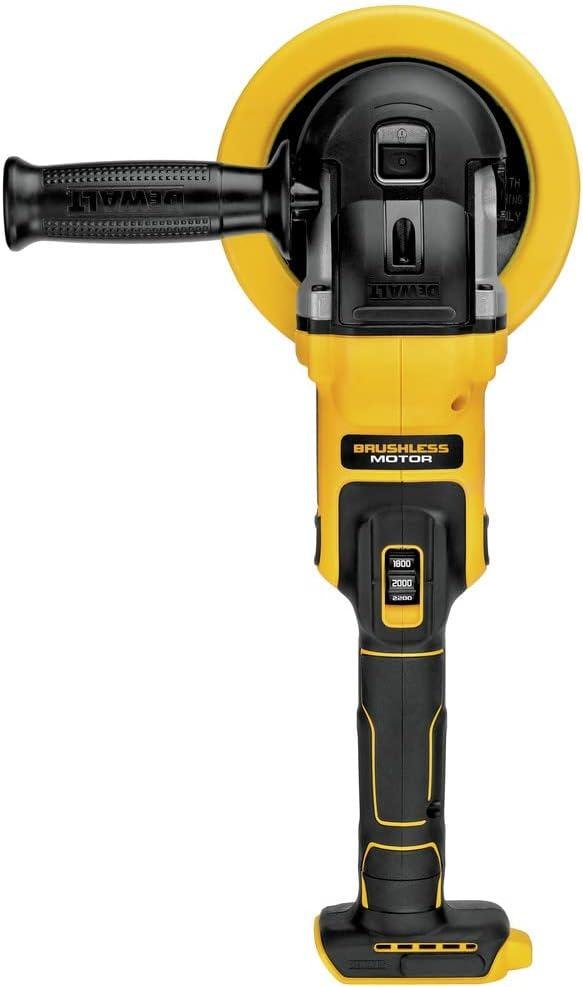
This tool is for people who already know how to run a rotary polisher. A rotary spins on one fixed axis, so it works fast but builds heat quickly if you sit in one spot. The variable speed trigger and dial, with a no-load range of 800 to 2200 RPM, let you start slow and control each pass. These are the buyers it fits best:
- Detailers and body shop techs polishing cars who want the included 7-inch backing plate, which is recommended for most applications.
- Marine and RV owners working on fiberglass and gelcoat.
- Anyone restoring headlights or windshieldsor doing glass polishing.
- Pros already running 20V MAX batteries, since this one is sold tool only and you supply the battery and charger.
The brushless motor is built for efficient performance and runtime, which matters when you are working a big panel or a full hull section. The rubber gear case overmold gives you a better gripping surfaceand you can hold the tool by the front grip or a side handle. If you have never run a rotary before, I would practice on scrap before putting it near paint you care about.
Pros & Cons
| Pros | Cons |
|---|---|
| Brushless motor is built for efficient performance and runtime. | Sold as tool only, so battery and charger cost extra. |
| Speed range of 800 to 2200 RPM covers cars, headlights, glass and gelcoat. | Runs on 20V MAX batteries, which ties you to the DEWALT platform. |
| Variable speed on both trigger and dial gives control through each step. | Rotary action takes more technique than a forgiving random orbital polisher. |
| Rubber gear case overmold improves grip and reduces surface imperfections. | No weight or runtime figures listed, so you can’t judge fatigue or battery needs. |
| Front grip or side handle gives you two ways to hold it. | Only a 7-inch backing plate is mentioned, so other sizes are not covered. |
Skip it if: you want a ready-to-run kit with a battery and charger, you have no DEWALT 20V MAX batteries on the shelf or you are new to polishing and want a more forgiving dual action machine.
Frequently Asked Questions
Does the DEWALT DCM849B polisher come with a battery?
No, the DCM849B is sold as a tool only, so the battery and charger are not included. Plan to buy them separately if you do not already own compatible ones. Check the listing before you order to confirm exactly what ships in the box.
Which batteries fit the DEWALT 20V MAX XR DCM849B?
The DCM849B is part of the DEWALT 20V MAX line, so you need a 20V MAX battery for it. The description does not list specific pack models or amp hour sizes. Check the listing or DEWALT directly for compatible batteries before you buy, so you are not guessing at the fit.
Is the DEWALT DCM849B polisher brushless?
Yes, the DCM849B uses a brushless motor. DEWALT says it is made for efficient performance and runtime. On a cordless tool, brushless means no carbon brushes to wear out, which is one less common failure point. Runtime depends on the battery you pair with it. The description gives no run time figures.
Can the DEWALT 20V MAX XR DCM849B polish headlights and glass?
Yes, DEWALT lists headlights, windshields and glass polishing as uses for the DCM849B. It also lists cars, fiber glass and gelcoat. The 7-inch backing plate is included and recommended for most applications. Pads and compound are not mentioned in the description, so check the listing for what comes in the box.
What speed does the DEWALT DCM849B polisher run at?
The DCM849B has a no-load speed of 800 to 2200 RPM. A variable-speed trigger and a dial let you control the speed through each step of the job. Lower speeds give you more control, which matters on a rotary polisher. You can hold it by the front grip or the side handle.
Final Verdict
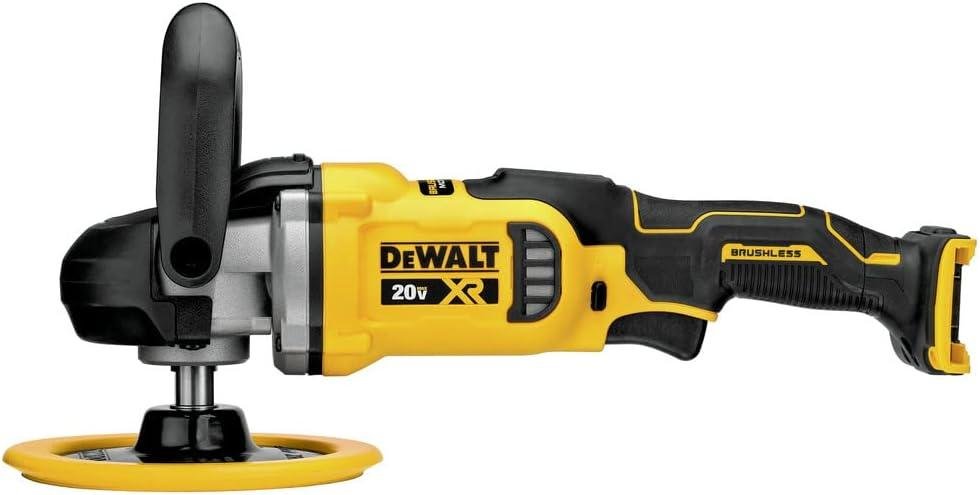
The bottom line: this is a cordless rotary polisher for working with a 7-inch backing plate without dragging a cord across paint or a boat deck. The 800-2200 RPM range, with speed set by both trigger and dial, gives you real control. On paper it suits cars, headlights, windshields, fiberglass and gelcoat. I have not tested it, so I can’t speak to runtime or how it holds up.
It fits a pro detailer, a fiberglass shop or a serious DIYer who already owns DEWALT 20V MAX batteries. It is tool only, so budget for a battery and charger if you have none. A homeowner who polishes a car only occasionally should look at something simpler, since a rotary takes a practiced hand and can burn paint. Anyone who wants a forgiving machine for swirl removal should look at a dual action polisher instead.