The Klein Tools 56335 is a 25-foot, 1/4-inch flat steel fish tape for short wire pulls in attics, down walls and through small branch circuits. It is built for electricians and low voltage installers on commercial, residential and VDV runs. For that kind of work, it looks like a solid, practical pick.
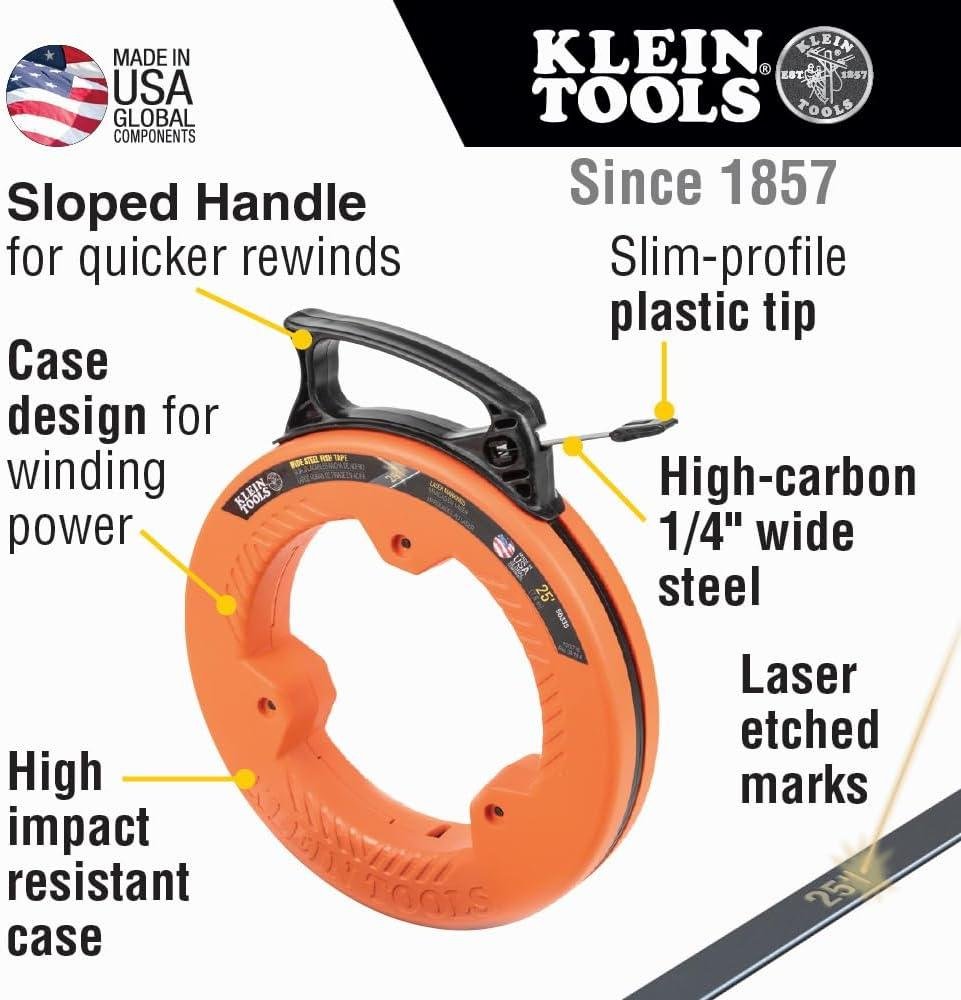
The high carbon spring steel is firm yet flexible, which is what you want when pushing through a cavity. Laser etched markings in 1-foot descending increments show how much tape is left to pay out. The housing is designed to cut payout effort and binding.
Quick verdict: A compact, short-run fish tape from a family-owned American brand.
- Best for: Short residential, commercial and VDV pulls in tight spaces.
- Skip it if: You need more than 25 feet of reach.
- Key spec: 1/4-inch high carbon spring steel with 1-foot descending markings.
Klein Tools 56335 Key Specs and What Comes in the Package
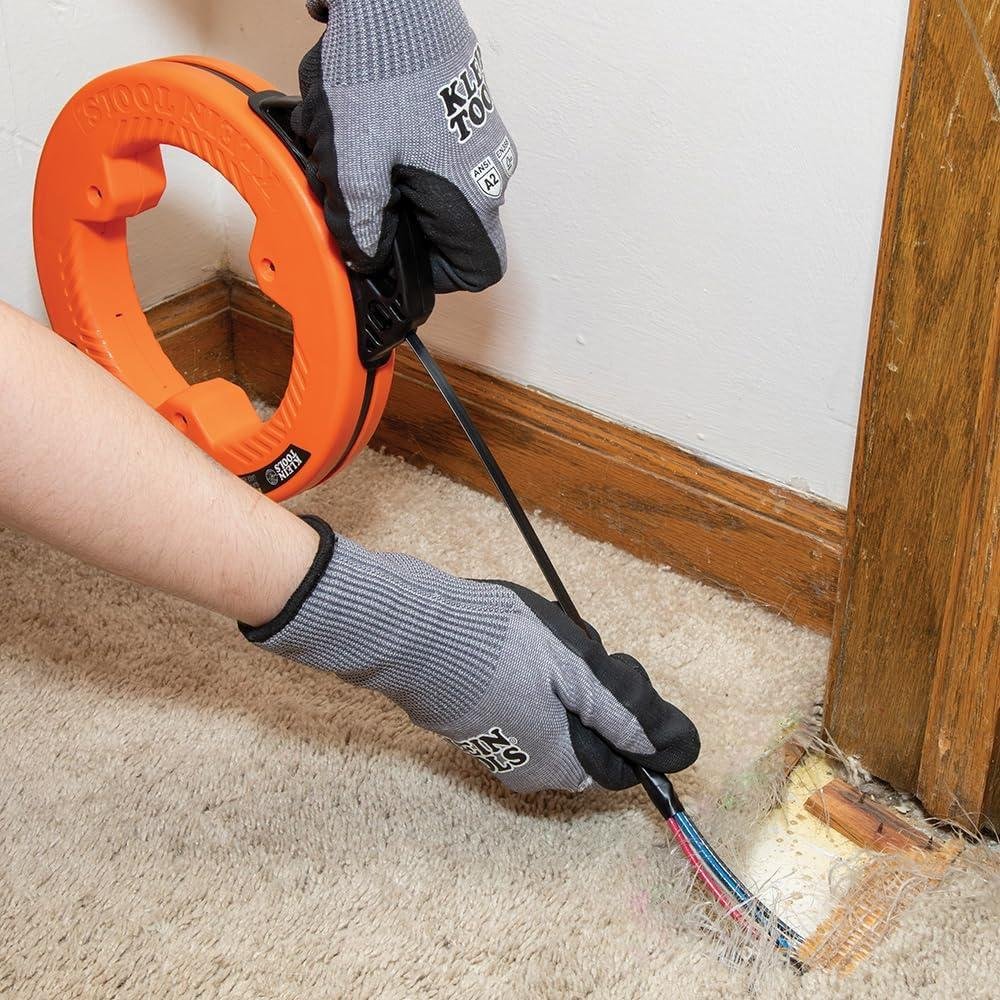
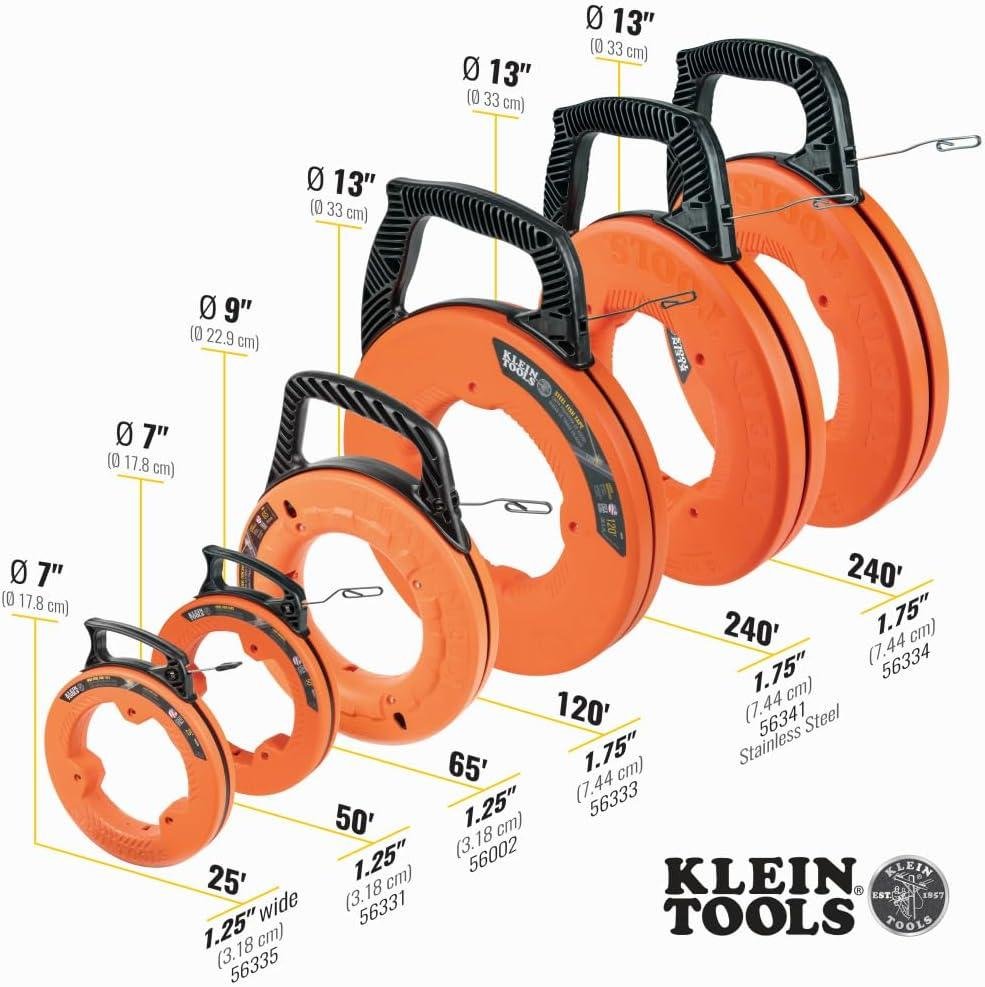
The spec that matters most is length. This is a 25-foot tape, so it fits short residential, light commercial and VDV runs, not long conduit pulls. If you regularly fish past that, you will want something longer.
| Length | 25 feet |
| Width | 1/4 inch, flat |
| Material | High carbon spring steel with protective coating |
| Markings | Laser etched, 1-foot descending increments |
| Tip | Slim-profile plastic |
| Case and handle | Designed for maximum impact resistance |
| Origin | Made in the US with global components |
The descending markings show how much tape is left to pay out. That helps when you are fishing blind through a wall or attic and need a rough idea of the run length. The coating is described as reducing non-contact moisture and humidity while keeping the steel dry to the touch. Rust and a grabby surface are what usually go bad first on steel tapes, so that is worth checking when you get one in hand.
The listing describes one tape in its housing. No extra accessories are mentioned, so don’t plan on any.
How Well Does the 56335 Push Through Long Conduit Runs?
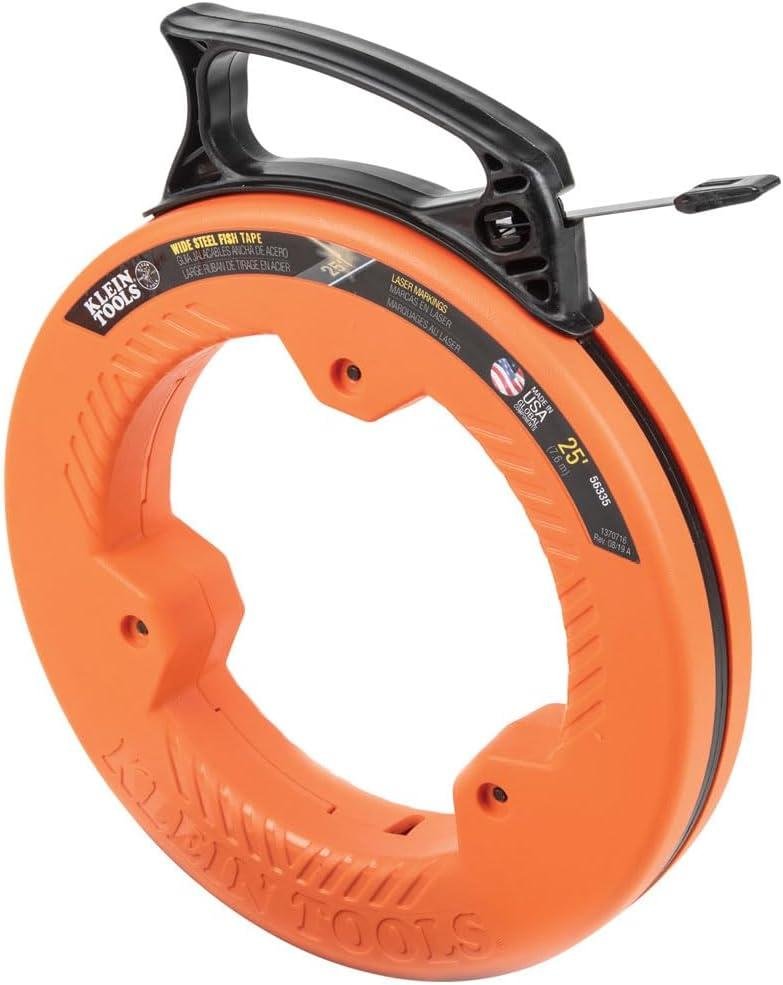
The 25-foot length tells you most of what you need to know. This tape is made for short commercial, residential and VDV runs, not long feeder conduit. If your run is close to 25 feet, you can run out of tape before you run out of conduit, so size the tool to the job.
Within that range, the spec is right for pushing. The 1/4-inch high carbon spring steel is described as firm yet flexible. Firm matters because a limp tape folds up on itself in a bend. Some flex matters because you have to get around turns in attics, down walls and through small branch circuits.
- Slim-profile plastic tip: meant to navigate easily and reduce catching as you push.
- Housing design: decreases payout effort and reduces binding, which helps when you are feeding tape out repeatedly.
- Laser etched markings: 1-foot descending increments show how much tape is left to pay out and help you measure the run.
That last point is useful on a push. If you can see you are near the end of the tape, you know to stop forcing it and pull from the other side instead.
Build Quality and Jobsite Durability of the Steel Tape
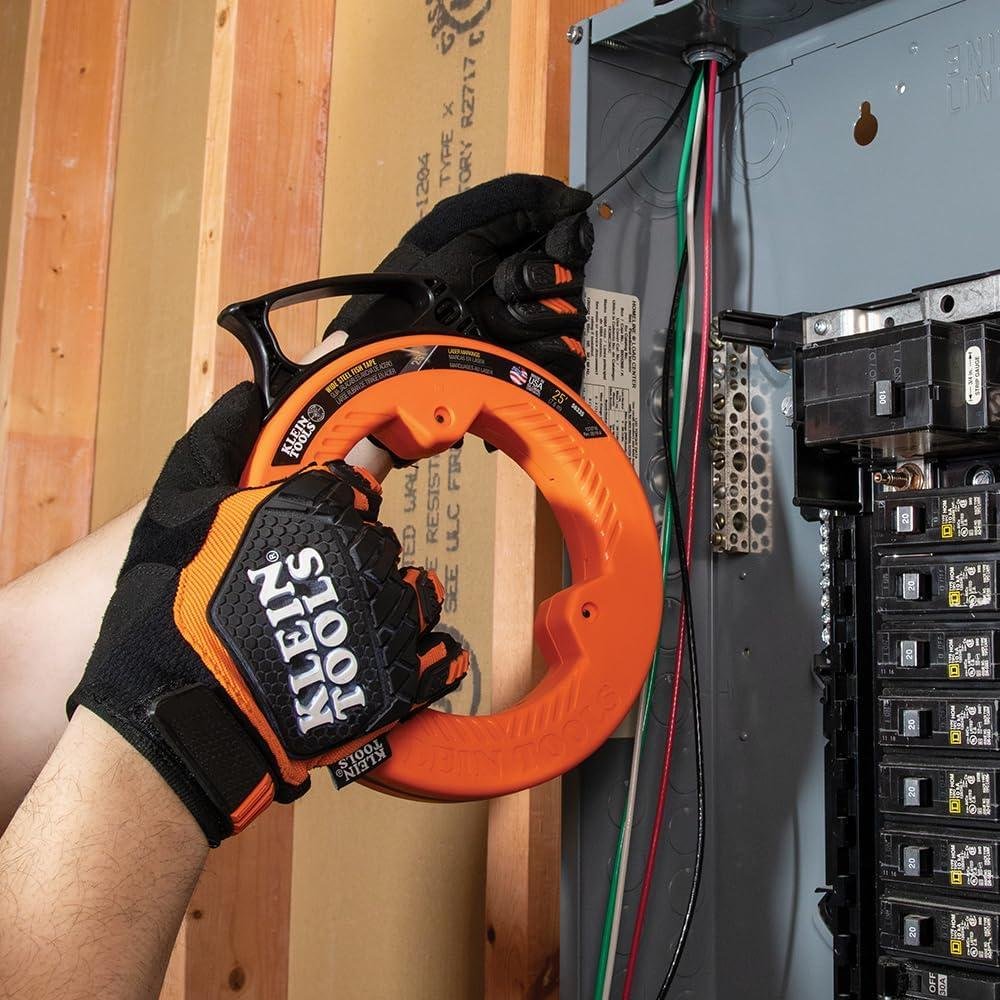
The steel is what matters most on a fish tapeand this one uses high carbon spring steel, 1/4 inch wide. That is the right material for the job. It needs to stay firm enough to push through a wall cavity or attic run and still flex enough to follow a bend. Klein also lists a protective coating that reduces non-contact moisture and humidity while keeping the steel dry to touch.
Coating matters because rust is a common way these tools go bad when they ride around in a bag or a truck. The case and handle are listed for maximum impact resistance, which counts for a lot since tools get dropped. A cracked housing is often what makes a tape bind on payoutand Klein says the housing is designed to cut payout effort and reduce binding.
- Steel: high carbon, 1/4 inch wide spring steel, firm yet flexible
- Finish: protective coating that keeps the steel dry to touch
- Tip: slim-profile plastic, made to reduce catching
- Case and handle: listed for maximum impact resistance
- Origin: Made in the US with Global Components
Which Conduit Sizes Work With a 1/4-Inch Steel Fish Tape?
Klein does not list a conduit size range for this tape, so I won’t guess at one. The description does tell you the intended use: short commercial, residential and VDV runs, plus attics, walls and small branch circuits. That points to small conduit and short pulls, not long feeders.
The 1/4-inch width is the spec that matters here. A flat steel tape this narrow is made for tight spacesand the slim-profile plastic tip is meant to reduce catching. The steel is described as firm yet flexible, which is what you want when pushing through a run with a few turns in it.
- Run length: You have 25 feet of tape. The etched 1-foot markings count down, so you can see how much is left to pay out.
- Bends: Flexible steel helps, but every bend adds drag. Count your bends before you commit.
- Existing fill: If the conduit already holds wire, a narrow tape can still hang up. Check what is in there first.
- Fittings: The plastic tip is built to catch less, but a rough fitting can still stop any tape.
Klein Tools 56335 vs Nylon Fish Tapes for Pulling Wire
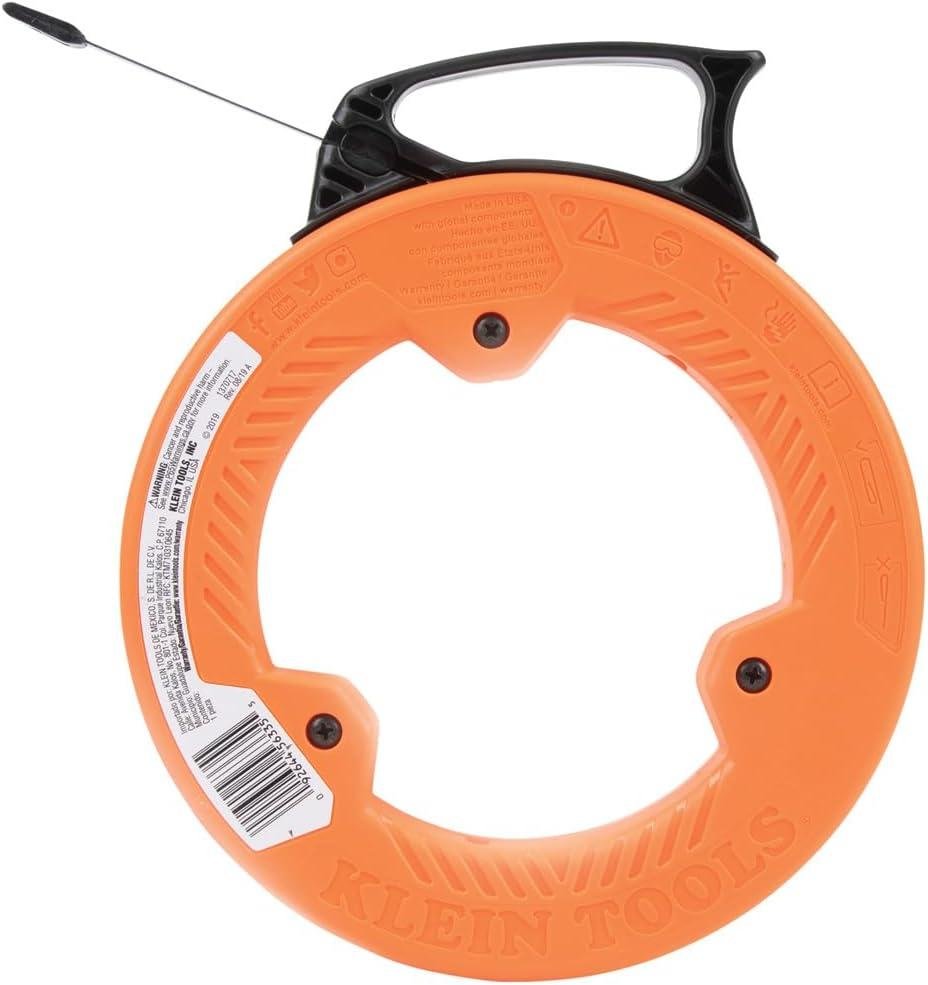
The main difference is stiffness. The Klein Tools 56335 is high carbon spring steel, 1/4 inch wideand the description calls it firm with the right amount of flex. That matters when you push through a wall cavity, an attic or a small branch circuit. Nylon tapes generally flex more, so they can lose push on a long or crowded run.
Steel conductsand that is the real tradeoff. If the tape could touch energized parts, nylon is the safer choice. With steel, I shut the power off and keep it off before the tape goes in. The coating on this tape is described as reducing moisture and humidity while keeping the steel dry to touch. That is not a claim of electrical insulation, so I would not count on it for protection.
Where the steel tape fits best:
- 25 feet suits the short commercial, residential and VDV runs the description names.
- Laser etched markings count down in 1-foot increments, so you can measure a conduit run and see how much tape is left to pay out.
- The slim plastic tip is meant to reduce catching.
- The housing is designed to lower payout effort and binding.
Which Electricians and Jobs Suit a 25-Foot Fish Tape Best?
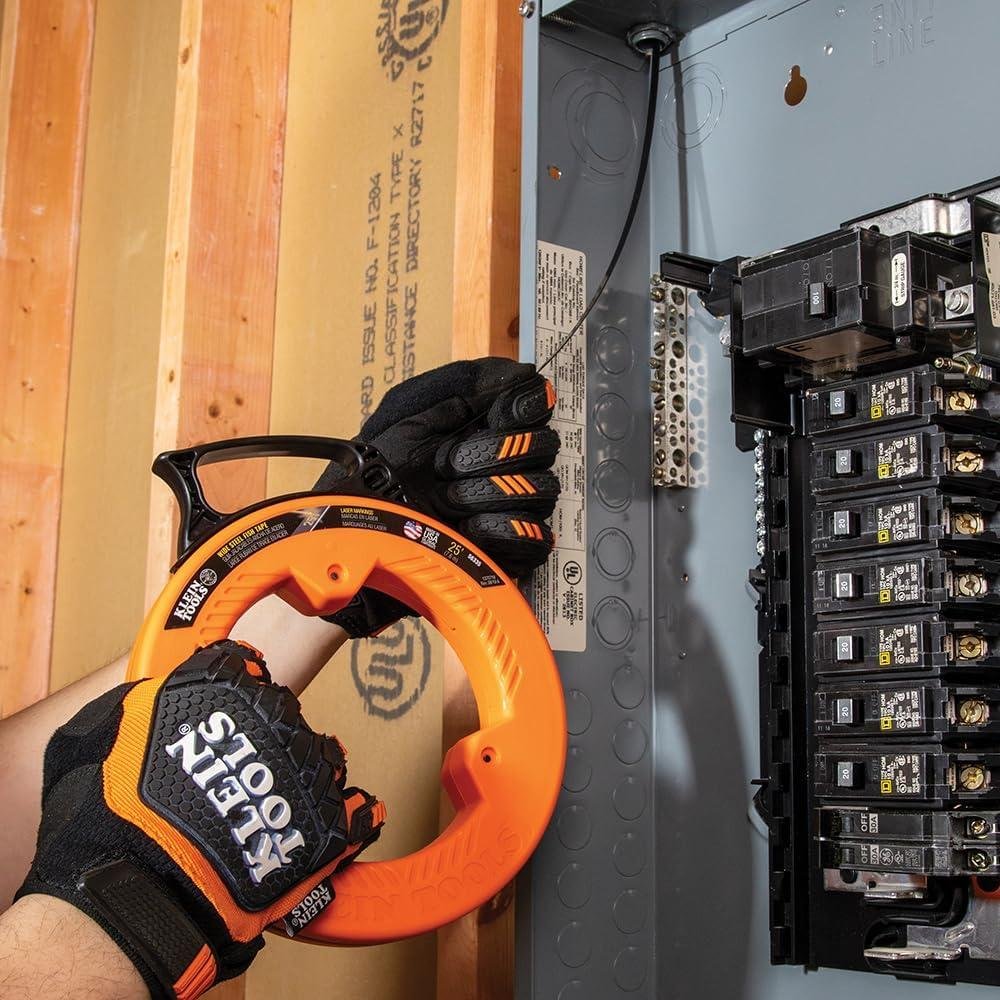
This tape suits short runs. The description points to short commercial, residential and VDV workand 25 feet covers that: attics, down walls and small branch circuits. If most of your pulls go from a device box to a nearby cavity or across a single room, you won’t be hauling extra tape you don’t need.
The 1/4-inch high carbon spring steel is described as firm yet flexible. That balance matters when you push through a wall and need the tape to hold a line but still steer around obstructions. The slim plastic tip is meant to reduce catching. The laser etched markings count down in 1-foot increments, so you can gauge a conduit run and see how much tape is left to pay out.
- Residential electricians pulling wire through walls and attics
- VDV installers running data and video cable on short routes
- Techs working small branch circuits
- Anyone who wants a compact tape that fits an everyday tool bag
The limit is the length. For long conduit runs or big commercial pulls, 25 feet will run out fastand you should step up to a longer tape.
Pros & Cons
Pros and Cons
| Pros | Cons |
|---|---|
| High carbon steel is firm with enough flex for attics and walls. | Only 25 feet, so long conduit runs need a longer tape. |
| Laser etched one-foot markings show run length and tape left to pay out. | Steel conducts electricity, so it is a poor choice near energized circuits. |
| Housing design decreases payout effort and reduces binding. | Coating only reduces non-contact moisture. Wet jobs still call for wiping it down. |
| Case and handle offer maximum impact resistance in a compact tool bag size. | Made in the US with global components, so not fully domestic. |
Skip it if: you pull wire on long commercial runs past 25 feet or work around energized circuits. Buy a longer tape or a nonconductive option instead.
Frequently Asked Questions
What is the Klein Tools 56335 fish tape good for?
Yes, the Klein Tools 56335 is built for short wire runs in commercial, residential and VDV work. The description points to attics, down walls and small branch circuits. At 25 feet, it is a short-run tool. For long conduit runs or big pulls, I would look at a longer tape.
What is the Klein Tools 56335 fish tape made of?
It is made of high carbon, 1/4-inch wide spring steel with a protective coating. Klein describes it as firm yet flexible, with the right amount of flex for pulling wire in attics, down walls or through small branch circuits. On any fish tape, that balance of stiffness and flex is what you want to check first.
Does the Klein Tools 56335 fish tape have length markings?
Yes, it has laser etched markings in 1-foot (0.3 m) descending increments. Klein says they help you measure the length of conduit runs and see how much tape is left to pay out. On a blind pull inside a wall, knowing how far you have gone saves guessing.
Is the Klein Tools 56335 fish tape made in the USA?
It is sold as made in the US with global components. So it is not built entirely from US parts. Klein is a family-owned American company that has made hand tools since 1857. If country of origin matters on your job or bid, confirm the details on the listing before you buy.
Does the Klein Tools 56335 fish tape come with a warranty?
The description does not state a warranty length, so check the listing or contact Klein Tools before you buy. The description does say the case and handle offer maximum impact resistanceand that the coating reduces non-contact moisture and humidity. Those details help, but they are not a substitute for the actual warranty terms.
Final Verdict
The Klein 56335 is a short run fish tapeand that is how I would judge it. The description points to firm yet flexible high carbon steel, a slim plastic tip that should reduce catching and a housing built to cut payout effort. The laser etched markings in 1-foot increments are useful for knowing how much tape is left. I have not used this one, so I can’t speak to how it holds up over time. Klein has been making hand tools since 1857.
It fits a homeowner, a serious DIYer or a pro who needs a compact tape for attics, walls and small branch circuits. At 25 feet, it is a narrow tool. If you pull long runs or work in big commercial spaces, look at something longer. Also keep power off, since this is a steel tape.