The Klein Tools DK16 is a 5-1/2-inch double-edged duct knife built for HVAC installers who cut flexible duct, duct board and insulation. It looks like a solid pick for anyone who needs one knife for smooth and serrated cuts.
The stainless steel blade has a smooth edge and a serrated edge, so you pick the cut that fits the material. A reinforced steel tang matters because that joint is where knives in this class tend to loosen or fail. The stainless pommel is made for strikingand the impact-resistant sheath with a belt clip keeps the blade covered and within reach.
Quick verdict: A purpose-built duct knife with the right features for duct work and insulationand a sensible pick for daily HVAC cutting.
- Best for: Cutting flexible duct, duct board and insulation.
- Skip it if: You need a general utility knife for materials beyond duct work.
- Key spec: Double-edged stainless steel blade with smooth and serrated cuts.
Klein Tools DK16 Key Specs and What Comes in the Box
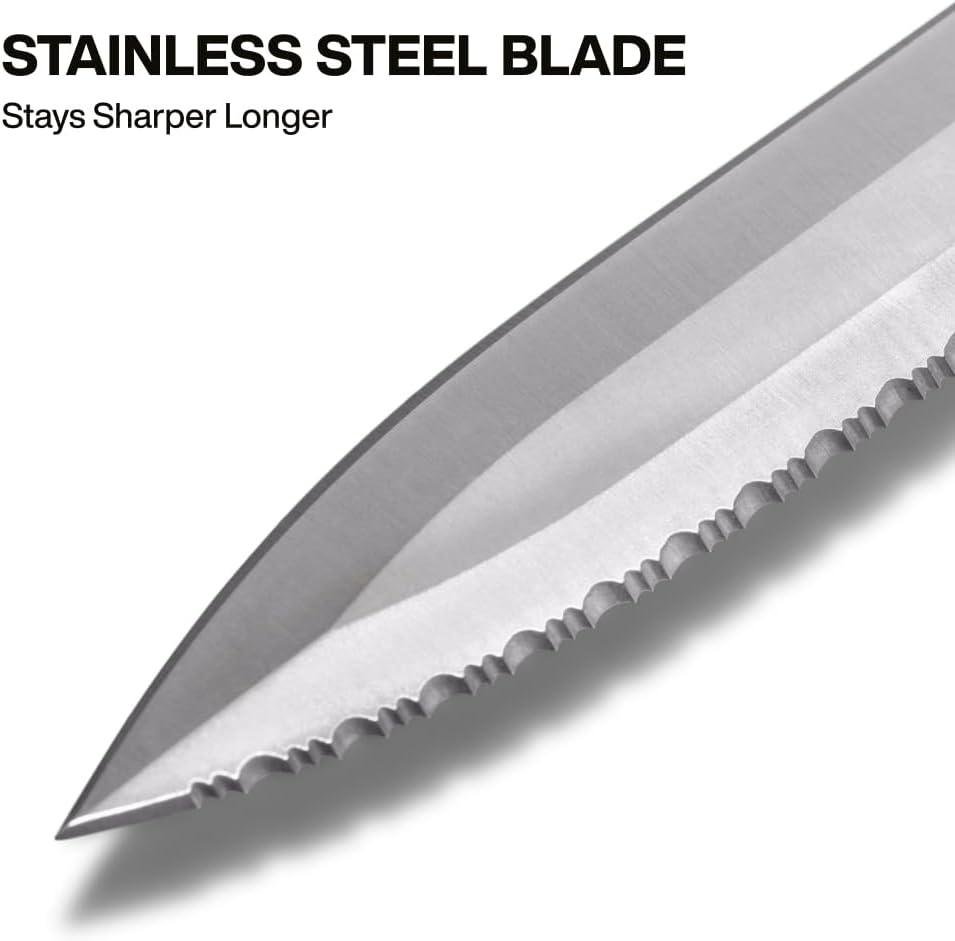
The spec that matters most is the blade. It is a 5-1/2-inch double-edged stainless steel blade made for smooth and serrated cuts on flexible duct, duct board and insulation. Having both cutting styles on one blade means fewer tool swaps when you move from board to flex.
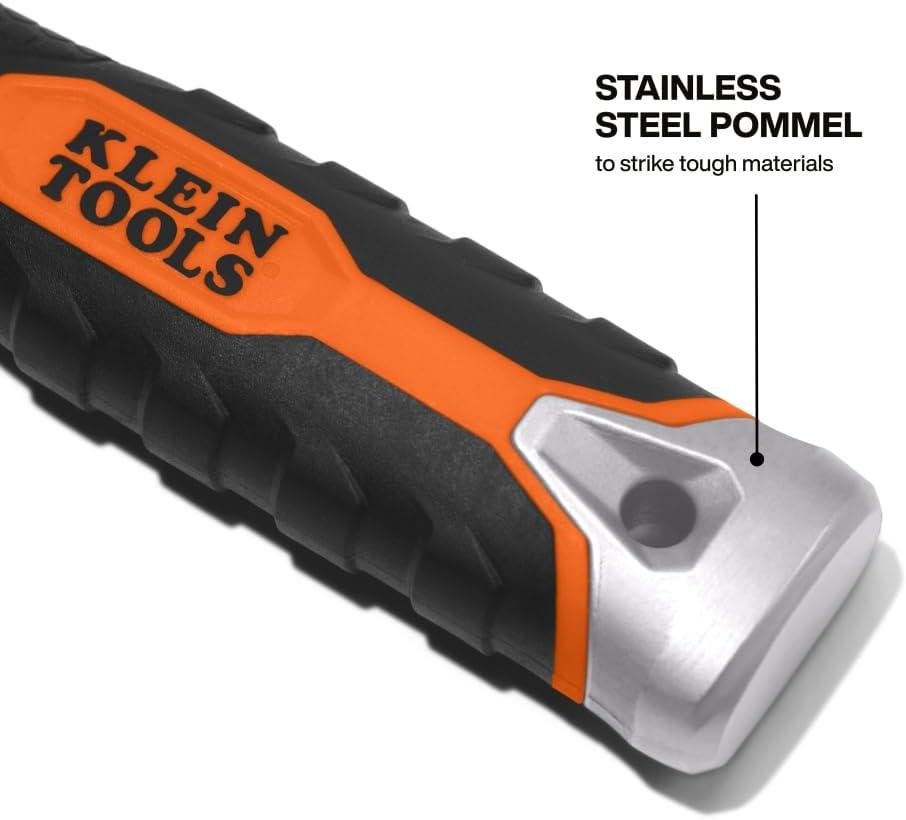
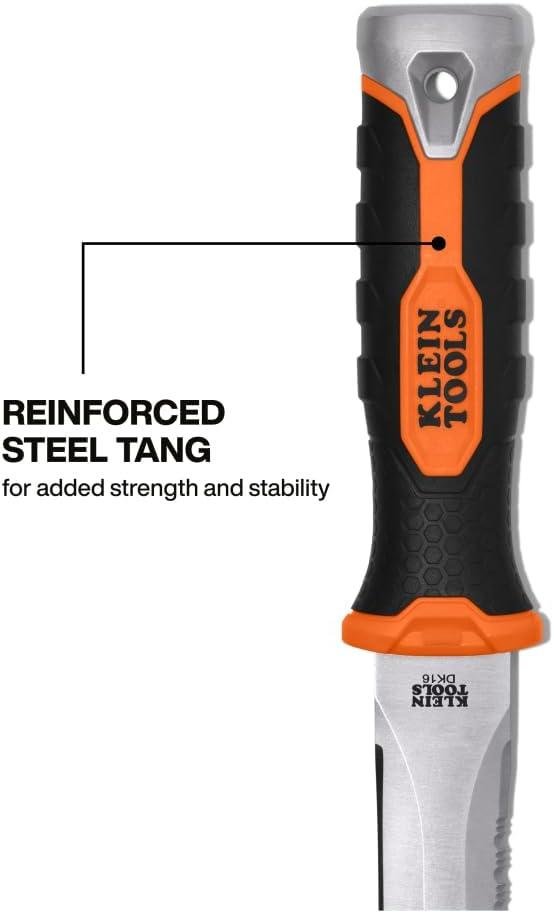
Behind the blade is a reinforced steel tang. On knives in this class, the tang is where cheap ones loosen or fail when you lean into a heavy cut. The handle is ambidextrous and dual-materialand it has a stainless steel pommel meant for striking tough materials with control.
Here is what the product description says you get:
- The double-edged duct knife with the 5-1/2-inch stainless steel blade
- An impact-resistant sheath for storage and blade protection
- A sheath belt clip for carrying the knife on your belt
The description does not list any spare blades or extras, so I would not count on them. The sheath matters more than it looks, since a serrated edge loose in a tool bag dulls and cuts things it should not.
How Well Does the Serrated Double Edge Cut Duct Board?
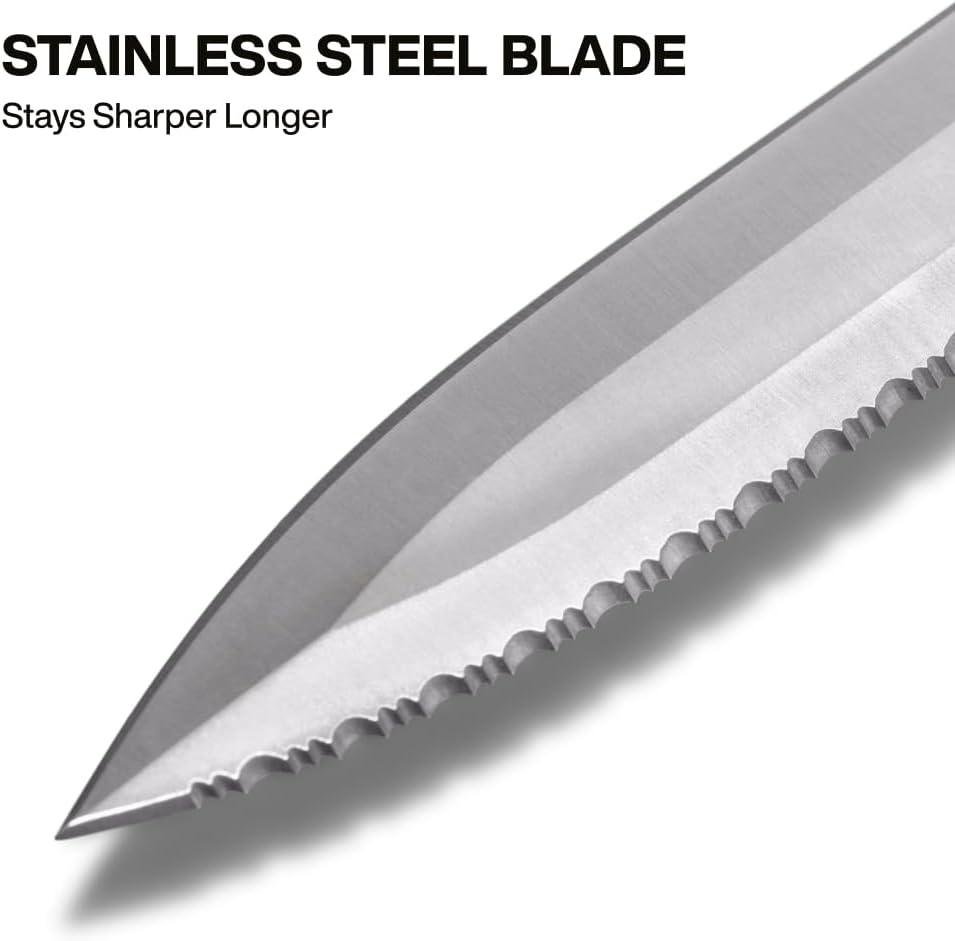
The main draw is the double edge. One side is smooth and the other is serratedand the stainless steel blade is made for flexible duct, duct board and insulation. That covers the common materials in one knife, so you are not swapping tools between a board cut and an insulation cut.
On duct board, what matters is how the edge handles the facing and the fibrous core. These are general traits of each edge type, not results from this knife:
- Smooth edge: usually gives the cleanest line when you cut along a straightedge.
- Serrated edge: tends to saw through fibrous material better, which suits insulation and flex duct.
- Reinforced steel tang: added strength and stability for heavy-duty cutsand that is where cheap knives flex and wander.
- Stainless steel pommel: meant for striking tough materials with control.
On a board job, check that the blade stays straight under pressure and that the edge you pick matches the material. Fiber dulls any edge over time, so expect to judge sharpness by how much force a cut takes. If you have to push hard or the cut line drifts, the edge is done.
Build Quality and Jobsite Durability of the 5-1/2-Inch Blade
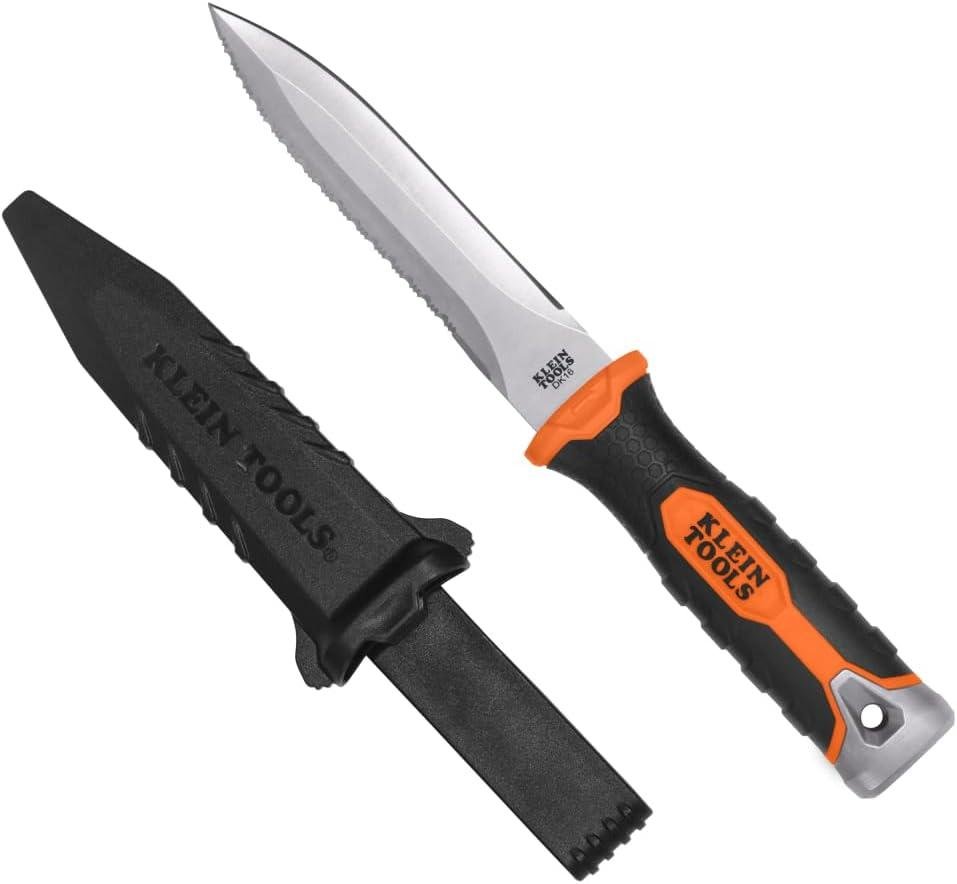
The first thing I check on any duct knife is the tang, because that is where cheap ones give out. Twisting and prying loosen the blade at the handle long before the edge is worn. The KLEIN TOOLS DK16 Double-Edged Duct Knife lists a reinforced steel tang, which puts the strength where heavy-duty cutting actually stresses the tool.
- Blade: premium stainless steel, double-edged with smooth and serrated sides.
- Tang: reinforced steel for added strength and stability.
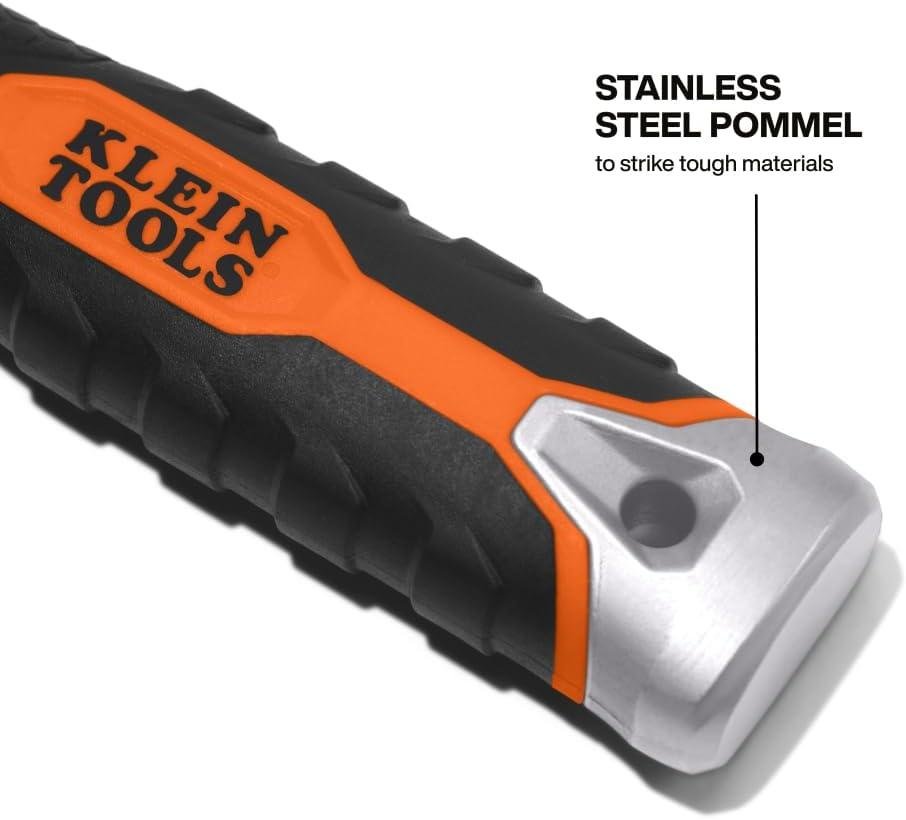
- Pommel: reinforced stainless steel, meant for striking tough materials.
- Sheath: impact-resistant, with a belt clip.
The steel pommel is a practical detail. Most of us end up tapping a knife handle on something at some pointand a plastic end tends to crack. A metal pommel is built for that kind of use. The dual-material handle is ambidextrous, so grip wear should not depend on which hand you favor.
The sheath matters more than people think. A knife rides on the belt, gets dropped in a tool bag and bangs around ladders and roof hatches. An impact-resistant sheath protects the blade and your legand the belt clip keeps it from living loose in a bucket.
Does the Serrated Edge Need Resharpening or Replacement?
Plan on resharpening this knife, not replacing the blade. The description lists no replacement blades and no swappable blade system, so treat the blade as a permanent part of the tool. The mention of convenient blade removal is tied to the sheathand I would not read it as a blade change feature.
The blade is stainless steel with one smooth edge and one serrated edge, so each side needs different care. The smooth side can be touched up on a fine stone like any plain knife. The serrated side takes more patience. You work each scallop with a tapered rodand you do it from the beveled side only. Flat stoning will wear the points off.
Here is how I would decide between touching it up and retiring it:
- Drag or tearing on duct board and insulation facing usually means the edge needs work, not that the tool is finished.
- Rounded or flattened serration points are the cue to sharpen the scallops.
- Chips, bends or a loose feel at the handle mean replacement, since a damaged blade is not worth fixing.
- If the smooth edge is sharp but the serrated side is shot, use the smooth side for the cut and save the sharpening for a slow day.
How Does the DK16 Compare to a Standard Utility Knife?
The biggest difference is the blade. A standard utility knife is a general-purpose tool with one straight edge, while the DK16 has a double-edged stainless steel blade with both a smooth edge and a serrated edge. That lets you match the edge to the material, which matters when you are cutting flexible duct, duct board and insulation.
Build is the second gap. On general-purpose knives, the weak points are usually the handle and the blade seat when you lean into a heavy cut. The DK16 uses a reinforced steel tang for added strength and stability on heavy-duty cuts. The handle also has a stainless steel pommel meant for striking tough materialsand the dual-material handle is ambidextrous, so it works in either hand.
Carry is the third difference. Many utility knives end up loose in a pouch or a pocket. This one comes with an impact-resistant sheath that protects the blade and allows quick removal, plus a belt clip for fast access. If most of your cutting is duct and insulation, that setup fits the job better than a general-purpose knife.
Which Jobs and Users Suit the Klein Tools Duct Knife Best?
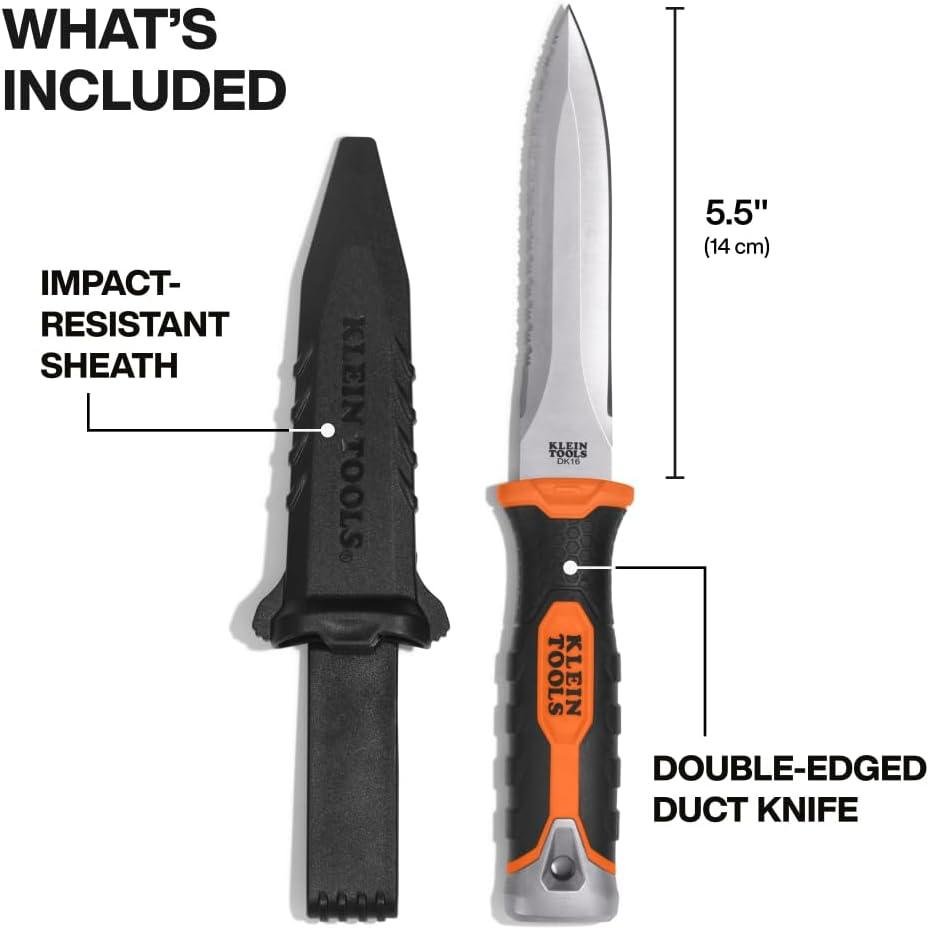
This knife suits HVAC installers and insulation crews who cut flexible duct, duct board and insulation on a regular basis. The blade is double-edged with a smooth side and a serrated side, so one tool covers both kinds of cuts. That saves you from swapping knives halfway through a run.
- Flexible duct: the serrated edge is the one to reach for on this material.
- Duct board: the smooth edge gives you a clean line when you are fabricating.
- Insulation: both edges are rated for it, so wrap and liner work is covered.
- Service and install calls: the sheath has a belt clip, so the knife stays on you instead of in the bucket.
The handle is ambidextrous, so left-handed and right-handed techs get the same grip. The stainless pommel is meant for striking tough materials. That is handy when you need to tap something into place without grabbing a hammer.
The reinforced steel tang is the detail I would look at for heavy cutting. On knives in this class the weak point is usually where the blade meets the handle. This is a duct and insulation knife, not a general utility blade, so pick it for that work.
Pros & Cons
| Pros | Cons |
|---|---|
| Double-edged blade gives you smooth and serrated cuts in one knife. | Description doesn’t say blades are replaceable, so a dull edge may end the knife. |
| Reinforced steel tang adds strength and stability for heavy-duty cutting. | Aimed at flexible duct, duct board and insulation, not general cutting. |
| Stainless steel pommel is made for striking tough materials. | The 5-1/2-inch blade may fall short on thicker insulation. |
| Impact-resistant sheath with belt clip keeps the blade protected and within reach. | Two cutting edges mean more nick risk once the knife is out of the sheath. |
| Ambidextrous dual-material handle works for left or right hand. | No blade hardness or edge life details, only “stainless steel.” |
Skip it if: you want a general-purpose utility knife, need replaceable blades or mostly cut thick material that calls for a longer blade.
Frequently Asked Questions
What is the Klein Tools DK16 duct knife used for?
The Klein Tools DK16 is made for cutting flexible duct, duct board and insulation. The double-edged stainless steel blade gives you a smooth edge and a serrated edge, so you can pick the one that suits the material. A reinforced steel tang adds strength for heavy-duty cutting. Check the listing before using it on anything else.
Does the Klein DK16 duct knife come with a sheath?
Yes, the description lists an impact-resistant sheath with the knife. It is built for secure storage and blade protection. It also allows quick and convenient removal. A belt clip on the sheath lets you carry the knife on your belt for fast access. Check the listing to confirm exactly what ships in the box.
Is the DK16 duct knife good for left-handed users?
Yes, the description calls the handle ambidextrous, so it is not built for one hand only. It is a dual-material ergonomic handle meant to give you comfort and control. Grip is personal, so I would check how it feels in your hand and with your work gloves before you rely on it all day.
Can you strike things with the Klein Tools DK16 pommel?
The description says the stainless steel pommel is reinforced and meant for striking tough materials with precision and control. That makes it a light striking surface on the end of the handle. I would not treat it like a hammer. The reinforced steel tang is listed for added strength, but check Klein for any limits on striking.
Is the Klein Tools DK16 duct knife made in the USA?
The description does not say where this knife is made. It describes Klein as an American company, family-owned and family-run since 1857and says it keeps manufacturing as close to home as it can. For country of origin and warranty length on the DK16, check the listing or contact Klein Tools directly.
Final Verdict
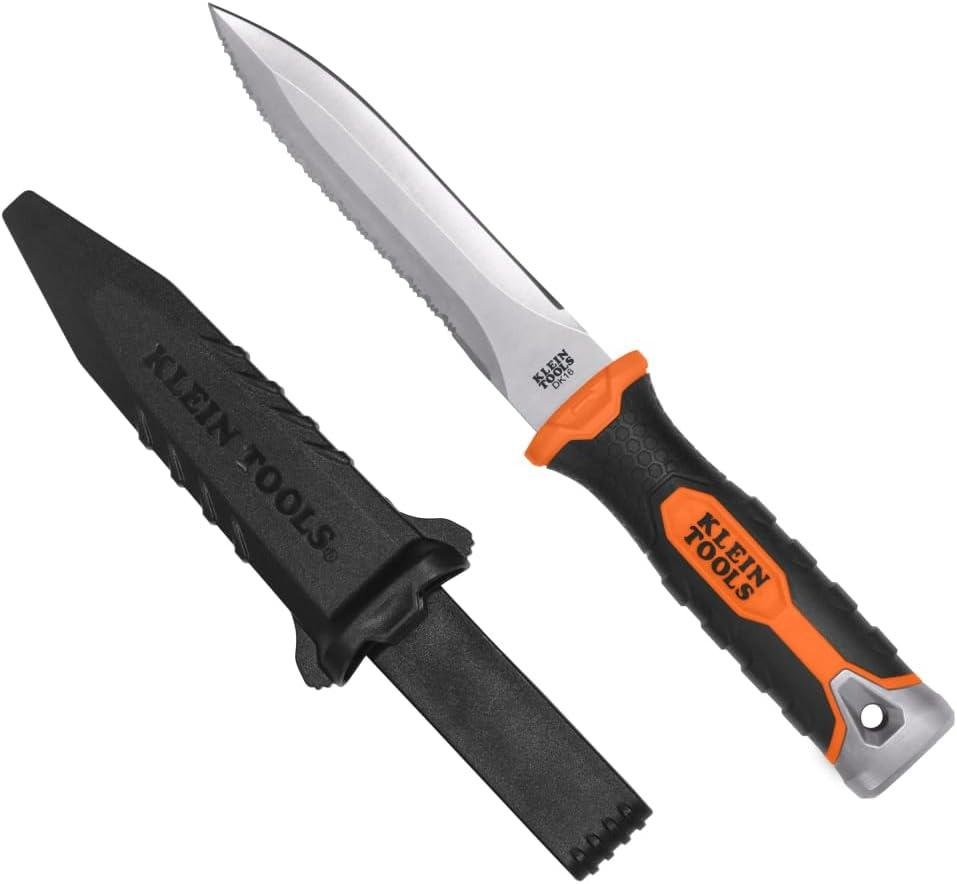
The bottom line: this is a purpose-built duct knifeand it looks like a sound pick for that job. The double-edged stainless blade gives you a smooth edge and a serrated edge for flexible duct, duct board and insulation. The reinforced steel tang and steel pommel suggest it is built for more than light slicingand the sheath with a belt clip keeps the blade covered and within reach.
It is the right buy for an HVAC pro or installer who cuts duct board and insulation regularly. A serious DIYer running a few duct runs could use it too. A homeowner who cuts insulation once a year can probably get by with a basic utility knife. If you need a general knife for drywall, rope and packaging, look at something else, since this one is aimed at a narrow set of materials.