The Klein Tools K12075 is a slim-forged wire stripper and cutter built for electrical pros who strip wire all day. It covers the common solid and stranded sizes and adds a screw shear, so on paper it looks like a solid everyday pair.
It strips 8-18 AWG solid wire and 10-20 AWG stranded wire. The slim-forged design is meant to be lighter than traditional forged strippers, which matters when your hand is on the tool all day. The self-opening spring handle cuts down on effort for repeat strips.
Quick verdict: A good everyday stripper for pros who want a lighter tool with a built-in screw shear.
- Best for: Electricians and techs stripping 8-18 AWG solid or 10-20 AWG stranded wire all day.
- Skip it if: You work outside those wire gauges or need a tool that does more than strip, grip and cut.
- Key spec: Strips 8-18 AWG solid and 10-20 AWG stranded wireand shears 6-32 and 8-32 machine screws.
Klein Tools K12075 Key Specs and What Comes in the Box
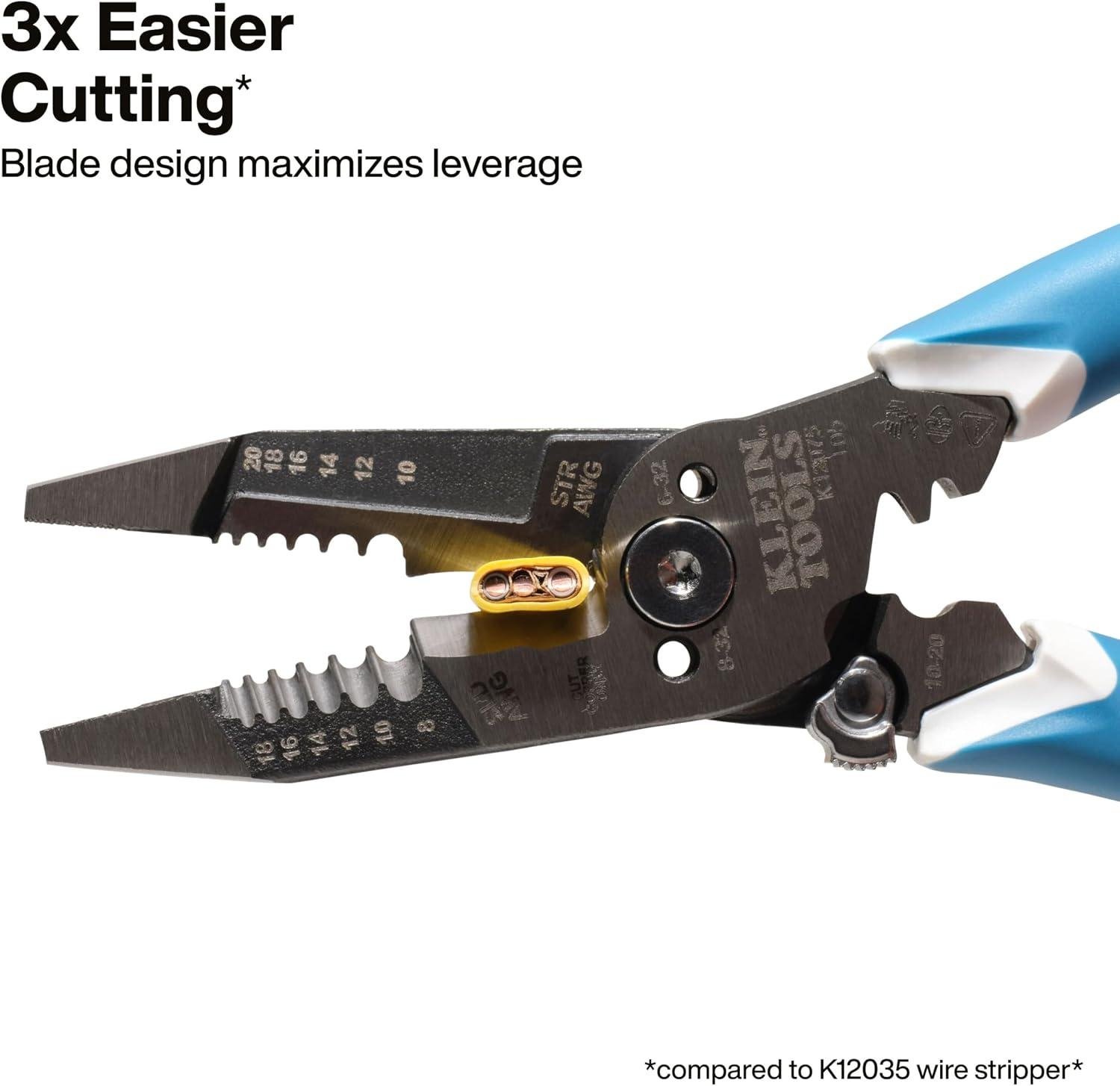
The Klein Tools K12075 strips 8-18 AWG solid wire and 10-20 AWG stranded wire. That range covers most line-voltage branch circuits and the lighter control and thermostat wire we run on service calls. Check the gauge markings against your wire before you cut into it, because a mismatched hole is what nicks conductors.
- Length: 8.16 inches, slim-forged to be lighter than traditional forged strippers
- Solid wire: 8-18 AWG
- Stranded wire: 10-20 AWG
- Screw shear: cuts 6-32 and 8-32 machine screws
- Jaws: cross-hatched, grab and twist up to three 12 AWG wires
The handle has a built-in internal spring that opens it on its own. On a long day of repeated strips, that saves your hand a lot of small motions. The spring is also the part I would watch over time on any tool in this class.
The product description does not list anything besides the tool itself. No pouch, sheath or extra blades are mentioned, so plan on getting the stripper and nothing else.
How Well Does the K12075 Strip and Cut Wire?
The most useful number here is the range. This tool strips 8-18 AWG solid wire and 10-20 AWG stranded wire. That spans heavy 8 gauge down to thin 20 gauge stranded, so one tool covers a lot of ground without swapping.
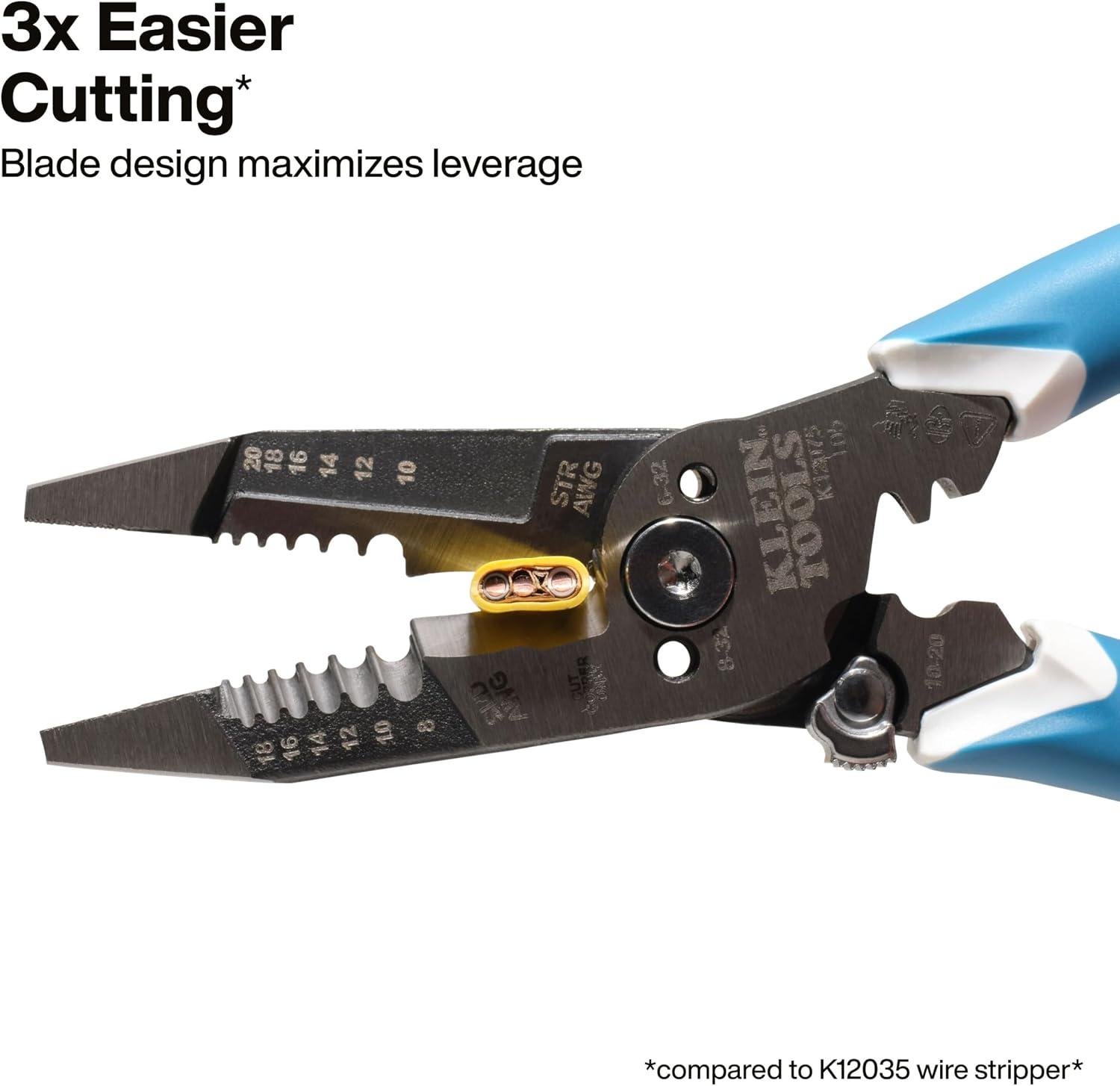
On cutting, Klein says the blade design gives easier cuts with more leverage. That matters because repeated cutting is what tires your hand, not stripping. The integrated shear cutter also handles 6-32 and 8-32 machine screws, which is handy when a screw is too long and you do not want to dig out another tool.
On any stripper in this class, I look at two things: whether the stripping holes leave nicks in the copper and whether the cutting edges stay aligned. A nicked conductor can break or heat up later, so check your first few strips before you trust it on a real job. The cross-hatched jaws are rated for gripping and twisting up to three 12 AWG wires, which is useful for splices. The internal spring opens the handle on its own, so you are not fighting the tool between cuts.
Build Quality and Jobsite Durability of the Slim-Forged Design
The slim-forged design is built to be lighter than traditional forged wire strippersand that matters on a long day. Forged tools are what you want when a tool gets squeezed, twisted and tossed in a bag. Less weight in the hand means less fatigue when you are stripping and cutting for hours.
Strippers in this class usually fail at the pivot, the spring or the cutting edges. I have not used this one, so I can’t speak to how it ages. The description does point at the right areas:
- The self-opening spring is built into the handle, so it stays internal.
- The integrated shear cutter is listed for 6-32 and 8-32 machine screws, so the cutting section is meant for more than copper.
- The cross-hatched jaws are listed for gripping and twisting up to three 12 AWG wires.
Klein says it has made hand tools for more than 160 years and keeps manufacturing as close to home as it can. That is a track record, not a guarantee. When it lands in your hands, check that the handles open and close cleanly and that the blades meet evenly. Those two checks tell you most of what you need to know.
Grip Comfort and Handle Compatibility With Everyday Wire Gauges
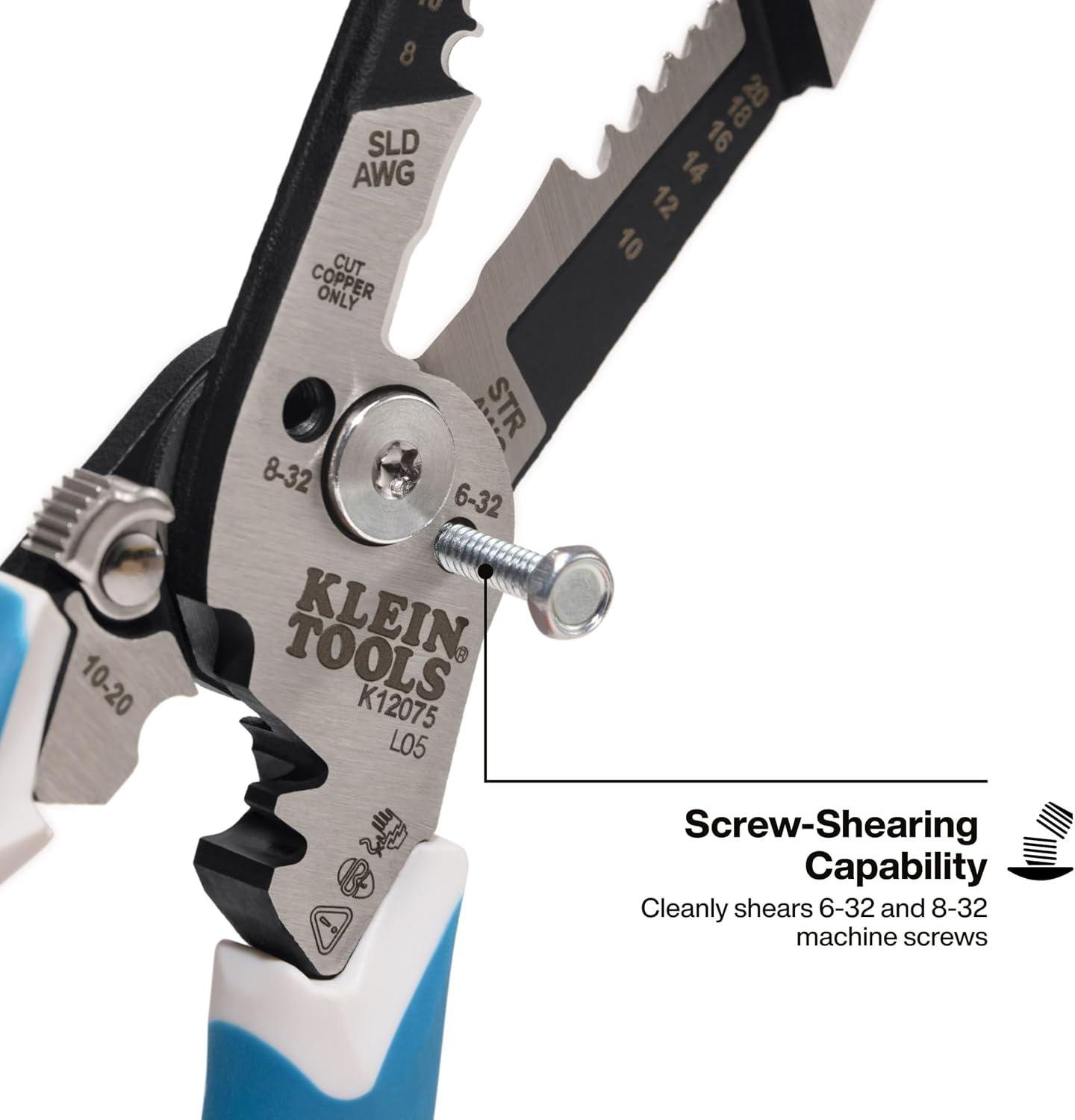
The gauge range covers most of what shows up on a service call. It strips 8 to 18 AWG solid wire and 10 to 20 AWG stranded. That takes in light control wiring on the small end and heavier power conductors at the top.
- Solid wire: 8 to 18 AWG
- Stranded wire: 10 to 20 AWG
- Cross-hatched jaws: grab and twist up to three 12 AWG wires
- Shear cutter: 6-32 and 8-32 machine screws
Comfort comes down to weight and repetition. The slim forged design is built lighter than traditional forged strippersand that matters when you are stripping wire for hours. The self-opening spring means your hand only does the squeezing, so you skip the constant reopening that wears on your grip.
The cross-hatched jaws are the other half of the grip story. Twisting three 12 AWG conductors together is a common spliceand knurled jaws keep the wires from sliding while you turn. On tools like this, the spring and the jaw teeth are where I would look first for wear over time.
Klein Tools K12075 vs. Standard Combination Strippers
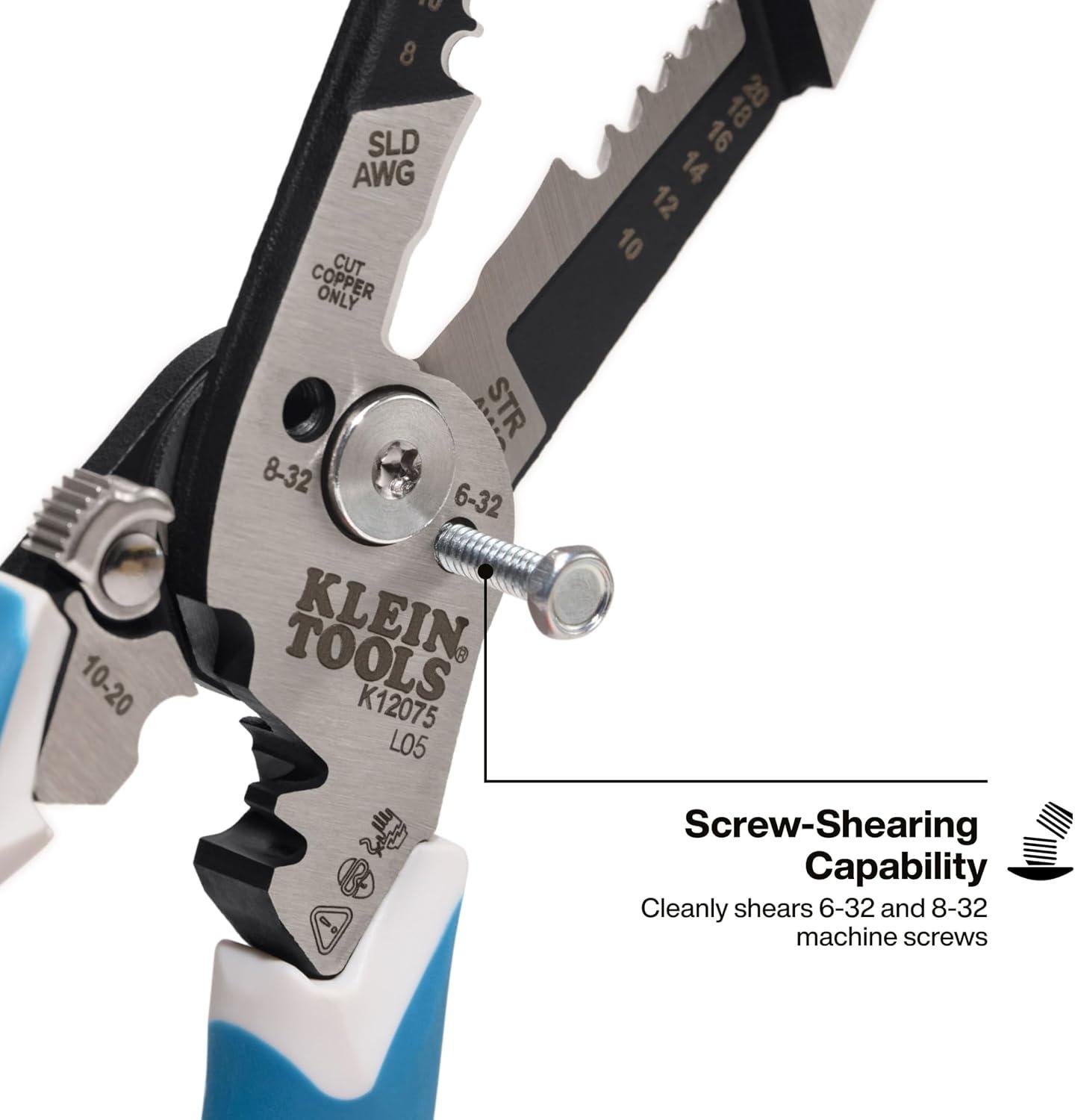
The main difference is weight. This Klein is slim-forgedand Klein says it is lighter than traditional forged wire strippers. When you spend a day terminating wire in tight panels and disconnect boxes, a lighter tool is easier on the hand and wrist.
Here is how its features compare with what you would expect from a standard combination stripper:
- Stripping range: 8-18 AWG solid and 10-20 AWG stranded.
- Cutting: the blade design is meant to give more leverage and take less effort on each cut.
- Screw shear: cuts 6-32 and 8-32 machine screws, which helps when a screw is too long for the job.
- Jaws: cross-hatched for gripping and twisting up to three 12 AWG wires.
The self-opening spring handle saves you from reopening the tool by hand after every cut. On any stripper in this class, I would keep an eye on that spring and the pivot over time. Also check the range against your work. If you regularly strip anything heavier than 8 AWG, this is not the tool for it.
Which Electricians and Jobs Suit the K12075 Best?
This tool fits electricians who spend their day on small to mid-size conductors. It strips 8-18 AWG solid wire and 10-20 AWG stranded wire, which covers a lot of device, fixture and control wiring. Service techs, maintenance crews and residential or light commercial electricians are the best match.
- Solid wire work from 8 to 18 AWG, where you strip and cut with the same tool
- Stranded leads from 10 to 20 AWG on service calls and equipment hookups
- Panel and device work where the cross-hatched jaws grab and twist up to three 12 AWG wires
- Trimming 6-32 and 8-32 machine screws with the integrated shear cutter
- Long days, since the slim-forged body is lighter than traditional forged strippers
The self-opening spring matters most on repetitive stripping, because you are not manually reopening the handle every cycle. On any tool in this class I would watch the spring action and the blade edge over time, since those are the parts that wear first.
It is a poor fit if you regularly handle conductors larger than 8 AWG solid or 10 AWG stranded. Those jobs need a different tool.
Pros & Cons
Pros and Cons
| Pros | Cons |
|---|---|
| Strips 8-18 AWG solid wire, covering most common branch circuit work. | Listing gives conflicting stranded ranges, so confirm 10-20 AWG before buying. |
| Slim forged body is lighter than traditional forged strippers. | Description never mentions insulated handles, so do not count on it for live work. |
| Blade design is built for easier cuts with more leverage. | Stripping stops at 8 AWG solid, so heavier conductors need another tool. |
| Internal spring opens the handle on its own between strips. | Screw shear only handles 6-32 and 8-32 machine screws. |
| Cross-hatched jaws grip and twist up to three 12 AWG wires. | No latch or lock is listed to keep the handle closed in a bag. |
Skip it if: you strip heavy gauge or fine wire outside the listed ranges, need a tool clearly rated for live workor cut screws larger than 8-32.
Frequently Asked Questions
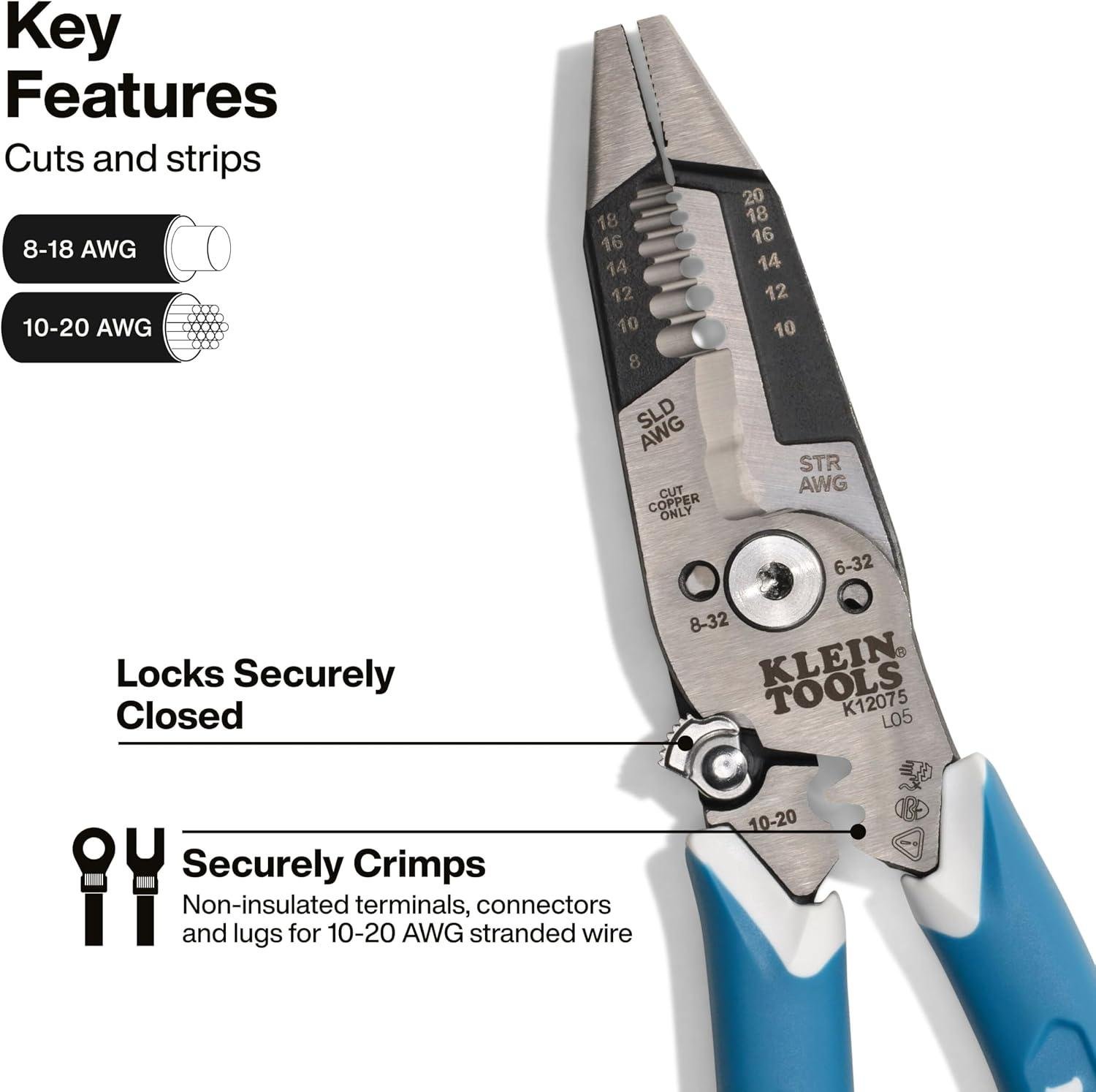
What wire sizes does the Klein Tools K12075 strip?
The Klein Tools K12075 strips 8-18 AWG solid wire and 10-20 AWG stranded wire. Always confirm the gauge of your wire before you strip. If your wire falls outside those ranges, use a different tool so you do not nick the conductor or damage the strands.
Can the Klein Tools K12075 cut machine screws?
Yes, the Klein Tools K12075 has an integrated shear cutter that cleanly cuts 6-32 and 8-32 machine screws. That is handy when a screw runs too long in a box or bracket. Other screw sizes are not listed, so do not assume it will cut them. Check with the manufacturer for anything else.
Is the Klein Tools K12075 comfortable for long days of electrical work?
Klein designed the K12075 for comfort during extended use. It has a slim-forged build that is lighter than traditional forged wire strippers. The self-opening spring handle also reopens for you between strips. How it feels still depends on your hand size and grip, so check the fit if you can.
Does the Klein Tools K12075 come with a warranty?
The product description does not give a warranty length for the Klein Tools K12075, so I will not guess. Check the product listing or contact Klein Tools directly before you buy. Klein says it is a family-owned American company making hand tools since 1857, but that is not the same as warranty terms.
Can the Klein Tools K12075 twist wires together?
Yes, the cross-hatched jaws are made for grabbing and twisting up to three 12 AWG wires. The textured surface gives a secure grip on the conductors, which helps when you are making a splice. Anything beyond three 12 AWG wires is not covered in the description, so judge the grip on your own setup.
Final Verdict
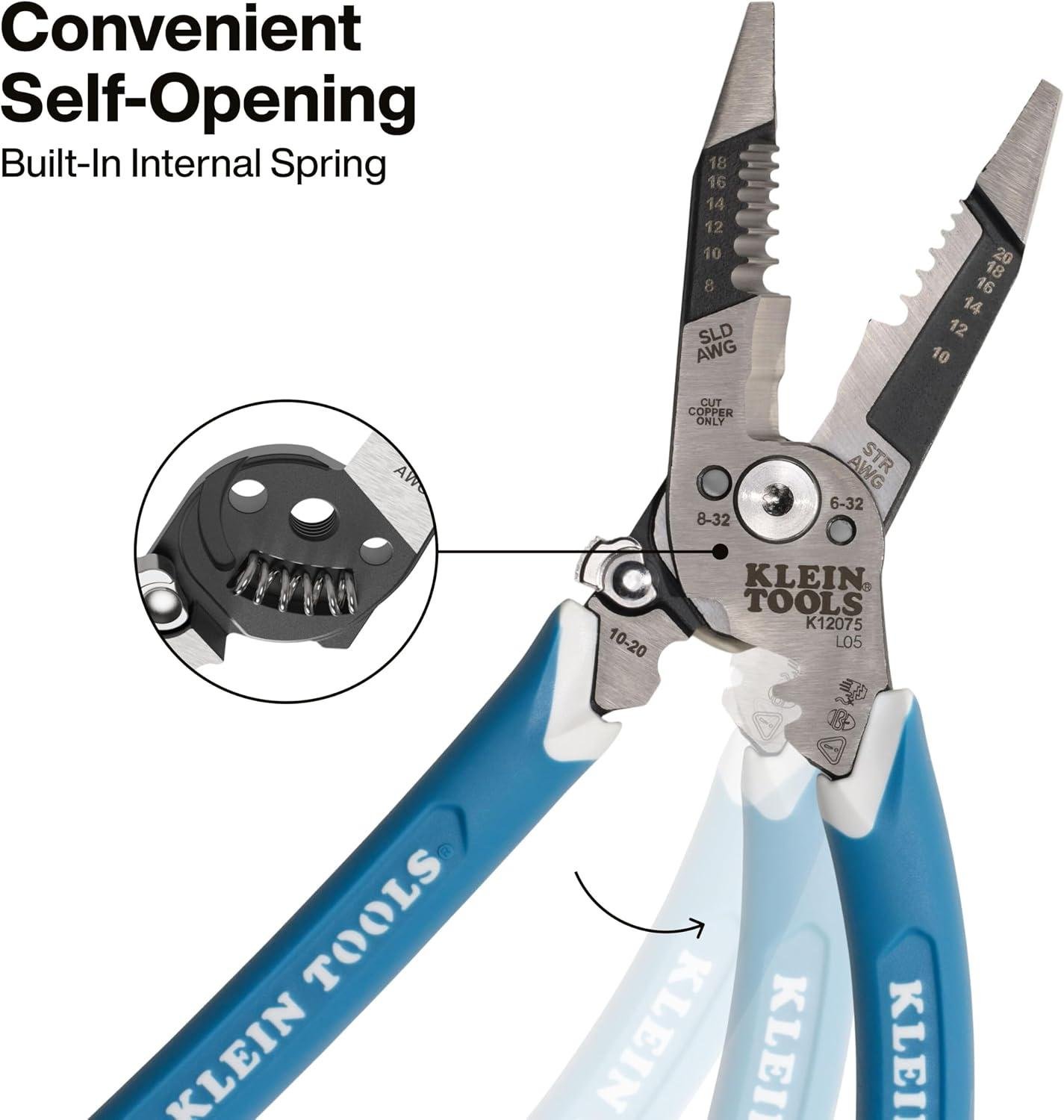
Going by the listed features, this is a focused stripper with a clear job. It strips 8-18 AWG solid and 10-20 AWG stranded wireand the slim-forged body is described as lighter than traditional forged strippers. That matters when you are working in tight spaces or holding a tool for hours. The self-opening spring and cross-hatched jaws, which grab and twist up to three 12 AWG wires, cover the basics. The shear cutter also handles 6-32 and 8-32 machine screws. I have not used this one, so this verdict rests on the specs and what I know about Klein’s reputation in this class.
It is the right buy for electricians and serious DIYers who strip common building wire often and want less hand fatigue. A homeowner can use it too, but a basic stripper may be all you need. Look elsewhere if your work falls outside those gauge ranges, such as heavier than 8 AWG or finer than 20 AWG stranded. Check that before you buy.