The Klein Tools NCVT3P is a dual range non-contact voltage tester with a built-in flashlight, made for electricians, techs and serious DIYers who need a quick check before touching a wire. The short verdict: it looks like a solid pocket tester for everyday voltage checks.
The key spec is the 12 to 1000V AC range, with a 70 to 1000V setting when you want more targeted detection. That low end also reaches AC in doorbells, thermostats and irrigation systems. The CAT IV 1000V rating, color-coded LED, beeper and auto power-off round out the useful features.
Quick verdict: A compact, flashlight equipped tester with a wide range and a solid safety rating for daily electrical checks.
- Best for: Techs and electricians who want a pocket clip tester for outlets, breakers, fixtures and low voltage controls.
- Skip it if: You need a meter that gives actual voltage readings.
- Key spec: 12 to 1000V AC dual range with a CAT IV 1000V rating.
Klein Tools NCVT3P Key Specs and What Comes in the Box
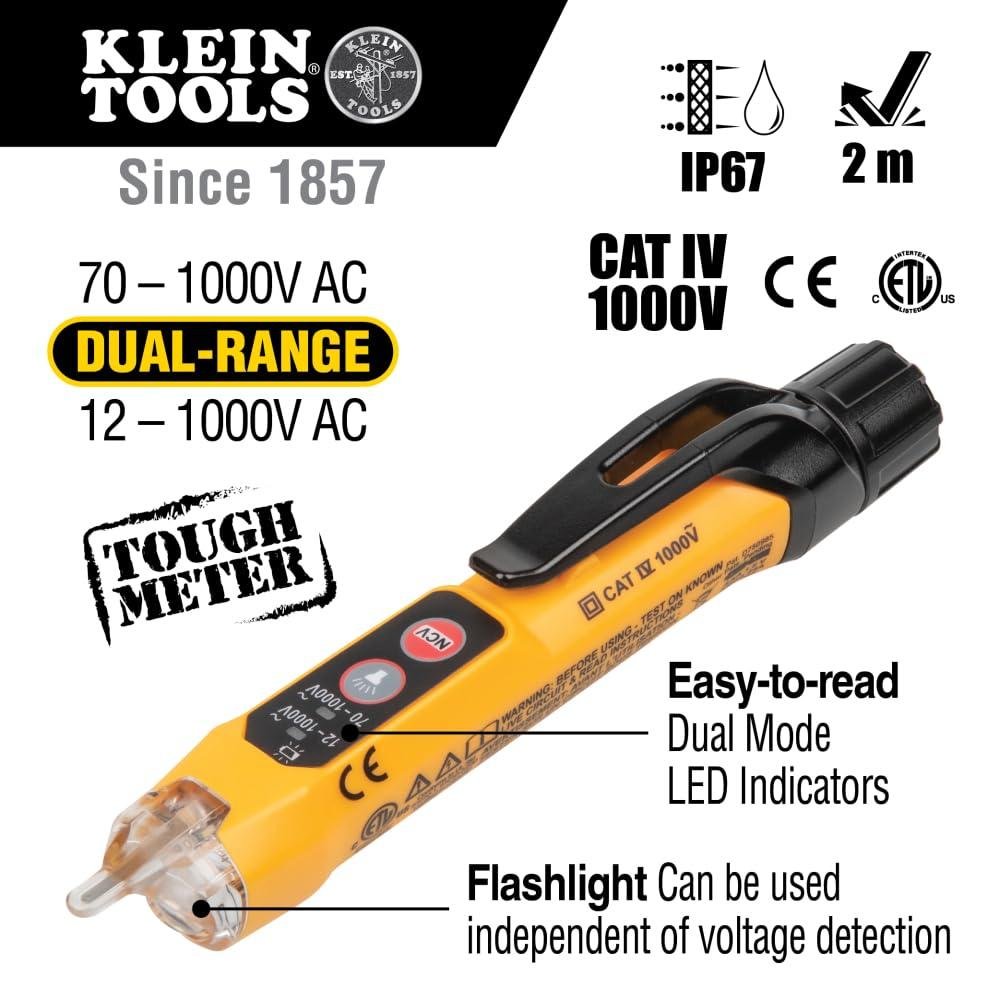
The number that matters most is the range. This tester detects 12 to 1000V ACand you can switch to a 70 to 1000V range for targeted detection. The low setting is the one that reaches AC in doorbells, thermostats, low voltage lighting and irrigation systems. The higher setting makes sense when you only care about line voltage.
- Detection: 12 to 1000V AC or 70 to 1000V AC, selectable
- Safety rating: CAT IV 1000V
- Indication: green LED when operational, flashing red with a beeping alert when voltage is detected
- Flashlight: works independently of voltage detection
- Extras: pocket clip and auto power-off
CAT IV 1000V is the rating I look for on any tester that goes near service equipment. Auto power-off matters because pen testers ride in a pocketand a dead battery is a common problem in this class. The light and the beep together help in loud or dark spaces.
The listing doesn’t spell out what ships in the box, including whether batteries are included. Check the package when it arrives and keep spares on the truck. Before you trust any pen tester, prove it on a known live circuit.
How Accurate Is the NCVT3P Dual Range Voltage Detection?
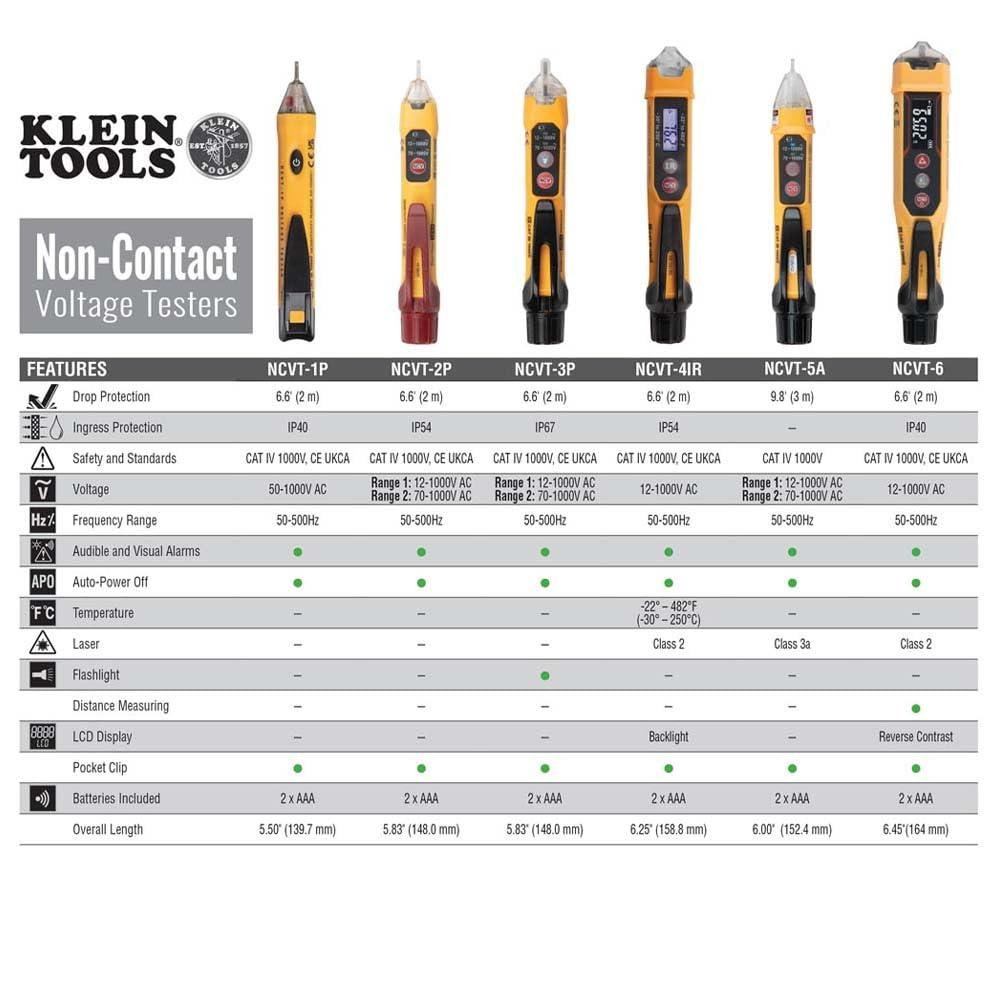
This tool tells you voltage is present. It does not tell you how much. Klein lists detection from 12 to 1000V ACand the description gives no accuracy tolerance, so treat every reading as a yes or no answer, not a number.
The dual range is what shapes real-world results. The 12 to 1000V setting is the one for low-voltage AC in doorbells, thermostats, low voltage lighting and irrigation systems. The 70 to 1000V setting is for targeted detection. On testers in this class, a higher threshold generally helps when stray voltage from nearby conductors muddies the picture.
- A green LED means the tester is operational. A flashing red LED with a beep means voltage is detected.
- Check it on a known live source before and after you test a circuit you believe is dead.
- Pick the range that fits the circuit. Use the low setting for control and low voltage work and the higher one for line voltage.
- The ratings are for AC voltage, so don’t count on it for DC.
The CAT IV 1000V rating speaks to protection during testing, not detection precision. A non-contact tester is a first check. Confirm a dead circuit with a meter before you put your hands on it.
Build Quality and Jobsite Durability of the Klein NCVT Pen
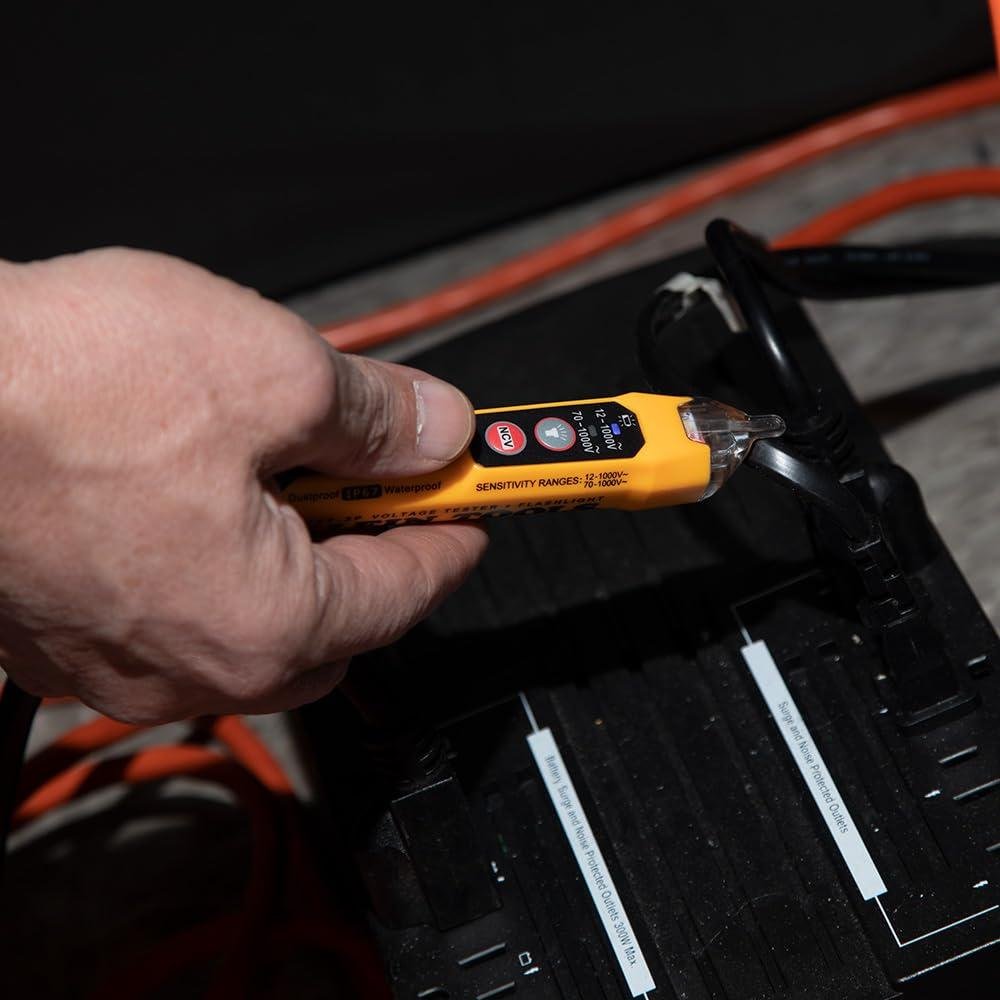
The most useful build fact here is the CAT IV 1000V rating. That is a safety category for electrical testing, not a toughness rating, so don’t read it as a drop rating. Klein calls the Klein Tools NCVT3P Dual Range NCVT Pen, 12 – 1000V AC with Flashlight rugged enough for any job site, but the description gives no drop or impact figures.
Pens in this class tend to fail in the same few places. Pocket clips bend, switches get sloppy and tips crack after a few rides in a loaded tool bag. The clip and the compact, lightweight body are what this pen has going for it on a service call, since it rides in a shirt pocket instead of the bag. The auto power-off also helps, because a tester that shuts itself off won’t drain its battery while it sits in a pocket.
- Clip tension, so it grips a pocket edge without flexing loose
- Switch feel for the range selection and flashlight
- Tip and lens condition right out of the package
- Battery door fit, since a loose one causes intermittent shutoffs
Klein has made hand tools since 1857 and says it is family-owned and keeps manufacturing as close to home as it can. That gives me a reasonable starting point, but I still judge a pen by how it holds up in the field.
Battery Life and AAA Battery Compatibility
The most useful battery feature here is the auto power-off. Per the description, the tester turns itself off after a period of inactivity to conserve battery life. On a pen-style tester that rides in a pocket or tool bag, that matters. A tester left on is a quick way to find a dead one when you need it.
The description does not state the battery type, the number of cells or any run time. That means I can’t confirm AAA compatibility from the listing alone. Check the battery compartment or the manual before you count on swapping in whatever cells are in the truck. I won’t guess at hours of use either, since no figure is given.
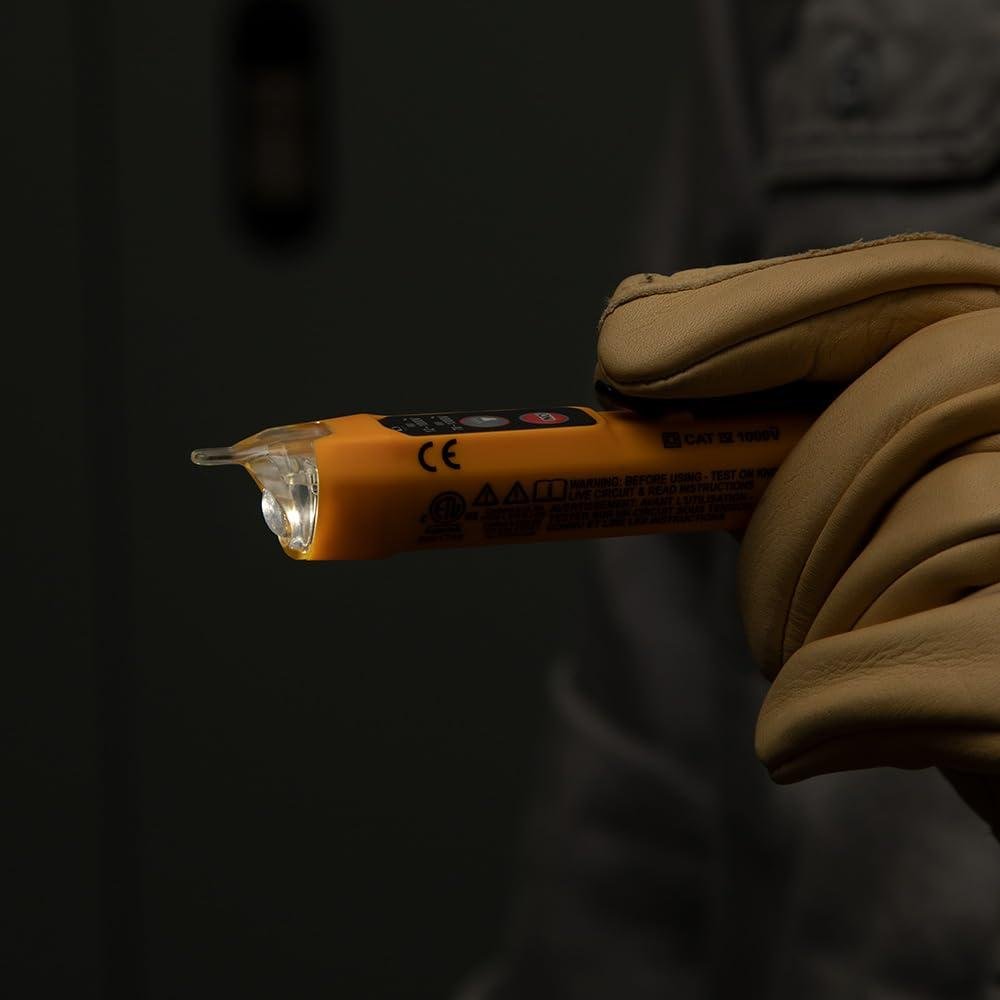
The flashlight is the other thing to think about. It works independently of the voltage detection, so you can leave it on while you workand any light use will draw on the battery. The green LED tells you the tester is operational, which is your quick check before you trust it. Still, prove any non-contact tester on a known live source before you rely on itand keep spare cells of the correct type in your kit.
Does Dual Range Beat a Standard Single-Range NCVT Pen?
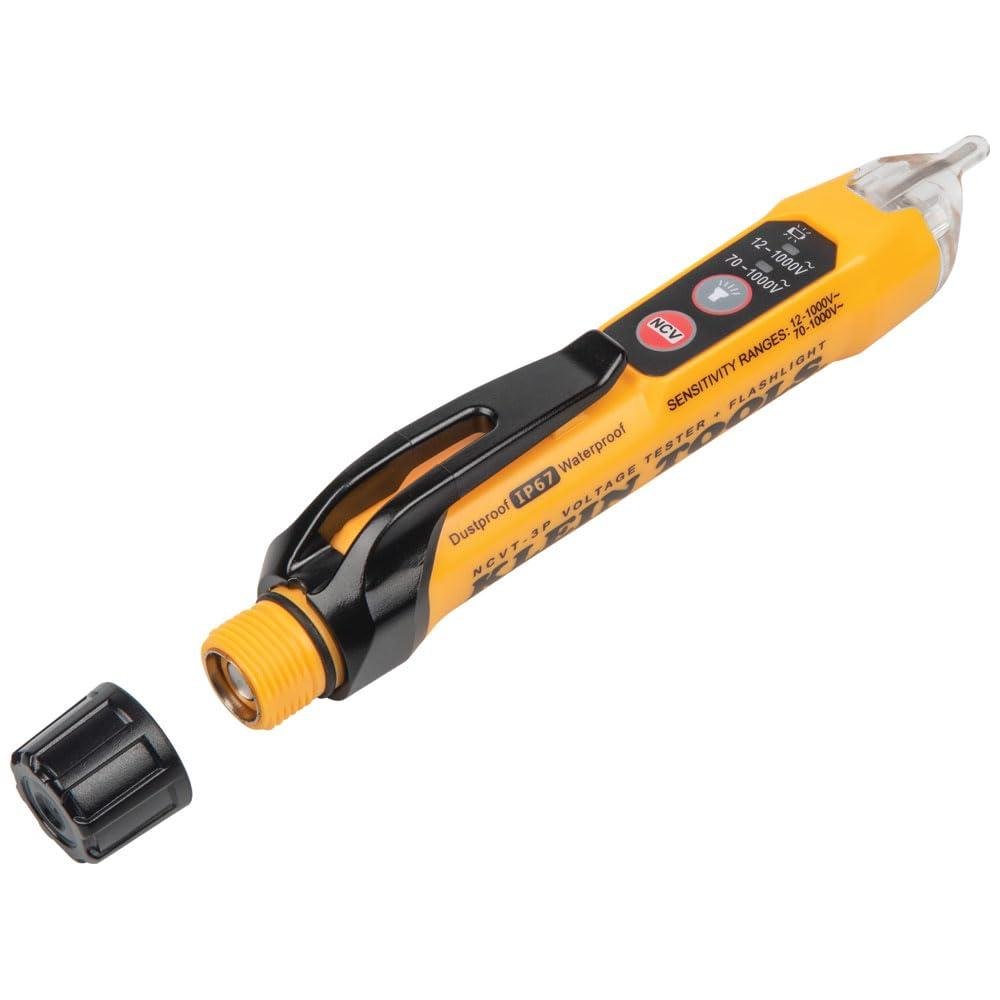
Yes, if you work around both line voltage and low voltage. A single-range pen is stuck at one sensitivity. This one lets you choose 12 to 1000V AC or 70 to 1000V AC, so you can match the tester to the circuit in front of you.
The 12V setting is for control and low voltage work. Thermostat wiring, doorbells, low voltage lighting and irrigation systems all sit in that rangeand a pen with a higher threshold can miss them. The 70V setting is for when you only care about real line voltage. A higher threshold ignores the small stuff, which can keep you from chasing weak signals in a crowded panel or a bundle of wires.
- 12 to 1000V: low voltage systems and general presence checks
- 70 to 1000V: targeted detection of higher voltage
- CAT IV 1000V rating on the tester itself
- Green LED means it is operational, flashing red with a beep means voltage is detected
The catch is that you have to know which range you are on. A pen set to 70V will stay quiet on a low voltage circuitand that silence does not mean the circuit is dead. Check the setting every time and prove the tester on a known live source before you trust a no-beep.
Which Electricians and Jobs Suit This Tester Best?
This tester fits electricians and techs who spend the day checking whether a circuit is live before they touch it. The 12 to 1000V AC range covers outlets, switches, light fixtures, breakers and cords. It also reaches low voltage work like doorbells, thermostats, irrigation and security systems. That makes it a good pocket tool for service techs, maintenance crews and low voltage installers as well as residential and light commercial electricians.
The dual range matters most in daily use. Pick 12 to 1000V when you are chasing low voltage controls. Switch to 70 to 1000V when you only care about higher voltage. The CAT IV 1000V rating also gives you room to work closer to the service side of a building.
- Dark spaces: the flashlight helps in panels, attics and crawlspacesand it works on its own or alongside detection.
- Quick checks all day: the compact, lightweight body and pocket clip keep it within reach.
- Clear signals: a green LED shows it is operationaland a red flash with a beep shows voltage.
- Battery care: auto power-off helps when it gets left in a pocket or bag.
A pen like this is a first check, not a full diagnosis. If you need actual readings, you still carry a meter.
Pros & Cons
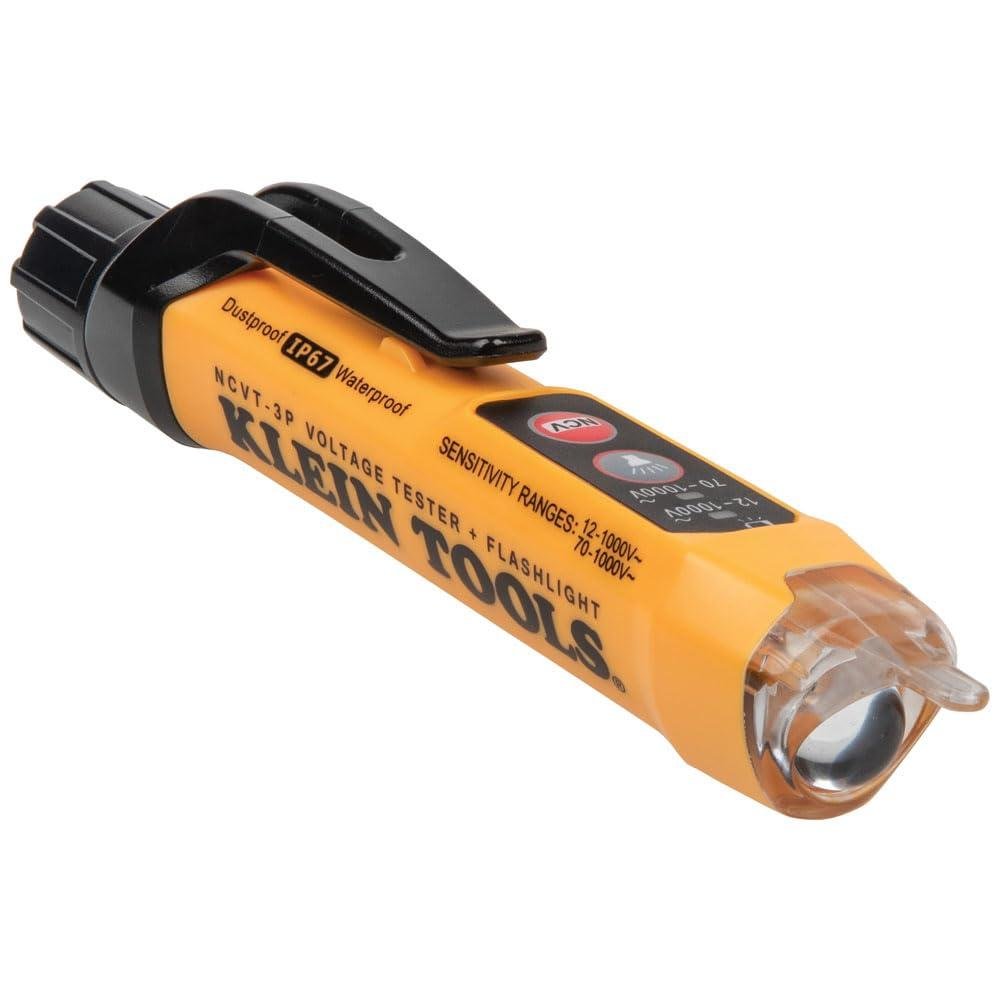
Pros and Cons
| Pros | Cons |
|---|---|
| Detects 12 to 1000V AC, so it covers low voltage controls and line voltage. | AC only. No DC detection is listed, so it is no help on DC circuits. |
| Green LED shows it is working. Red flash and beep signal voltage. | Presence indication only. No voltage reading, so you still need a meter. |
| Flashlight works on its own, separate from voltage detection. | The 70 to 1000V setting skips low voltage. Check your range selection. |
| CAT IV 1000V rating gives solid protection for electrical testing. | Battery type and inclusion are not listed. Confirm before you buy. |
| Lightweight and compact, with a pocket clip for quick access. | Auto power-off timing is not stated, so it may shut off mid-task. |
Skip it if: you work on DC circuits, need an actual voltage reading to troubleshootor want a tester with a stated battery setup. In those cases, buy a multimeter or a DC-capable tester instead.
Frequently Asked Questions
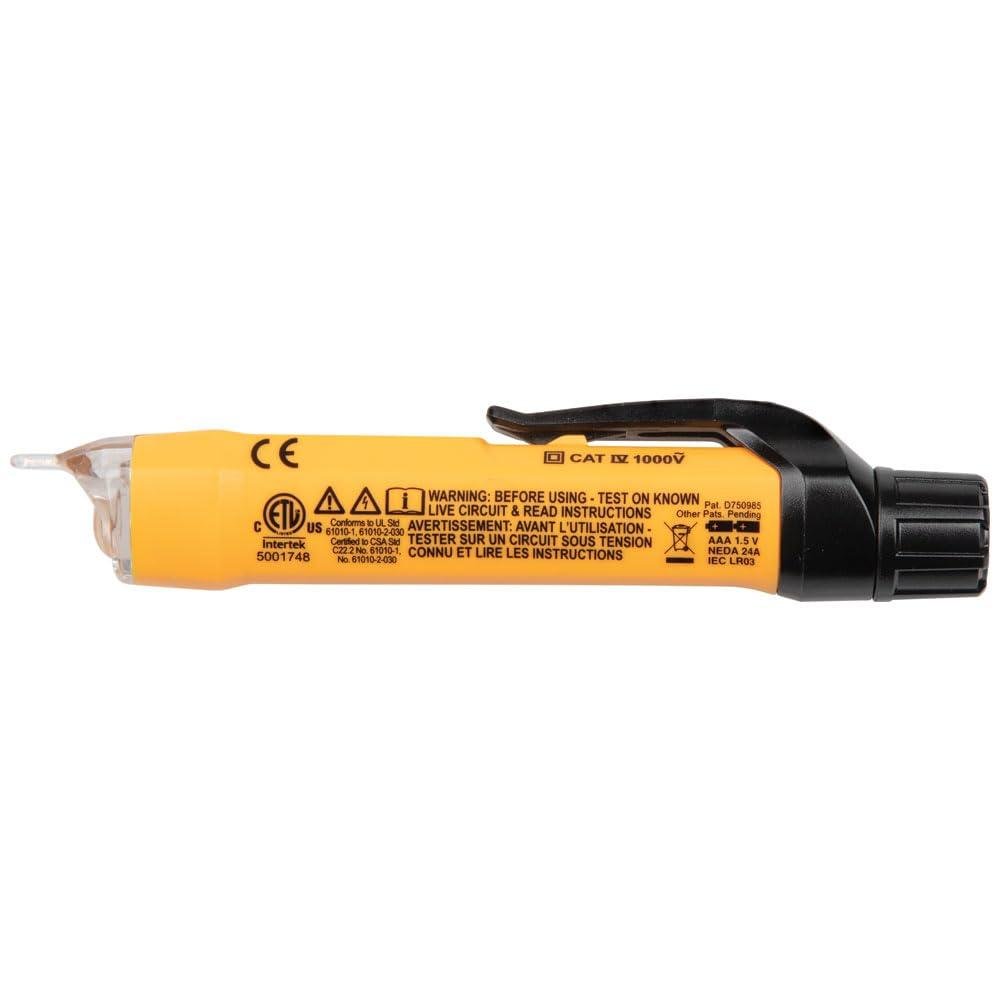
Does the Klein Tools NCVT3P come with batteries?
The description does not say whether the Klein Tools NCVT3P ships with batteries, so check the listing or ask Klein Tools before you order. It does mention an auto power-off feature to conserve battery life, which tells you it runs on batteries. Battery type is not listed here either, so confirm it before buying spares.
What is the difference between the 12 to 1000V and 70 to 1000V settings on the NCVT3P?
The NCVT3P lets you pick between a 12 to 1000V range and a 70 to 1000V range. The 12V setting covers low voltage circuits such as doorbells, thermostats and irrigation systems. The 70V setting is for targeted detection, so voltages below 70V fall outside its range. Pick the range that matches the circuit you are checking.
Is the Klein Tools NCVT-3P good for HVAC work?
Yes, the Klein Tools NCVT-3P covers a lot of what an HVAC tech checks. The description lists breakers, switches, outlets, wires and AC voltage in thermostats and low voltage lighting. It also carries a CAT IV 1000V rating. A non-contact tester is a first check only. Confirm with a meter before you put hands on conductors.
What do the lights and beeps mean on the Klein NCVT3P?
A green LED means the tester is operational. A flashing red LED with a beeping alert means voltage is detected. Check it on a known live source before you trust it on a job. A tester that is not working can look like a dead circuit. The flashlight also works independently of the voltage detection function.
Does the Klein NCVT3P turn off by itself?
Yes, the NCVT3P has an auto power-off feature that shuts it off after a period of inactivity. The description does not give the time, so check the listing or Klein Tools for that. It also has a pocket clip and a lightweight, compact design for easy carry.
Final Verdict
The Klein NCVT3P is a solid pick for a quick yes or no voltage check. It detects 12 to 1000V AC and carries a CAT IV 1000V rating. The flashlight works on its own, which helps in dark panels and ceiling spaces. The selectable 70 to 1000V range is handy when you only care about higher voltage. Green means it is on. Red flashing with a beep means voltage is present.
It suits electricians, HVAC and maintenance techs and homeowners who want a pocket tester for outlets, fixtures and breakers. The low range also covers thermostat and doorbell circuits. Still, a pen only tells you voltage is present. It will not give you a number, so anyone who needs readings still needs a multimeter. Always prove the tester on a known live source before you trust a no voltage result. If you want a tester that displays values, look at something else.