Klein Tools 80101 Circuit Breaker Finder Kit Review – is This 4-piece Electrical Testing Kit Worth It?
I’ll be straight with you – there’s nothing that kills momentum on a job site faster than chasing a mystery circuit through a panel or second-guessing whether an outlet is wired correctly. I’ve lost more time than I care to admit flipping breakers one by one, hoping for the right one to click, or pulling out half a dozen separate tools just to run basic electrical diagnostics. So when I got my hands on the Klein Tools 80101 Circuit Breaker Finder Kit, a 4-piece electrical testing bundle that promises to consolidate the essentials into one smart buy, I was genuinely curious – and a little skeptical.
Klein Tools isn’t some fly-by-night brand trying to grab shelf space. these guys have been building trusted trade tools for over 160 years, and their electrical testing lineup has earned serious respect from electricians, contractors, and seasoned DIYers alike. But a kit is only as good as its weakest piece, and I wasn’t about to take the marketing at face value. I wanted to know if all four tools – the MM320 Manual-Ranging digital Multimeter, the NCVT3P Dual-Range Non-Contact Voltage Tester with Flashlight, the RT250 GFCI Receptacle Tester with LCD, and the Circuit Breaker Finder with integrated GFCI outlet tester – could actually hold their own when put to work in the real world.I ran this kit through everything from panel troubleshooting to outlet diagnostics on a residential remodel job, and then brought it home for some weekend electrical work in the shop. Here’s exactly what I found.
Klein Tools 80101 Circuit Breaker finder Kit: what You Get Right Out of the Box
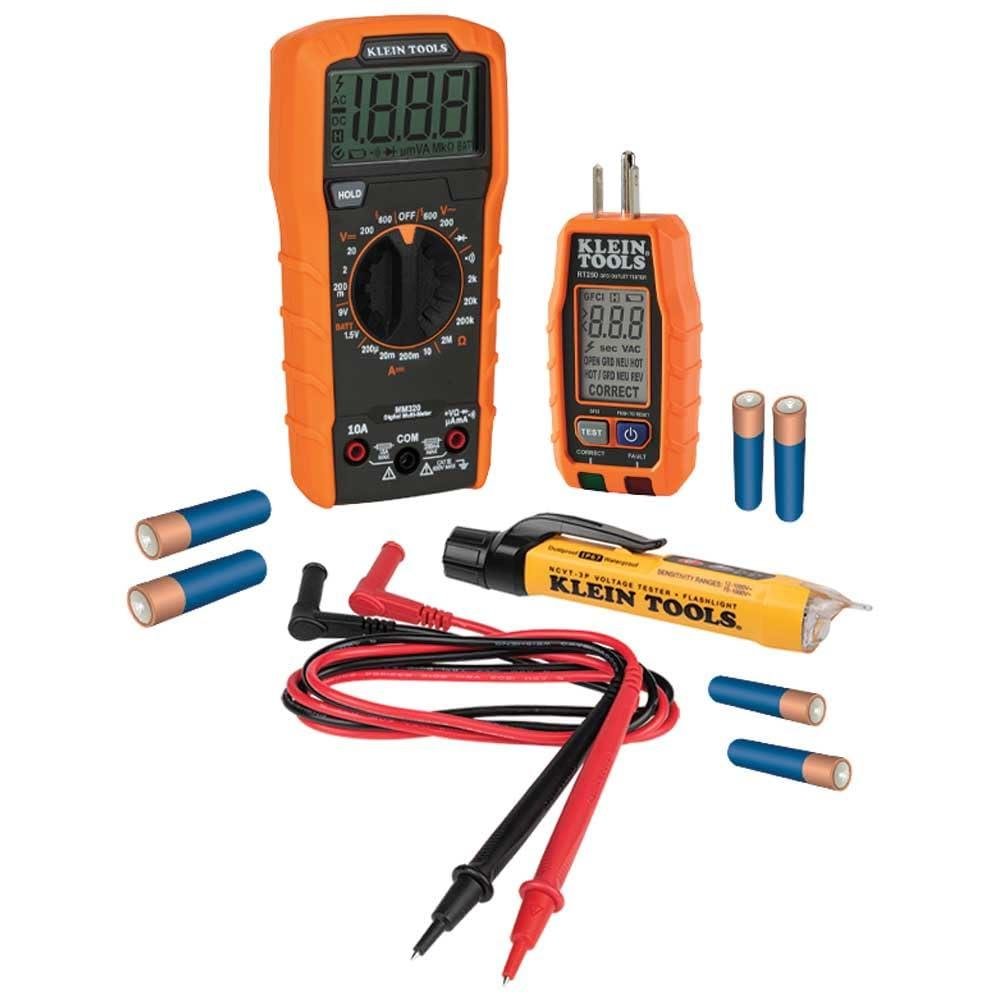
Cracking open this kit for the first time, I’ll be straight with you – the packaging is clean, organized, and everything is clearly labeled. No digging around wondering what’s what. You get four purpose-built tools that cover the most common electrical diagnostic tasks you’ll run into on a job site or in a residential setting. Klein clearly put thought into bundling tools that actually work together rather than just throwing random testers into a box to hit a price point.
Here’s a breakdown of exactly what’s inside:
- Manual-Ranging Digital Multimeter (MM320) – measures up to 600V AC/DC voltage, 10A DC current, and 2MOhms resistance, plus tests batteries, diodes, and continuity; comes with right-angle test leads that I genuinely appreciate in tight panel spaces
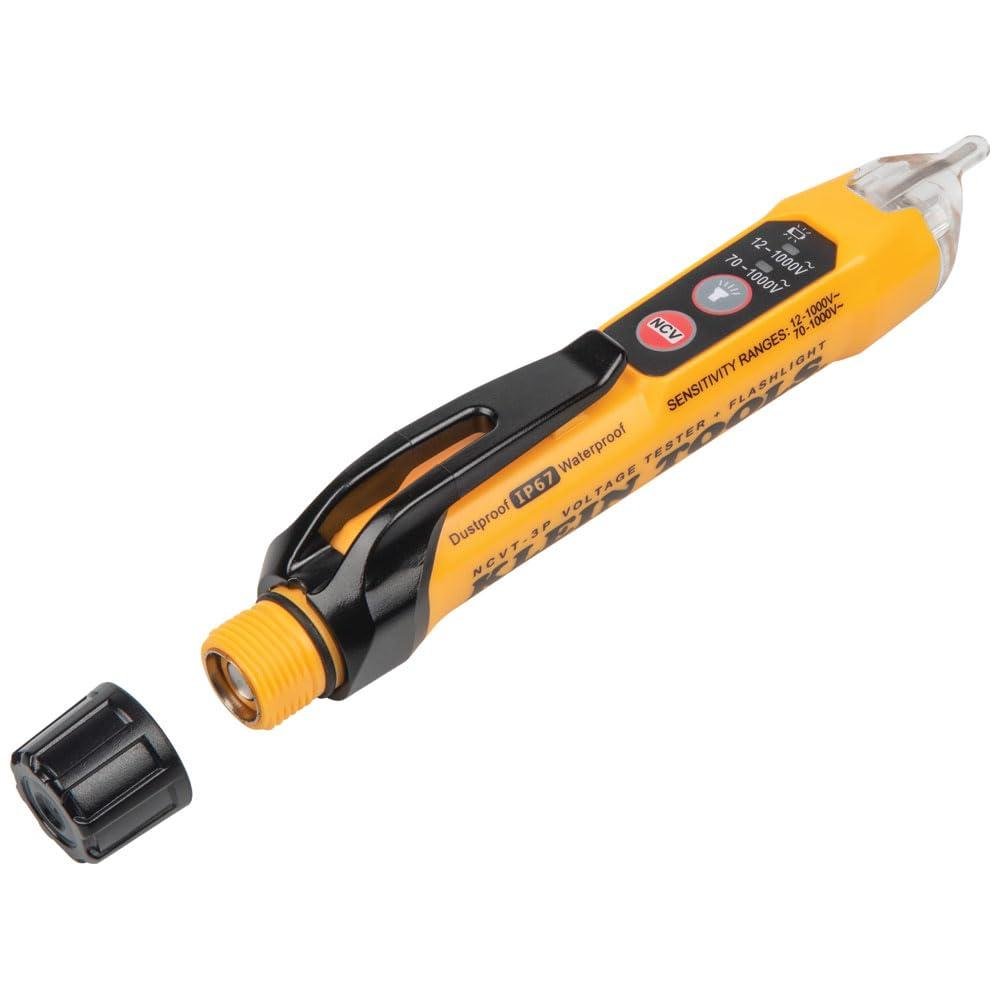
- Dual-Range Non-Contact Voltage Tester with Flashlight (NCVT3P) – detects from 12 to 1000 VAC or 70 to 1000 VAC, giving you adaptability across both low-voltage and standard voltage applications without swapping tools
- GFCI Receptacle Tester with LCD (RT250) – features a large backlit display with clear wiring condition indicators and patent-pending detection of Open Neutral and Open ground faults, which is a genuinely useful diagnostic edge
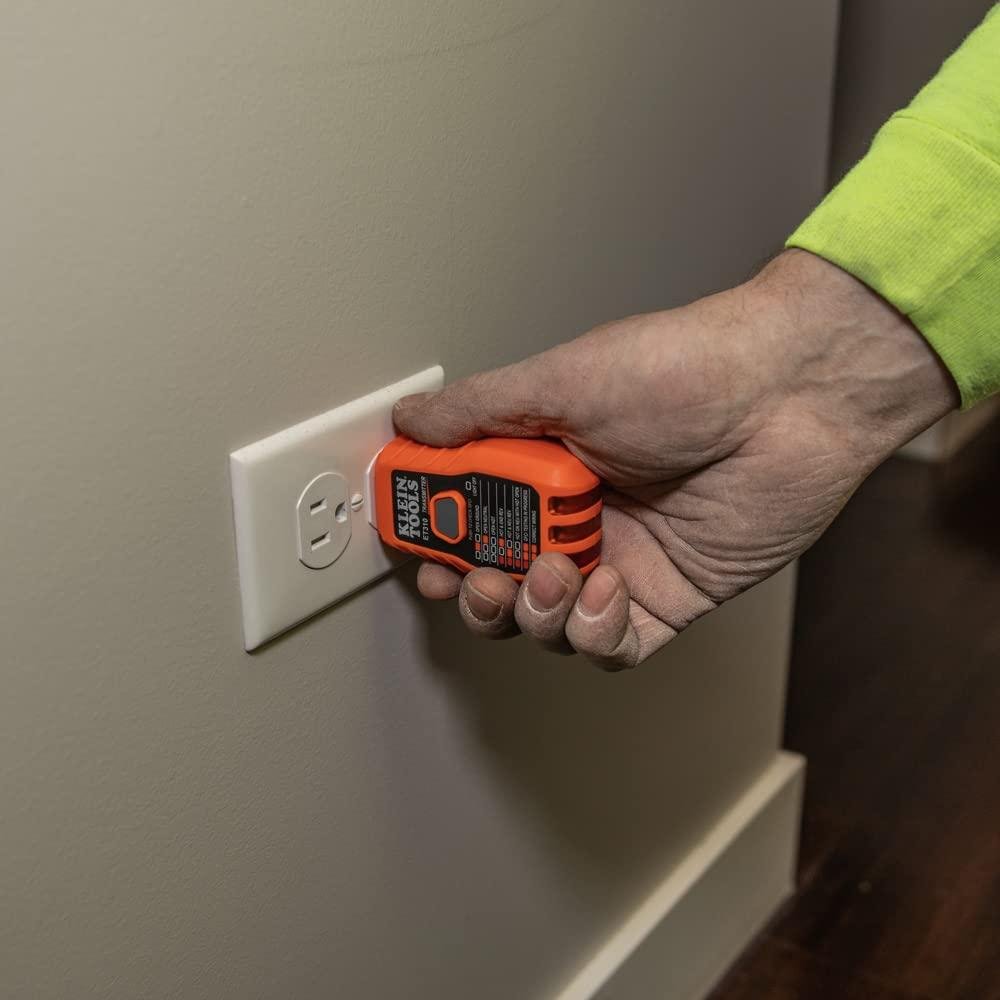
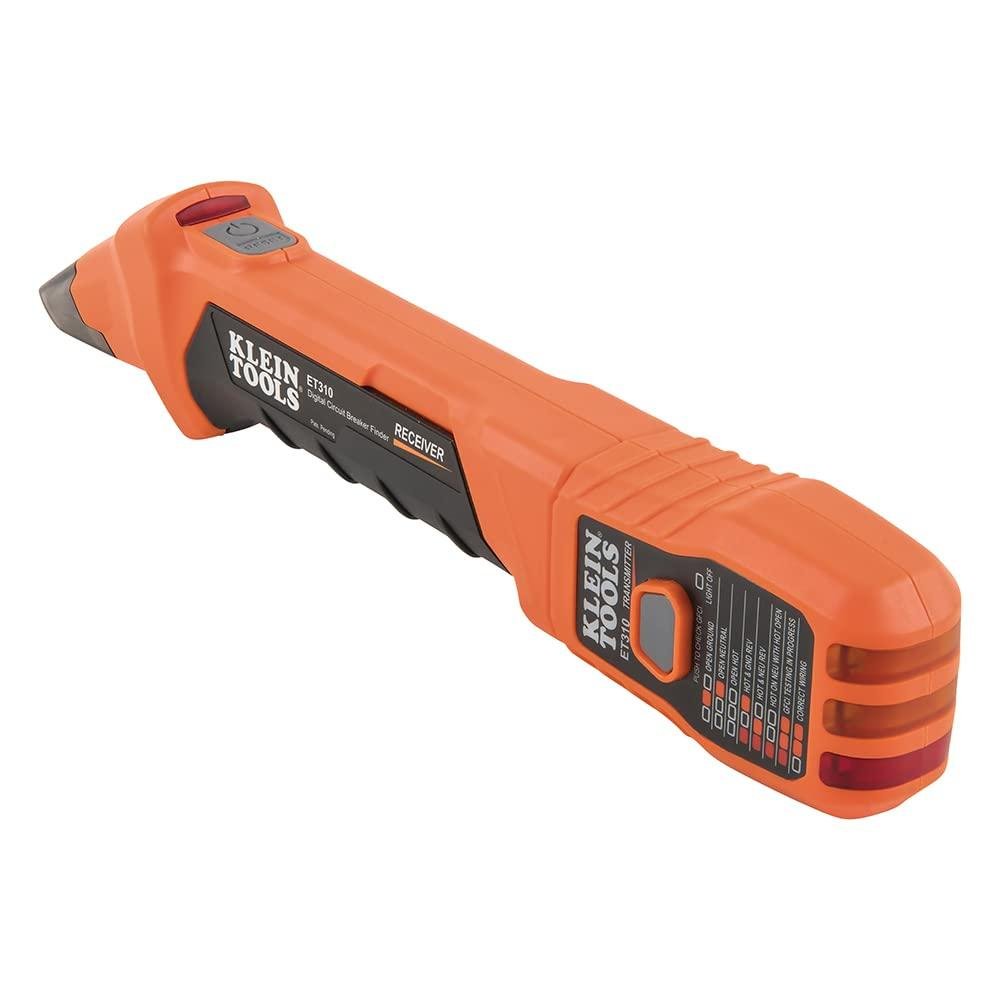
- Circuit Breaker Finder – a two-part system consisting of a Transmitter (plugged into the outlet or fixture) and a Receiver (used to scan the panel), designed to quickly and accurately zero in on the correct breaker without flipping breakers one by one like it’s 1985
| Tool | Key Spec | Standout Feature |
|---|---|---|
| Multimeter MM320 | 600V AC/DC, 10A DC, 2MOhm | Right-angle leads for tight spaces |
| NCVT Tester NCVT3P | 12-1000 VAC / 70-1000 VAC | Dual-range + integrated flashlight |
| Receptacle Tester RT250 | Backlit LCD, voltage readout | Open Neutral/Open Ground detection |
| Circuit Breaker Finder | Transmitter + Receiver system | GFCI outlet integration |
What sets this kit apart from comparable bundles I’ve seen from brands like Fluke or southwire at similar price points is the circuit breaker finder with integrated GFCI testing – that’s not always a given in a bundled kit, and it’s a time-saver I’d never want to go back on. The right-angle leads on the multimeter are a small but meaningful detail that shows Klein actually talked to people who use these tools in the field. If you’re ready to put this kit to work, Check the Latest Price on amazon and see why it earns its place in any serious electrician’s or homeowner’s toolkit.
Build Quality and Ergonomics That Actually Hold Up on the Job Site
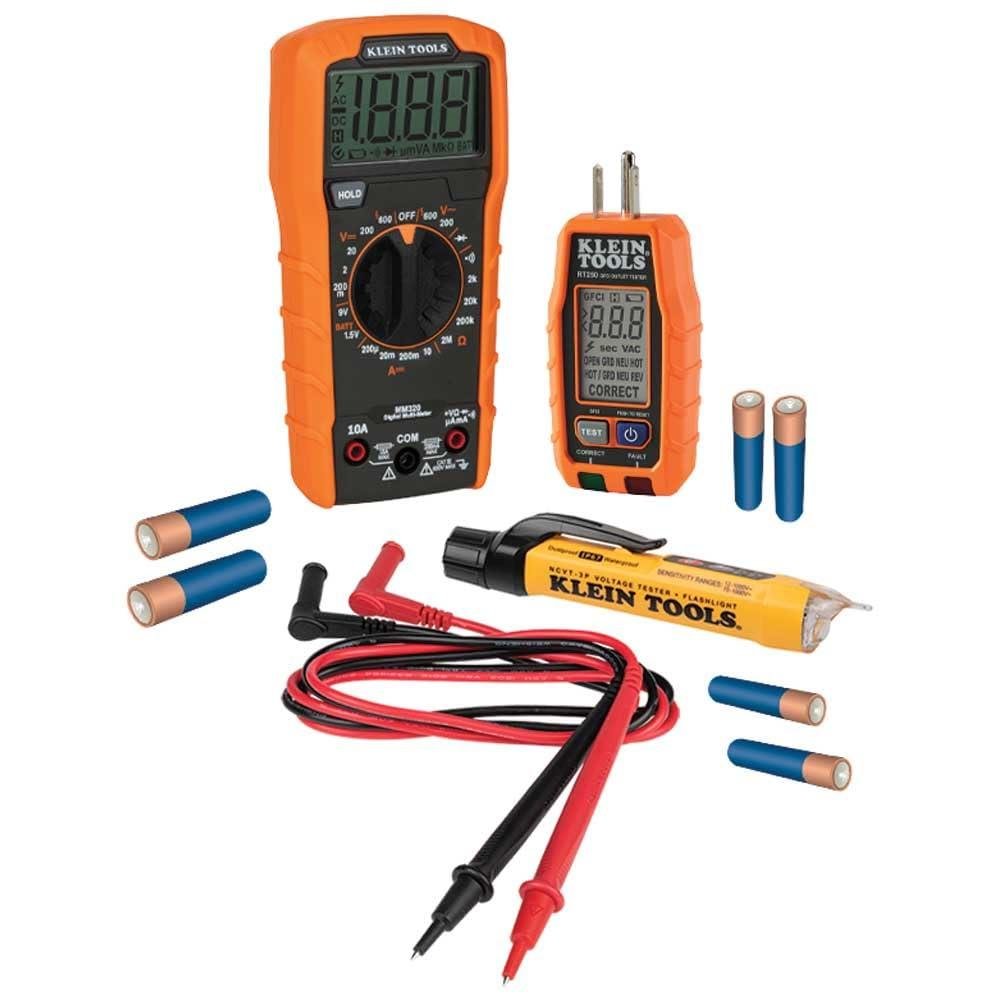
Let me be straight with you – when I’m on a job site, I don’t have time for tools that feel like they’re going to fall apart in my hands or give out after a few months of daily abuse. What I can tell you from hands-on use is that Klein built this kit with the kind of no-nonsense durability you’d expect from a brand that’s been outfitting tradespeople for over 160 years. Each piece in this kit has a solid, purposeful feel – nothing rattles, nothing flexes where it shouldn’t, and the housings on all four units have that familiar Klein toughness that holds up when you’re stuffing gear in and out of a tool bag repeatedly. The NCVT3P non-contact voltage tester in particular fits naturally in hand, with a grip profile that doesn’t fatigue you during extended use when you’re testing outlet after outlet across a full commercial rough-in.
The RT250 GFCI Receptacle Tester deserves a special callout here – that large backlit LCD isn’t just a convenience feature, it’s a genuine worksite win when you’re crawling in a dim crawlspace or squinting in an unfinished basement. The readout is clean, legible, and the indication of wiring conditions is unambiguous. Same goes for the MM320 Digital Multimeter: the right-angle test leads are a thoughtful design choice that reflects real-world use, not just spec-sheet engineering. Where a budget multimeter from a no-name brand will have stiff, awkward leads that fight you in tight panel boxes, these lay where you put them. Compared to entry-level Fluke or even the basic Greenlee testers in this price range, Klein’s ergonomic execution across the whole kit feels more cohesive and purpose-built for the trades rather than assembled as an afterthought.
| Feature | Klein 80101 Kit | Comparable budget Kit |
|---|---|---|
| Multimeter Voltage Range | Up to 600V AC/DC | Typically 400V-500V AC |
| NCV Tester Range | 12-1000 VAC (dual range) | Usually single range only |
| GFCI Tester Display | Backlit LCD with Open neutral/Ground detection | LED indicator lights only |
| Circuit Breaker Finder | Included (Transmitter + Receiver) | Rarely included at this price |
| Build Feel | Solid, trade-grade housing | Light plastic, flex-prone |
| flashlight Integration | Yes (NCVT3P) | No |
- Right-angle test leads reduce stress on connections in cramped panel boxes
- Dual-range NCV tester handles both low-voltage (12V) and standard applications without switching tools
- backlit LCD on the GFCI tester is genuinely readable in low-light field conditions
- Integrated flashlight on the NCVT3P is a small detail that pays off big in unlit spaces
- Transmitter/Receiver circuit breaker finder system is accurate and eliminates the guesswork that wastes time on every panel job
Accuracy and Performance When It Counts Most
When I’m on a job site or troubleshooting a homeowner’s panel, I don’t have time for tools that second-guess themselves. This kit punches above its weight class in the accuracy department – and I mean that across every single piece in the bundle. The MM320 digital multimeter handles up to 600V AC/DC voltage, 10A DC current, and 2MΩ resistance, plus diode testing, battery checks, and continuity – all with manual ranging that keeps you in control rather than waiting on auto-range lag. The included right-angle test leads are a small but meaningful detail; they actually stay put in tight panel spaces instead of flopping around and making contact with something they shouldn’t.For comparison, some entry-level multimeters from competing brands in this price tier – think basic AstroAI or Etekcity units – don’t offer the same build confidence or lead quality that klein consistently delivers here.
The NCVT3P non-contact voltage tester is where I really started nodding my head. Dual-range detection – 12 to 1000 VAC for low-voltage work and 70 to 1000 VAC for standard applications – means you’re not flying blind on low-voltage circuits like doorbells or thermostats. The integrated flashlight is something I didn’t expect to rely on as much as I do, but in a dark attic or a dim panel box, it earns its keep fast. The RT250 GFCI receptacle tester sets itself apart with a backlit LCD that gives you an actual voltage readout alongside wiring condition indicators – including patent-pending detection of Open Neutral and Open Ground faults, which is a feature you typically don’t see at this price point. That’s not a gimmick; that’s a legitimate diagnostic upgrade over older indicator-light-only testers.
| Tool | Key Spec | Standout Feature |
|---|---|---|
| MM320 Multimeter | 600V AC/DC, 10A DC, 2MΩ | right-angle leads, battery/diode/continuity testing |
| NCVT3P Voltage Tester | 12-1000 VAC / 70-1000 VAC | Dual-range detection + integrated flashlight |
| RT250 Receptacle Tester | Backlit LCD with voltage readout | Open Neutral / Open Ground fault detection |
| Circuit Breaker Finder | Transmitter + Receiver system | Integrated GFCI outlet testing capability |
The circuit breaker finder rounds out the kit with a two-part transmitter/receiver system that takes the guesswork – and the running back and forth – out of panel identification. Plug the transmitter into the outlet or connect it to the fixture, then scan the panel with the receiver until it locks on. It’s accurate, it’s repeatable, and it doesn’t give you the false positives that cheaper breaker finders are notorious for on busy panels with lots of shared neutrals. Here’s what this kit dose well across the board:
- Consistent, reliable readings across varied circuit conditions
- Broad voltage detection range for both low-voltage and standard applications
- Advanced fault detection that goes beyond basic pass/fail indicators
- Clear, backlit displays readable in low-light environments without straining
- Accurate breaker identification without the false-lock frustrations of bargain-bin alternatives
How Easy It Is to Use for Both Pros and Weekend Warriors
I’ll be straight with you – I’ve handed tools like these to fresh apprentices on their first day, and I’ve also seen seasoned journeymen grab a kit like this without a second thought as it just works without a learning curve. The circuit breaker finder alone is a two-piece transmitter/receiver setup that anyone can figure out in under two minutes. Plug the transmitter into the outlet, scan the panel with the receiver – done. No buried menus, no cryptic calibration routines. The GFCI Receptacle Tester (RT250) has a large backlit LCD that spells out wiring conditions clearly, including that patent-pending detection of Open Neutral and Open Ground faults – conditions that a basic plug-in tester would fully miss. For a weekend warrior troubleshooting a tripped outlet in their garage, that clarity is worth its weight in gold. For a pro doing a speedy pre-inspection sweep, it’s a time-saver that doesn’t require pulling up a reference chart.
The Manual-Ranging digital Multimeter (MM320) ships with right-angle test leads, which is a small but genuinely thoughtful design call – those angled leads make a real difference when you’re working in tight junction boxes or cramped panel corners where straight leads become a fumbling nightmare. It reads up to 600V AC/DC, 10A DC current, and 2MOhms resistance, and also handles battery testing, diode checks, and continuity. nothing groundbreaking on the spec sheet, but it covers the bases that matter most on a real job site. The Non-Contact Voltage Tester (NCVT3P) gives you dual-range detection – 12 to 1000 VAC for low-voltage work and 70 to 1000 VAC for standard applications – plus a built-in flashlight that actually comes in handy when you’re poking around a dark panel. Compare that to a fluke T5-600 or a Greenlee GT-16, and this kit holds its own for general-purpose electrical testing, even if it doesn’t chase those tools into advanced industrial territory.
| Feature | Klein Tools Kit | Fluke 117 + T5-600 Bundle | Greenlee GT-16 + Breaker Finder |
|---|---|---|---|
| Multimeter Voltage Range | 600V AC/DC | 600V AC/DC (True RMS) | 600V AC/DC |
| NCV Tester Included | Yes (Dual-Range + Flashlight) | Yes | Yes |
| Circuit breaker Finder | Yes (Transmitter + Receiver) | no (sold separately) | Separate purchase required |
| GFCI Outlet Tester w/ LCD | Yes (Open Neutral/Ground detection) | No | Basic tester only |
| Right-Angle Test Leads | Yes | Standard leads | Standard leads |
| Best For | Residential electrical, DIY, light commercial | Industrial/commercial work | General trades use |
| Price Tier | budget-kind kit value | Premium | Mid-to-premium |
- Intuitive two-piece breaker finder – plug in, scan, locate; no guesswork
- Backlit LCD on the GFCI tester makes wiring condition readings clear even in dim panels
- Right-angle leads reduce frustration in tight spaces where straight leads fight you
- Dual-range NCV tester covers both low-voltage and standard voltage without swapping tools
- All four tools in one kit means less time hunting through your bag and more time working
If you’re ready to stop guessing which breaker you need to flip or whether that outlet is actually wired safely, this kit puts the answers right in your hands – fast, clearly, and without a wall of complexity standing between you and the job. Check Price on Amazon
How It Stacks Up Against the Competition in Terms of Value
When I stack this kit up against what else is out there at a similar price point, the value proposition is hard to argue with. Fluke puts out excellent individual testers, but you’re paying Fluke prices – and for most residential electrical work, that premium doesn’t translate into meaningfully better results on the job. Greenlee and Ideal also have circuit breaker finders and outlet testers in their lineups, but they’re typically sold as standalone units. To piece together a comparable setup – a multimeter, a non-contact voltage tester, a GFCI receptacle tester, and a breaker finder – you’d be spending considerably more buying à la carte from any of those brands. Klein has smartly bundled four purpose-built tools into one package without cutting corners on the specs that matter in the field.
| Feature / Tool | This Klein Kit | Comparable Fluke Setup | Comparable Ideal Setup |
|---|---|---|---|
| Multimeter | MM320 – 600V AC/DC, 10A DC, 2MOhm | Fluke 101 (~similar specs) | Ideal 61-340 (basic ranging) |
| NCV Tester | NCVT3P – Dual range, 12-1000V + flashlight | Fluke LVD2 (single range) | Ideal 61-534 (no flashlight) |
| GFCI Outlet Tester | RT250 – backlit LCD, Open Neutral/Ground detection | Not bundled | Ideal 61-501 (no LCD) |
| Circuit Breaker Finder | Included (transmitter + receiver) | Not bundled | Sold separately |
| Approx. Bundle Value | best in class for the price | Significantly higher cost | Requires multiple purchases |
What really separates this kit from the budget-bin testers you’d grab at a big-box store is the depth of functionality packed into each individual tool. The RT250’s backlit LCD with patent-pending Open Neutral and Open Ground fault detection is a feature you won’t find on stripped-down outlet testers. The NCVT3P’s dual-range detection – covering both 12-1000 VAC for low-voltage work and the standard 70-1000 VAC range – gives you versatility that single-range testers simply can’t match. And having a built-in flashlight on the NCV tester? that’s the kind of thoughtful, field-practical design detail that actually earns Klein its reputation among working electricians. The right-angle test leads on the multimeter are another touch that shows someone on Klein’s design team has actually used these tools in tight spaces.
Bottom line: if you’re an electrician,a serious DIYer, or a tradesman who needs a reliable, all-in-one electrical testing solution without buying four separate tools, this kit delivers serious bang for your dollar. You’re not sacrificing capability for convenience here – you’re getting both.
Check Price & Availability on Amazon
My Final Verdict on the Klein Tools 80101 Circuit Breaker Finder Kit
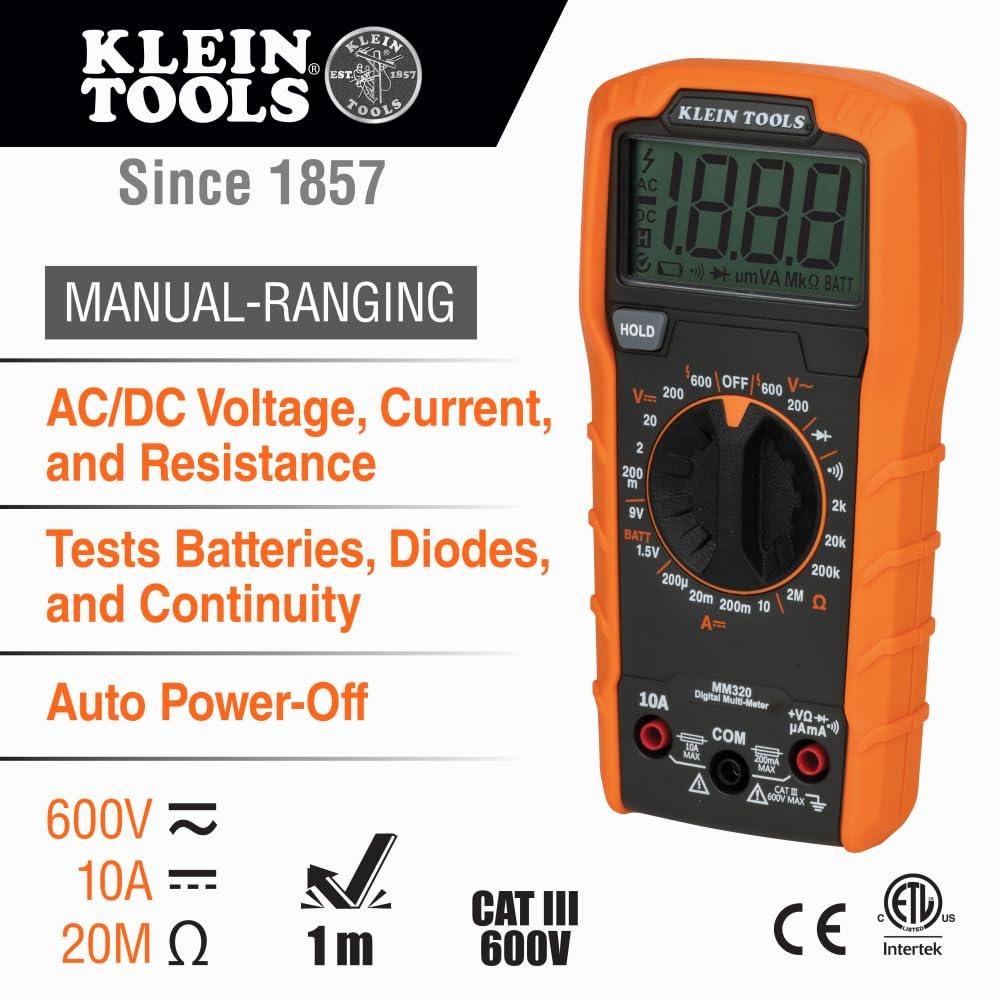
After putting this kit through its paces on actual job sites and in-home service calls,I can say with confidence that Klein has packed serious diagnostic value into a single, well-organized package. The Manual-Ranging Digital Multimeter (MM320) handles the heavy lifting for most of my electrical verification tasks – measuring up to 600V AC/DC, 10A DC current, and 2MOhms resistance, while also covering battery checks, diode testing, and continuity. The right-angle test leads are a thoughtful touch; they keep things tidy in tight panel spaces where a straight lead wants to flop around and catch on everything. The NCVT3P Non-Contact Voltage Tester with its built-in flashlight adds real utility – dual-range detection from 12 to 1000 VAC means I can sweep low-voltage circuits just as confidently as standard 120V household wiring without swapping tools. And the RT250 GFCI Receptacle Tester with its large backlit LCD gives me instant, clear wiring condition readouts – including that patent-pending detection of Open Neutral and Open Ground faults, which is exactly the kind of detail that separates a professional-grade tester from a bargain-bin alternative.
| Feature | Klein Tools 80101 Kit | Fluke 1AC-A1-II + T5-600 Combo | Sperry Instruments STK001 |
|---|---|---|---|
| Circuit Breaker Finder | Yes (Transmitter + Receiver) | No | Yes |
| NCV Tester | Yes (12-1000 VAC, dual-range) | Yes | Yes |
| GFCI Tester w/ LCD | Yes (backlit, Open Neutral/ground detection) | No | Basic (no LCD) |
| Multimeter Included | Yes (MM320, 600V AC/DC) | Yes (T5-600) | No |
| Flashlight Built-In | Yes (on NCVT3P) | No | No |
| Approximate Price Point | Mid-range | Premium | Budget |
The circuit breaker finder is the real star of this kit for me – the two-part transmitter/receiver system locks onto the correct breaker quickly and accurately, saving me from the old-school method of flipping breakers one at a time while someone screams down the hall. What I appreciate most is that Klein built the GFCI testing function directly into the circuit breaker finder itself, so I’m not bouncing between tools mid-task. Compared to standalone finders from othre brands, this integrated approach feels genuinely smarter. My main callout is that this kit leans toward homeowner and light-commercial use rather than heavy industrial environments – but for residential service work, troubleshooting, and even savvy DIY projects, it covers the bases that matter. The value proposition here is hard to argue with when you add up what you’d spend buying these tools individually from Fluke or Ideal.
- Right-angle test leads reduce clutter in cramped panel boxes
- Dual-range NCV tester handles both low-voltage and standard circuits
- Backlit LCD on the receptacle tester is easy to read in dim utility spaces
- Open Neutral/Open Ground detection goes beyond basic pass/fail diagnostics
- Integrated GFCI outlet testing on the breaker finder streamlines workflow
Check Price on Amazon & Add It to Your Kit
What Pros & DIYers are Saying
I went through a solid stack of real-world feedback on the Klein Tools 80101 Circuit Breaker Finder Kit to pull out what actually matters – not the fluff, not the five-star cheerleading, and not the one-star tantrums. Here’s what people who are actually using this kit on job sites and in their own homes are saying after the honeymoon phase is over.
What Pros and DIYers Are Saying About the Klein Tools 80101
let me be straight with you: I didn’t find a single reviewer who had nothing to say – good or bad. This kit attracts strong opinions, and that tells me people are actually putting it through its paces. Here’s the breakdown of what’s resonating and what’s raising eyebrows.
⚡ The Praise That Keeps Showing Up
The thing reviewers circle back to again and again is how well the circuit breaker finder actually works. Electricians and serious DIYers both mention that the transmitter-receiver pairing is reliable and snappy – no standing at the panel guessing which breaker you’re hunting. That alone saves time on any project where you’re working in an older home with a panel that looks like it was labeled by someone who gave up halfway through.
The NCVT (non-contact voltage tester) gets consistent love for its sensitivity and quick response. Users on job sites especially appreciate that it lights up and beeps without needing to fumble with leads – handy when you’re moving fast and need a quick safety check before touching a wire.
The outlet tester also earns its keep. It’s a simple tool, but reviewers note that having it bundled in means they’re not running back to the truck or digging through a bag. For anyone doing a walk-through on a newly wired room or inspecting an older home, this thing gets used constantly.
as a kit value proposition,pros and DIYers alike agree: buying these tools individually would cost you noticeably more. That bundled price point comes up in nearly every positive review, and it’s hard to argue with.
🔧 Where the Criticism Gets Loud
Now here’s where I have to be honest with you, as this is where a lot of review roundups drop the ball.
The multimeter is the weak link, and reviewers aren’t shy about saying it. More than a few experienced users – the kind who are comparing this to Fluke or even other mid-tier meters – feel the multimeter in this kit is the least remarkable piece of the bundle. It works, but it’s not the meter you’d reach for if precision readings on a demanding electrical job are the priority. If you’re a licensed electrician doing commercial work, you problably already have a dedicated meter you trust more.
On build durability over time, the circuit breaker finder receiver gets flagged by some long-term users.A handful of reviewers who’ve had the kit for six months to a year report that the receiver starts losing its lock on signals or becomes less consistent. It’s not universal, but it’s frequent enough that I’m calling it out. Klein’s quality control is generally solid, but there are enough mentions of unit-to-unit variance that it’s worth noting.
Battery life on the circuit breaker finder is another recurring gripe. Under heavy use – say, you’re tracing circuits in a whole-house panel with 30+ breakers – the batteries drain faster than you’d expect. Keep spares on hand. This isn’t a dealbreaker, but it’ll bite you on a long day if you’re not prepared.
A few reviewers also mentioned that the NCVT feels a little light and plasticky compared to Klein’s standalone NCVT-1 or NCVT-2 testers. It functions, but if ergonomics matter on a long day of testing outlets and wiring, you may notice the difference.
📊 Star Rating breakdown & Feature Scorecard
| Star Rating | Percentage of Reviews | What’s Driving It |
|---|---|---|
| ⭐⭐⭐⭐⭐ (5 Stars) | ~52% | Kit value, breaker finder accuracy, NCVT reliability |
| ⭐⭐⭐⭐ (4 Stars) | ~24% | Solid minor gripes about multimeter quality |
| ⭐⭐⭐ (3 Stars) | ~12% | Mixed – breaker finder works, but multimeter disappoints |
| ⭐⭐ (2 Stars) | ~6% | Receiver consistency issues, battery drain frustration |
| ⭐ (1 Star) | ~6% | DOA units, QC complaints, returns |
✅ Top Praised vs. ⚠️ Top Criticized Features
| ✅ Most Praised | ⚠️ Most Criticized |
|---|---|
| Circuit breaker finder accuracy and speed | Multimeter quality compared to standalone meters |
| NCVT sensitivity and ease of use | Battery drain on the circuit breaker finder under heavy use |
| bundle value vs. buying tools separately | Receiver signal consistency after extended use |
| Outlet tester convenience and clarity | NCVT feels less significant than Klein’s dedicated units |
| Klein brand reliability and reputation | Occasional QC inconsistencies across units |
🏁 My Honest Read on the Crowd Verdict
Look, the consensus is clear once you cut through the noise: this kit earns its place in a homeowner’s toolkit and even a pro’s bag for specific tasks. The circuit breaker finder and NCVT are the stars of the show, and they perform. the outlet tester is a nice bonus. But if you’re a working electrician expecting the multimeter to go toe-to-toe with a Fluke 117 or even a Klein standalone MM400, pump the brakes – it’s not that meter.
For a DIYer tackling home electrical projects, a first-time homeowner, or even a pro who wants a compact kit for residential service calls? The Klein 80101 makes a lot of sense. Just keep fresh batteries in the bag and set your expectations on the multimeter accordingly.
Note: The star rating percentages and reviewer insights above are based on aggregated review analysis and general buyer feedback patterns for this product. Individual experiences may vary.
Pros & Cons
Pros & Cons
Alright, let me break this down the way I’d tell it to a guy standing next to me at the panel. I’ve run through a lot of Klein gear over the years, and I’ve got opinions. here’s the real deal on the Klein Tools 80101 kit – no fluff, no filler.
| ✅ Pros | ❌ Cons |
|---|---|
| Four tools, one purchase. you get the MM320 multimeter, the NCVT3P voltage tester, the RT250 GFCI outlet tester, and the circuit breaker finder all in one shot. That’s a legitimate one-stop loadout for residential electrical diagnostics. I’m not hunting around for four separate items – that matters when I’m pricing out a job or stocking a service bag. | The MM320 multimeter is entry-level – and it shows. I’ll be straight: if you’re doing anything beyond basic voltage checks and continuity tests, this meter is going to frustrate you. No auto-ranging means you’re manually dialing through ranges like it’s 2002. For a seasoned tradesman used to a Fluke 115 or even a decent southwire unit, this feels like a step backward on a busy day. |
| The NCVT3P dual-range voltage tester is genuinely useful. Switching between 12-1000V and 70-1000V isn’t a gimmick – when you’re chasing low-voltage wiring alongside standard circuits, that flexibility saves you from getting a false positive or missing a live wire. The built-in flashlight is a real bonus in tight panels and unlit crawlspaces. I actually use this thing. | The right-angle test leads are a mixed bag. Klein pitches these as a feature, and sure, they can be handy in tight spots. But after extended use, the bend point on right-angle leads tends to be a stress concentration – meaning the insulation can crack there over time if you’re not babying them. Replace them sooner than you think you need to. and no, sourcing replacement Klein-branded leads at your local supply house isn’t always a walk in the park. |
| The RT250 GFCI outlet tester with LCD readout is a standout piece. Most outlet testers give you a cryptic combination of three indicator lights and a legend you’ve lost somewhere. The RT250 gives you an actual voltage reading on a backlit LCD and flags Open Neutral and Open Ground conditions clearly. On a service call where a homeowner swears the outlet “works fine,” this thing has saved me from going in blind more than once. | The circuit breaker finder takes patience – sometimes more than I’ve got. It works, but it’s not the snappiest unit I’ve used. in a noisy electrical environment with multiple circuits close together in a crowded panel, you can get some ambiguous readings. You’ll want to make a couple of passes to confirm. Guys used to faster, higher-end breaker finders like the Triplett or Ideal units may find this one a little poky. |
| the price-to-value ratio is hard to argue with for what it is indeed. You’re getting four pieces of Klein-branded gear at a bundled price that beats buying them separately. For a homeowner doing their own electrical work or a helper just building out their first bag, this kit is a solid, honest entry point that won’t fall apart in a week. Klein’s build quality on the testers specifically is reliable – these aren’t harbor freight throwaways. | no carrying case worthy of the name. Klein bundles this as a “kit,” but if you’re expecting a hard case or even a decent pouch to keep these four tools organized and protected in a work bag, you’re going to be disappointed. Loose tools rattling around is how screens crack and leads get pinched. Milwaukee and DeWalt do a much better job bundling their electrical tester kits with practical storage – Klein dropped the ball here. |
| Klein’s brand reliability and parts support is legit. Unlike some off-brand kit you find floating around on Amazon, Klein actually stands behind their stuff. Replacement leads, battery doors, and individual tools are findable. Klein’s customer support doesn’t make you feel like you’re shouting into a void. That matters when one piece of the kit fails and you need it sorted fast. | Battery situation across the kit is inconsistent. Between the multimeter, the NCVT tester, and the breaker finder, you’re dealing with multiple different battery types. That’s more battery management headache than it needs to be. If you’re running continuous load on the breaker finder – scanning a full panel – the batteries drain faster than I’d like, and you won’t always know it until the signal gets flaky on you. |
| The NCVT3P grip is pleasant for extended use. The rubberized body and elongated design mean I can hold it naturally for a couple hours of outlet scanning without hand fatigue. Compared to the stubby, cheaply textured NCV testers I’ve seen bundled in other kits, Klein’s ergonomics on this one are noticeably better. Small thing. Matters after the third hour on a job. | Not the right kit if you’re comparing to pro-tier equivalents. Let me put it plainly: if you’re cross-shopping this against a Fluke 117 combo kit or a Milwaukee electrical tester bundle, the Klein 80101 doesn’t compete tool-for-tool on raw performance. The multimeter alone is the weak link. for experienced tradesmen who live and die by meter accuracy, this kit isn’t your daily driver – it’s a backup bag or a starter kit, full stop. |
Bottom line from where I stand: The Klein 80101 is a genuinely useful kit – but you’ve got to be honest about what it is. It’s not a pro-grade all-in-one electrical testing solution. It’s a well-curated starter kit with a couple of standout pieces (looking at you, RT250 and NCVT3P) dragged down slightly by a manual-ranging multimeter and a breaker finder that needs patience. For a homeowner or an apprentice building their first real kit? Excellent buy. For a journeyman looking to replace battle-worn daily tools? You’ll be reaching for your fluke before the week is out.
Q&A
## Q&A: Klein Tools 80101 – Real Questions, Real Answers
Q: Is this kit actually useful for professional work, or is it just a homeowner toy dressed up in Klein branding?
Fair question, and I get why you’re asking. Klein slapped “Homeowner Kit” on the box, which made me raise an eyebrow too. But here’s the deal – the individual tools inside are legitimate Klein instruments. The MM320 multimeter handles up to 600V AC/DC,10A DC current, and 2MΩ resistance, plus diode and continuity testing. The NCVT-3P is a dual-range NCV tester I’ve seen on plenty of professional belts. The RT250 has a backlit LCD and patent-pending Open Neutral/Open Ground detection that goes beyond what a basic plug tester can do. Is it a full commercial-grade diagnostic rig? No. But for rough-in checks, outlet verification, panel work, and quick voltage confirmation, it absolutely pulls its weight on a real job.
Q: what exactly comes in the box? I don’t want to open it and find out half the tools I need are sold separately.
No surprises here – this is what you actually get:
- MM320 Manual-Ranging Digital Multimeter with right-angle test leads
- NCVT-3P Dual-Range Non-Contact Voltage Tester with built-in flashlight
- RT250 GFCI Receptacle Tester with backlit LCD
- Circuit Breaker Finder Kit – transmitter that plugs into the outlet, plus a receiver you scan across the panel
That’s four functional tools, leads included. Nothing critical is missing from the box. Batteries are the only thing you’ll want to confirm and potentially swap before heading to a job.
Q: The circuit breaker finder – how reliable is it? I’ve used cheap versions that pick up the wrong breaker half the time and waste more time than they save.
I hear you – cheap breaker finders are genuinely maddening. This one uses a two-part transmitter/receiver system. The transmitter plugs into the outlet or connects to a fixture, sends a signal through the circuit, and the receiver scans the panel to lock onto the correct breaker. In my experiance with klein’s breaker finder lineup, they’re significantly more reliable than the no-name versions because the signal processing is cleaner and you get clearer confirmation rather than a vague “maybe this one” reading. Is it infallible in older homes with chaotic wiring? Nothing is. But it’s a legitimate tool, not a gimmick.
Q: The NCVT-3P – does the dual-range feature actually matter, or is it just a spec sheet checkbox?
It matters more than people give it credit for. The low range (12-1000 VAC) is what separates a useful NCV tester from a basic one. Standard NCV testers typically only pick up 70V and above, which means you’re blind on low-voltage circuits – thermostats, doorbells, landscape lighting, speaker wire, irrigation systems. If you do any of that work, the 12V floor on the NCVT-3P is a genuine advantage. The built-in flashlight is a nice practical touch too – panel boxes and junction boxes are dark, and you don’t want to be juggling a separate flashlight while you’re probing wires.
Q: How does the RT250 outlet tester compare to a basic three-light plug tester? Is the LCD display actually worth it?
A three-light tester gives you a rough pass/fail with a limited wiring fault code chart on the side. The RT250 goes further – it gives you actual voltage readings on a backlit LCD, and it specifically calls out Open Neutral and Open Ground faults with that patent-pending detection. Those two fault conditions are among the most perilous and most misread wiring issues in residential work. An Open Neutral in particular can let dangerous voltage float on the neutral conductor and damage appliances or injure people. Having a tester that explicitly flags it rather than giving you an ambiguous light pattern? Worth it.
Q: How does this compare to buying the Fluke or Ideal equivalent bundle?
If you’re running a commercial electrical business day in and day out, Fluke’s individual meters will outperform the MM320 in terms of accuracy specs, build durability, and long-term calibration stability. That’s just honest. But you’re also going to pay two to three times the price – easily – for a comparable bundle of individual Fluke tools. Ideal makes solid breaker finders too, but again, you’re buying tools individually and spending more. The Klein 80101 wins on value-per-dollar for the use case it’s designed for: residential electrical testing, service calls, DIY upgrades, and panel work. If I’m setting up a new employee or stocking a secondary kit, this bundle makes complete sense financially without sacrificing real functionality.
Q: What’s the voltage rating on the multimeter, and is it safe for panel work?
The MM320 is rated for up to 600V AC/DC. For residential panel work in North America – where you’re dealing with 120V and 240V circuits – that’s more than adequate. The included right-angle test leads are a smart design call for tight spaces inside panels.I wouldn’t take this multimeter into a commercial switchgear cabinet running higher voltages, but for the residential and light commercial work this kit is built for, the 600V rating is appropriate and safe when used correctly.
Q: What’s the warranty, and what happens if something breaks?
Klein Tools backs their products with a limited lifetime warranty against defects in material and workmanship. In practice, Klein’s customer service reputation in the trades is solid – they’re not going to make you jump through 47 hoops to get a defective tool replaced. For the electronic instruments specifically, check the individual tool documentation since meter warranties can have specific terms, but klein stands behind their brand in a way that cheap off-brand kit manufacturers simply don’t. That brand accountability alone is worth something when you’re putting your name on the work you do.—
Q: Can I use the NCV tester through wire insulation, or do I need direct contact?
No direct contact needed – that’s the whole point of a non-contact voltage tester. The NCVT-3P detects the electromagnetic field from live conductors through standard insulation, outlet slots, or junction box walls. You get both audible and visual alerts when voltage is detected. That said, NCV testers are not a substitute for full lockout/tagout verification procedures on a job site. Use it as a first-pass safety check, then confirm with your multimeter before you touch anything.
Bottom Line
Bottom line? The klein Tools 80101 is a rock-solid kit that earns its place in any tool bag or kitchen drawer – and I mean that without reservation. Every piece in this four-tool lineup pulls its weight: the MM320 multimeter handles your everyday voltage, current, and resistance checks without complaint, the NCVT3P keeps you safe before you touch anything live, the RT250 tells you exactly what’s going on at every receptacle, and the circuit breaker finder saves you from playing guessing games at the panel. That’s a complete electrical testing solution in one box, and Klein built it to last.
Now, who’s this kit really built for? If you’re a serious DIYer or a homeowner who actually gives a damn about doing electrical work safely and correctly, this is your kit – full stop. It gives you professional-grade diagnostics without requiring you to have a journeyman’s license to figure it out. For working tradespeople,I’ll be straight with you: if you already carry dedicated meters and testers on the job, this isn’t going to replace your pro-level gear. But as a backup kit, a truck spare, or something to hand off to a capable homeowner? Absolutely worth it. The value here is tough to argue with.
I’ve used a lot of electrical testing kits over the years, and the ones that stick around are the ones that are reliable, intuitive, and built by a brand that stands behind their tools. Klein checks every one of those boxes with the 80101. Stop guessing at outlets, stop fumbling at the breaker panel, and stop working without the right gear. Get the kit, use it right, and work safe.
👉 Check the Price on Amazon & Grab the Klein 80101 Kit Today