The WORKPRO Locking Pliers, 10-inch Curved Jaw Vice Grips are a general purpose clamping and gripping tool for repair work, job sites and home projects. The listing points to chrome vanadium steel and a one-handed release, which is what you want in this class. Short verdict: a solid-looking basic locking plier, based on specs alone.
The adjustable screw sets clamping pressure for different jaw widths. The one-handed trigger matters when your other hand is holding the work. The steel is heat-treatedand the diamond-pattern handle is meant to resist slipping. Check the size first, because the title says 10-inch but the box contents say 7-inch.
Quick verdict: A sensible curved jaw locking plier for everyday clamping, twisting and turning.
- Best for: Repair jobs and home projects that need a dependable clamp.
- Skip it if: You need a confirmed size, since the listing shows both 10-inch and 7-inch.
- Key spec: Heat-treated chrome vanadium steel.
WORKPRO 10-Inch Locking Pliers Specs and What Comes in the Box
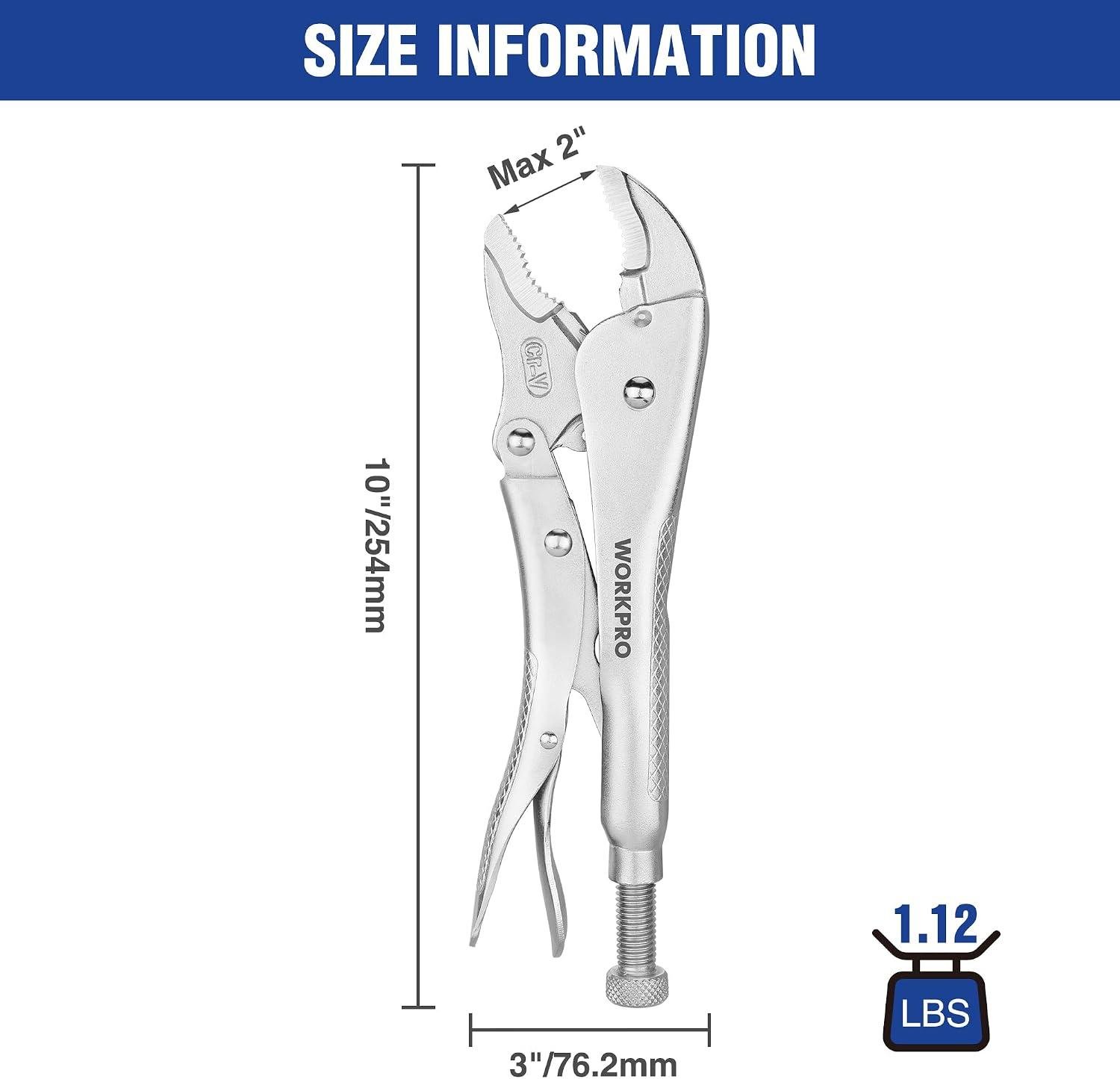
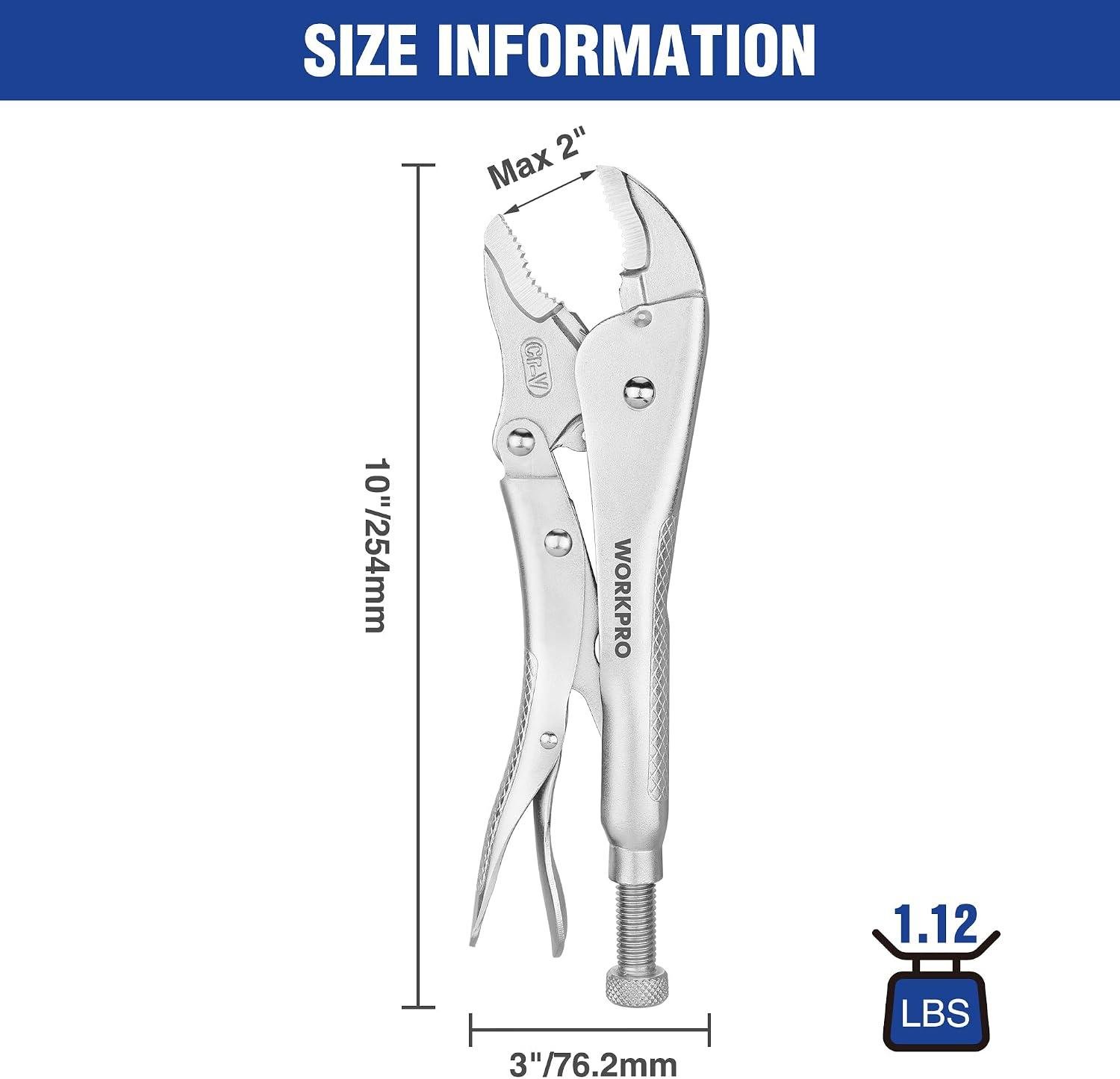
Check the size first. The listing calls this a 10-inch plier, but the what’s in the box line says one 7-inch curved jaw locking plier. Confirm which length you are getting before you buy, because reach and leverage change with length.
- Jaw style: curved jaw
- Material: chrome vanadium steel, heat-treated
- Adjustment: screw design to suit different jaw widths
- Release: one-handed trigger
- Handle: diamond-pattern anti-slip grip
Heat-treated chrome vanadium is the right steel for this class of tool. Cheap locking pliers usually give out at the jaw teeth or the pivot, so those are the spots to inspect when it arrives. The listing gives no hardness rating, so I can’t say how it holds up there.
The box holds one plier. No case, spare jaws or accessories are listed. The adjusting screw sets clamping pressure to the workand the trigger lets you release the grip with one hand while the other hand supports the part. That matters when you are working in a tight spot or off a ladder.
How Strong Is the Grip on These Curved Jaw Vice Grips?
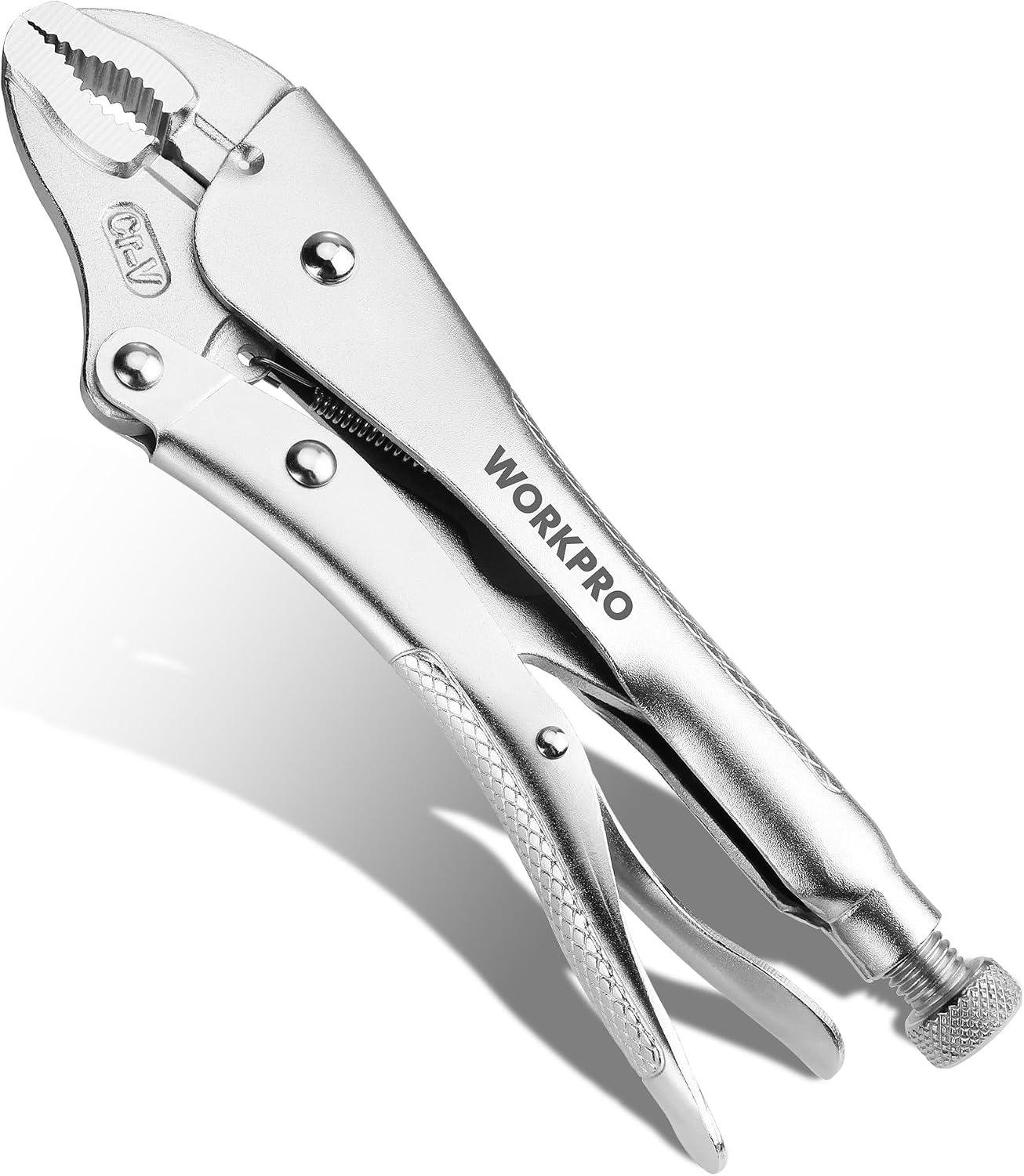
The listing gives no clamping force figure, so I won’t quote one. It says the trigger mechanism is designed for maximum locking strength and that an adjustable screw sets the jaw opening for the work at hand. That screw decides how hard the jaws bite. Set it right and the part stays locked. Set it wrong and the jaws either won’t lock or will slip.
The jaws are chrome vanadium steel, heat-treated. In this class of tool, soft jaws are the usual failure. The teeth round off and the grip fades. Heat treatment is what you want to see. Curved jaws also tend to hold round and rounded-off stock better than flat jaws, since they wrap the part instead of touching it at two points.
When you get a pair, check these before trusting it on a real job:
- The jaws lock firmly at the screw setting you use most.
- The jaw tips meet cleanly when closed, with no gap or twist.
- The trigger releases with one hand, as the listing claims.
- The diamond-pattern handle stays put when your hands are dirty or oily.
Build Quality and Jobsite Durability of the WORKPRO Pliers
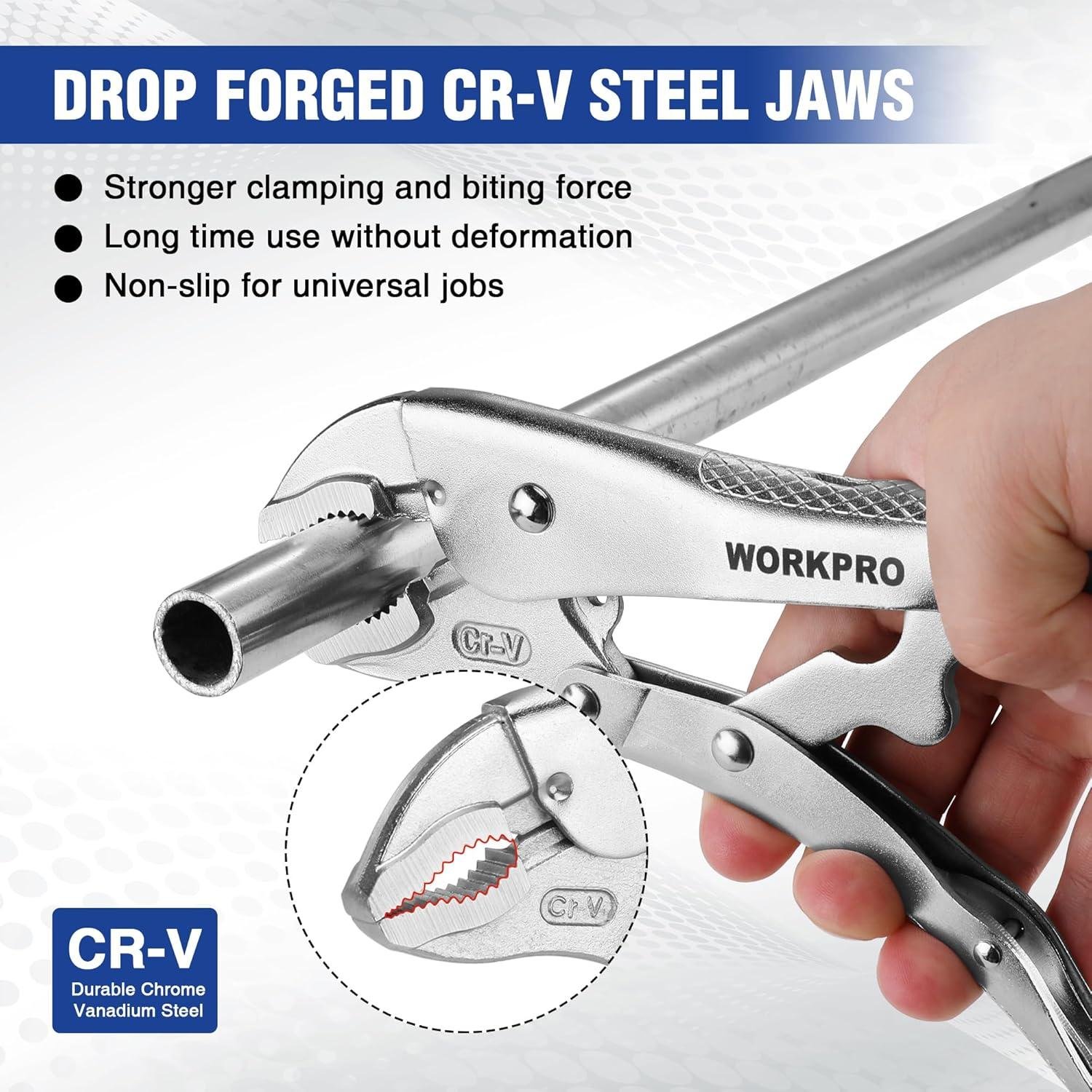
The most useful fact here is the steel. The listing says these pliers are made from chrome vanadium steel and heat-treated for strength. That is the right material for locking pliers, since the jaws take heavy clamping force and twisting load. Heat treatment matters just as much, because soft jaws round off and lose their bite.
I have not used this tool, so I can’t speak to how it holds up in the field. What I can tell you is where this class of pliers usually gives out. Check the jaw teeth, the pivot and the adjusting screw threads, because those take the abuse.
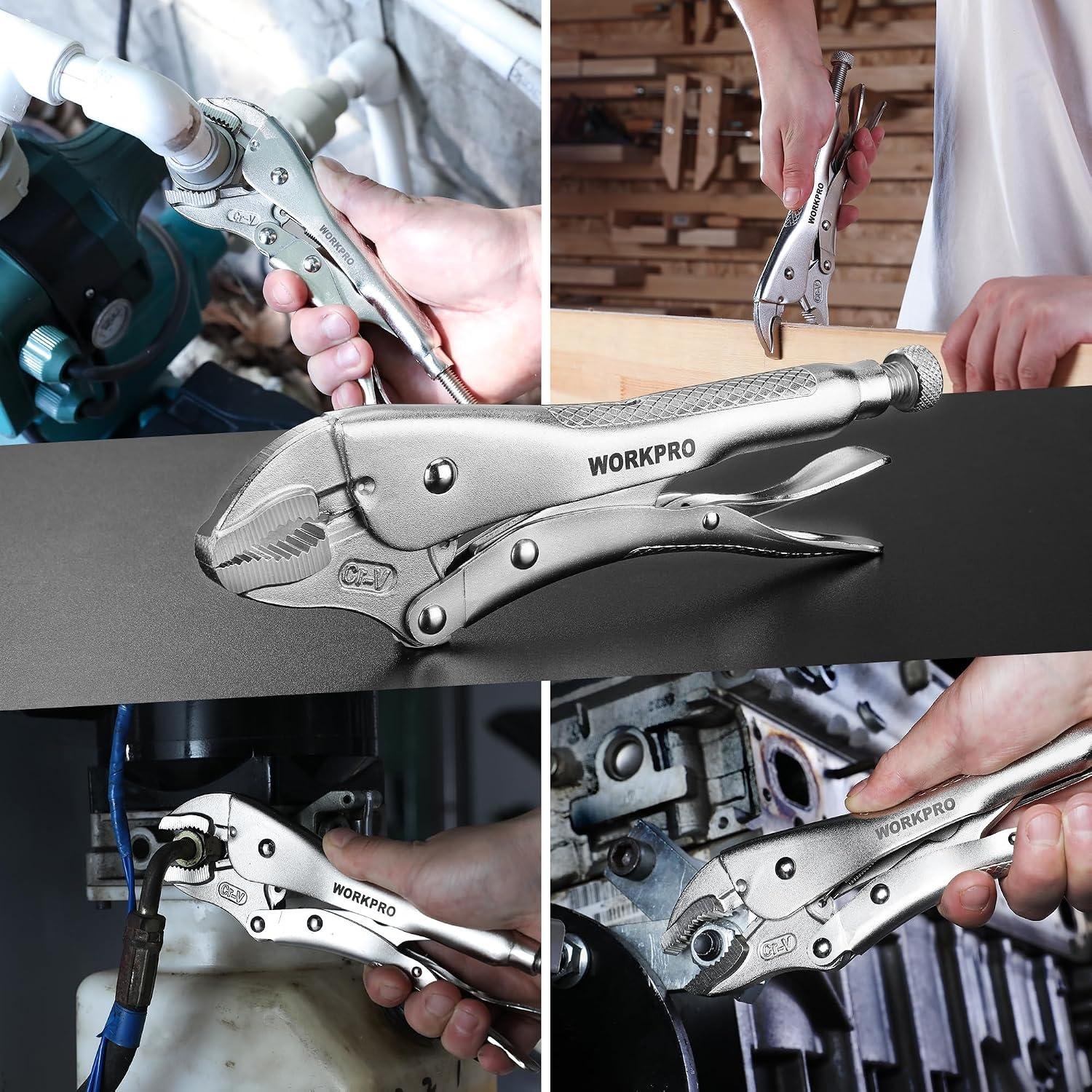
- Jaws: curved, which suits gripping round stock and fittings.
- Adjusting screw: sets the jaw opening so the clamping pressure fits the work.
- Release trigger: one-handed operation, so it gets cycled a lot over a day.
- Handle: diamond-pattern grip for traction when your hands are dirty.
One thing to sort out before buying: the title says 10-inch, but the box contents describe a 7-inch curved jaw locking plier. Confirm the actual size with the seller so you get the reach you expect.
Jaw Capacity and Adjustment Screw Compatibility With Common Tasks
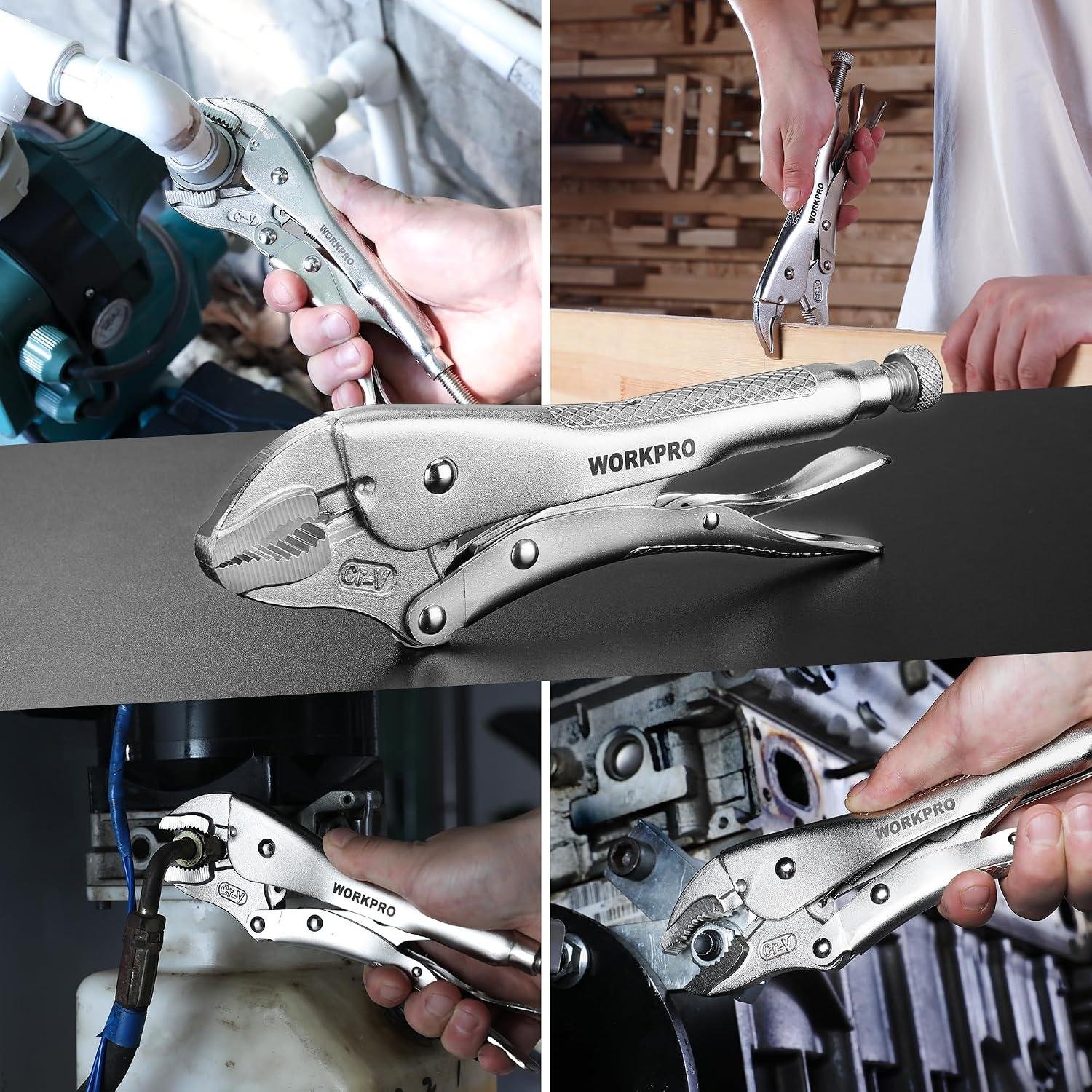
The adjustment screw sets the jaw width to the work. You turn it until the jaws fit the part, then close and lock the handle. The listing says this gives the right clamping pressure across different jobs. If the screw is set wrong, you either can’t close the handle or the grip comes out weak.
The listing gives no jaw opening figure, so I won’t guess at one. The title says 10-inch, but the box description says a 7-inch curved jaw plier. Sort that out before you buy, because length changes both reach and leverage. Check the stated jaw opening against the biggest stock you actually clamp.
The curved jaws match the tasks the listing names:
- Tightening and turning: curved jaws wrap around round or hex stock better than flat jaws.
- Clamping: set the screw once and the plier holds a part while your hands do other work.
- Twisting: the locked jaws give you a solid handle on the piece.
On tools in this class the screw threads and jaw teeth are what wear out first. The listing calls out heat-treated chrome vanadium steel, which is the right material for that wear. I would still check that the screw turns smoothly and the jaws meet evenly when you set it.
Are WORKPRO Locking Pliers Better Than Irwin Vise-Grips?
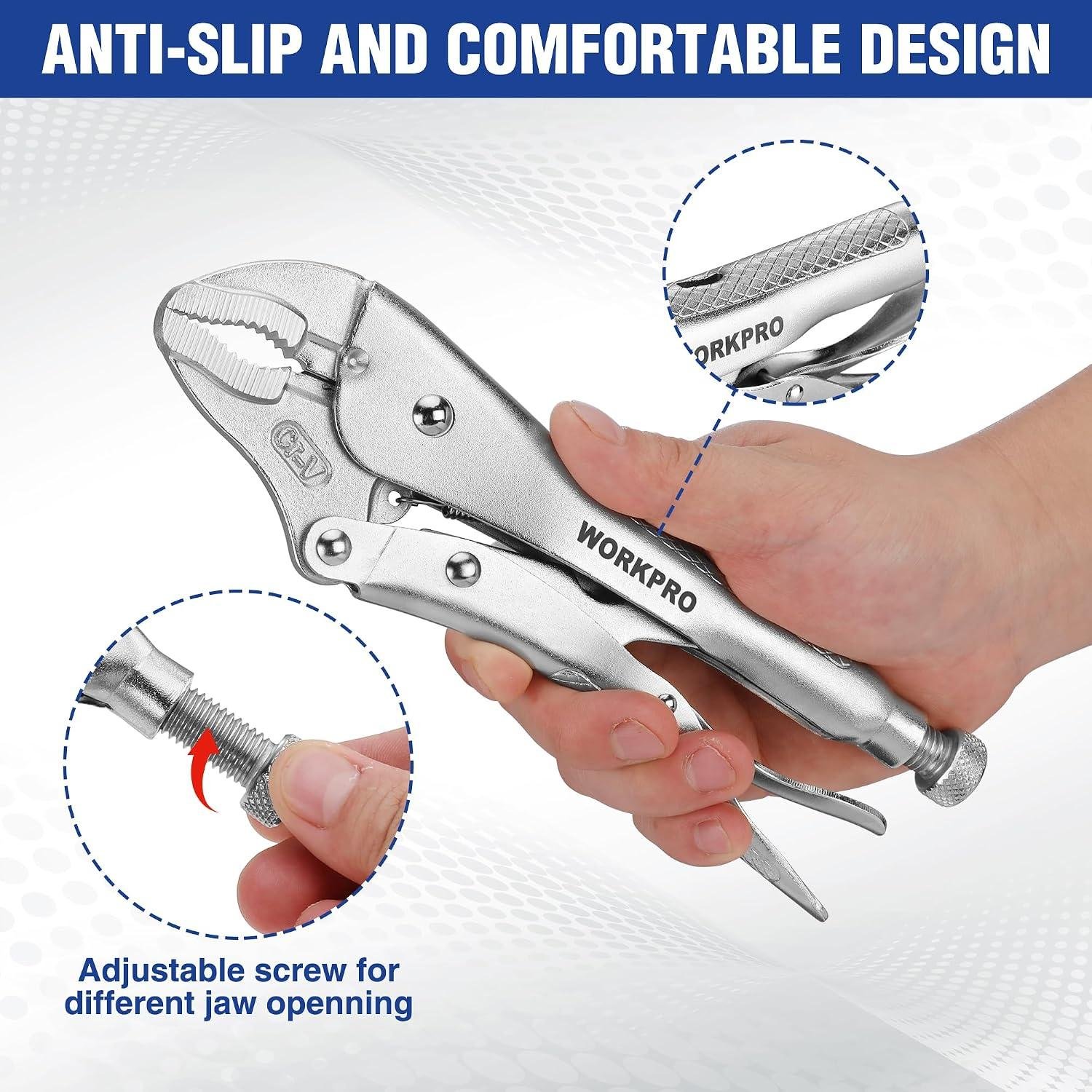
On features, the WORKPRO lines up with what you expect from a locking plier. It has an adjustable screw for different jaw widths, a one-handed release trigger and a diamond-pattern handle for grip. The jaws are curved and the steel is chrome vanadium, heat-treated for strength. Those are the same basics you look for on an Irwin Vise-Grip.
Where Irwin has the edge is reputation. Vise-Grip is the name that defined this tooland techs trust it because it has been on job sites a long time. The WORKPRO listing says nothing about jaw tolerances or how consistent the lock is, so the description alone can’t settle a head-to-head call on those details.
What decides it on the job is how the lock holds under load and how the jaws bite. Here is what I check on any pair in this class:
- Jaws meet evenly and line up when closed.
- The adjustment screw turns smoothly and doesn’t bind.
- The lock snaps over center with firm, repeatable pressure.
- The trigger releases cleanly with one hand.
- The teeth hold a rounded fastener without slipping.
If a pair clears those checks, the name on the handle matters less than the bite.
Which Jobs and Users Suit 10-Inch Curved Jaw Locking Pliers Best?
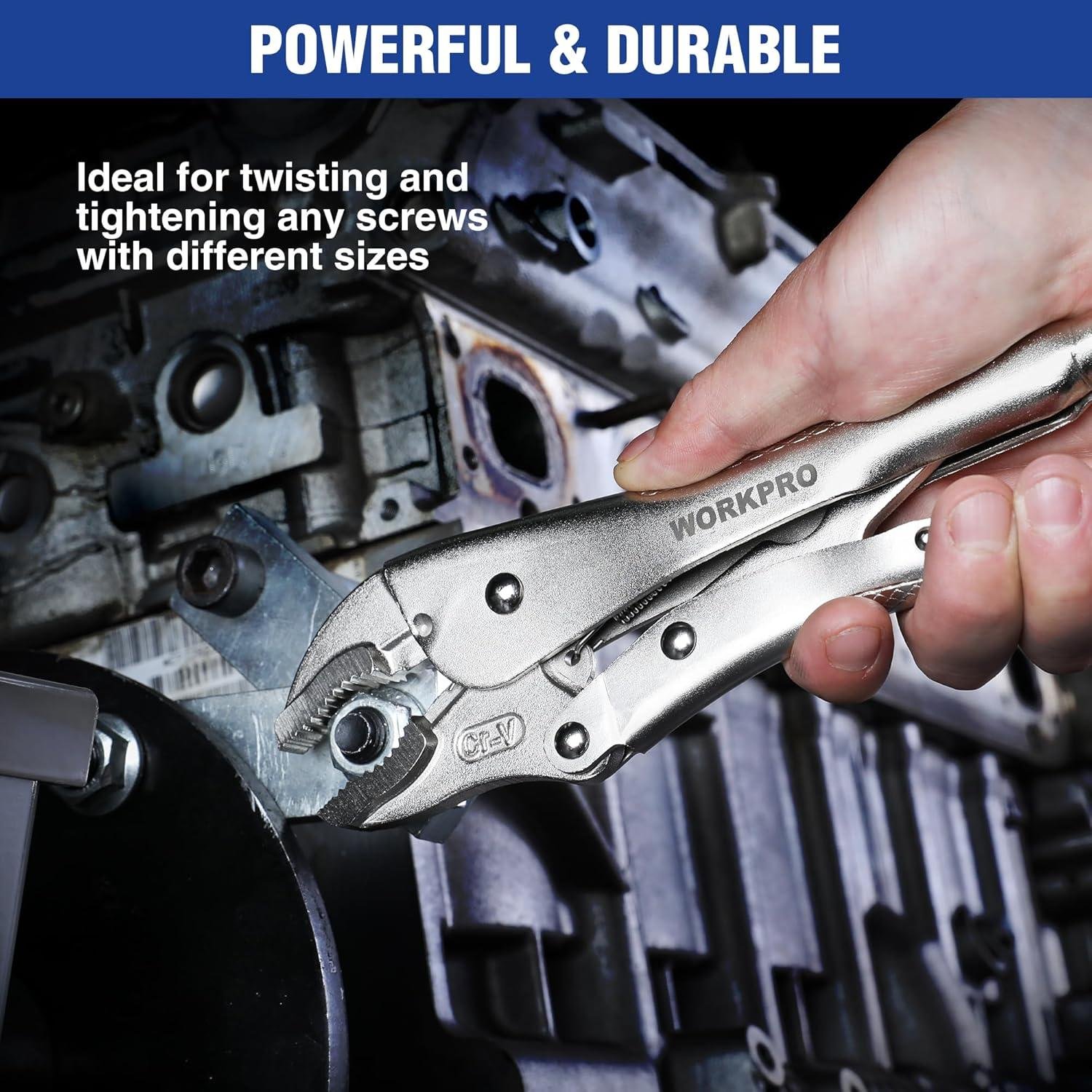
This tool suits jobs where a wrench can’t get a bite, like rounded or stripped nuts and bolts. The curved jaw wraps around round stockand the lock lets you set it and work with both hands. That makes it useful for holding, clamping and turning in repair and maintenance work.
- Gripping and turning rounded or damaged fasteners
- Clamping parts together while you fit or fasten them
- Twisting and holding rod or small stock
- General home improvement and repair jobs
- Industrial job sites where one tool has to cover several tasks
The adjustable screw sets the jaw to the width of the work, so it fits people who deal with mixed sizes. Plan on a few seconds to dial it in each time the size changes. The one-handed release trigger helps when your other hand is busy holding the work or steadying you on a ladder.
Heat-treated chrome vanadium steel is the right material for hard use. On locking pliers, the jaw teeth and the adjusting screw are what I would check first as they wear. It is a poor choice for finished or soft surfaces, since the teeth will mark them. Anyone who needs fine, precise gripping should reach for a different plier.
Pros & Cons
Pros and Cons
| Pros | Cons |
|---|---|
| Chrome vanadium steel, heat-treated for strength under hard use. | Title says 10-inch but the box contents say 7-inch. Confirm size first. |
| Adjustable screw sets clamping pressure for different jaw widths. | Screw needs resetting when jaw width changes, which adds a step. |
| One-handed release trigger lets you free the tool while holding a part. | Cutting is advertised, but no cutter or jaw is described. |
| Diamond-pattern handle is meant to resist slipping while you turn. | Weight, jaw opening capacity and finish are not listed. |
| Curved jaw covers tightening, clamping, twisting and turning. | Curved jaw only, with no long-nose or straight option included. |
Skip it if: you need a confirmed 10-inch size, a listed jaw capacity, a built-in wire cutter or long-reach jaws for tight panels and equipment cabinets.
Frequently Asked Questions
Is the WORKPRO 10-inch curved jaw locking pliers actually 10 inches or 7 inches?
The listing is inconsistent, so confirm the size before you buy. The title says 10-inch, but the box contents line says a 7-inch curved jaw locking plier. Both numbers appear in the description. Check the listing images and dimensions or ask the manufacturer, because length affects reach and leverage.
What are WORKPRO vice grips made of?
They are made of chrome vanadium steel that is heat-treated for strength. That is a sensible material for locking pliers, since the jaws and the lock mechanism take a lot of force. The description does not give a warranty length or a hardness rating, so check the listing or the manufacturer for those details.
How does the adjustable screw work on the WORKPRO locking pliers?
The adjustable screw lets you set the pliers for different jaw widths so you get the clamping pressure the job needs. Set it for the work before you lock down. The description does not give an adjustment range, so check the listing or the manufacturer if you need to clamp very thin or very thick material.
Can you release the WORKPRO vice grips with one hand?
Yes, they have a one-handed release trigger. The description says it allows single-handed operation, which helps when your other hand is holding a pipe, a panel or a ladder. It does not say how much force the release takes, so check the listing or the manufacturer for more detail.
Are these locking pliers good for general repair and clamping jobs?
Yes, they suit general gripping, clamping, twisting and turning. The description lists tightening, clamping, twisting and turningand says they are used on job sites, home improvement and repair work. The curved jaw and diamond-pattern handle help with grip. Still, use the right wrench on good fasteners, since locking pliers can chew up nuts.
Final Verdict
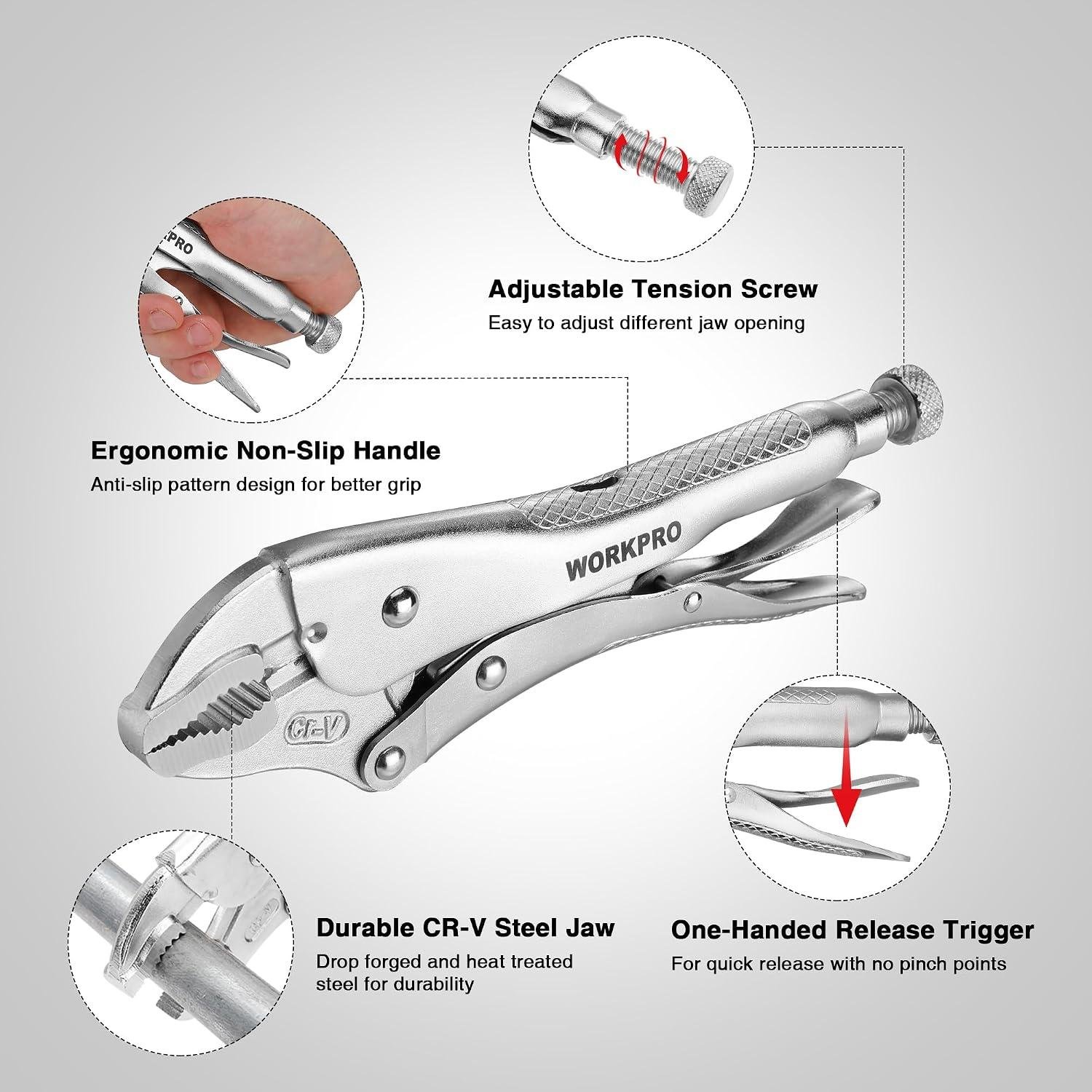
Bottom line: this is a straightforward set of curved jaw locking pliers with the features that matter in this class. The description lists chrome vanadium steel, heat treatment, an adjustable screw for different jaw widths and a one-handed release trigger. The curved jaw suits round stock, which is the job this tool should do well. One thing to check first: the title says 10-inch, but the box listing says 7-inch. Confirm the size before you order.
It fits a homeowner or serious DIYer who wants a general clamping and turning tool for repair work. A working tech can keep one in the bag too, though I would not buy it expecting a specialty tool. If you need flat jaws for sheet metal or a long reach for deep work, look at something else.