The WORKPRO 8-Inch Long Nose Slip Joint Pliers are a low-cost hybrid of needle nose and slip joint pliers, aimed at home repair and general toolbox duty. Most buyers say the value is good. Some report uneven fit, alignment and grip, so quality control looks like the risk.
The body is CR-V steel with heat treatment. The jaws have three serration zones and a wire cutting shear at the base. The slip joint gives two jaw positions, so one tool covers thin wire and larger bolts. On a real job, jaw alignment and a snug joint matter most, because loose or mismatched jaws slip and chew up fasteners.
Quick verdict: A fairly priced backup pair for light work, but check the jaws the day it arrives.
- Best for: DIY work and a tool bag backup that reaches tight spots.
- Skip it if: You need guaranteed precision for daily professional use.
- Key spec: Two position slip joint with 3-zone serrated jaws.
WORKPRO 8-Inch Slip Joint Pliers Specs and Box Contents
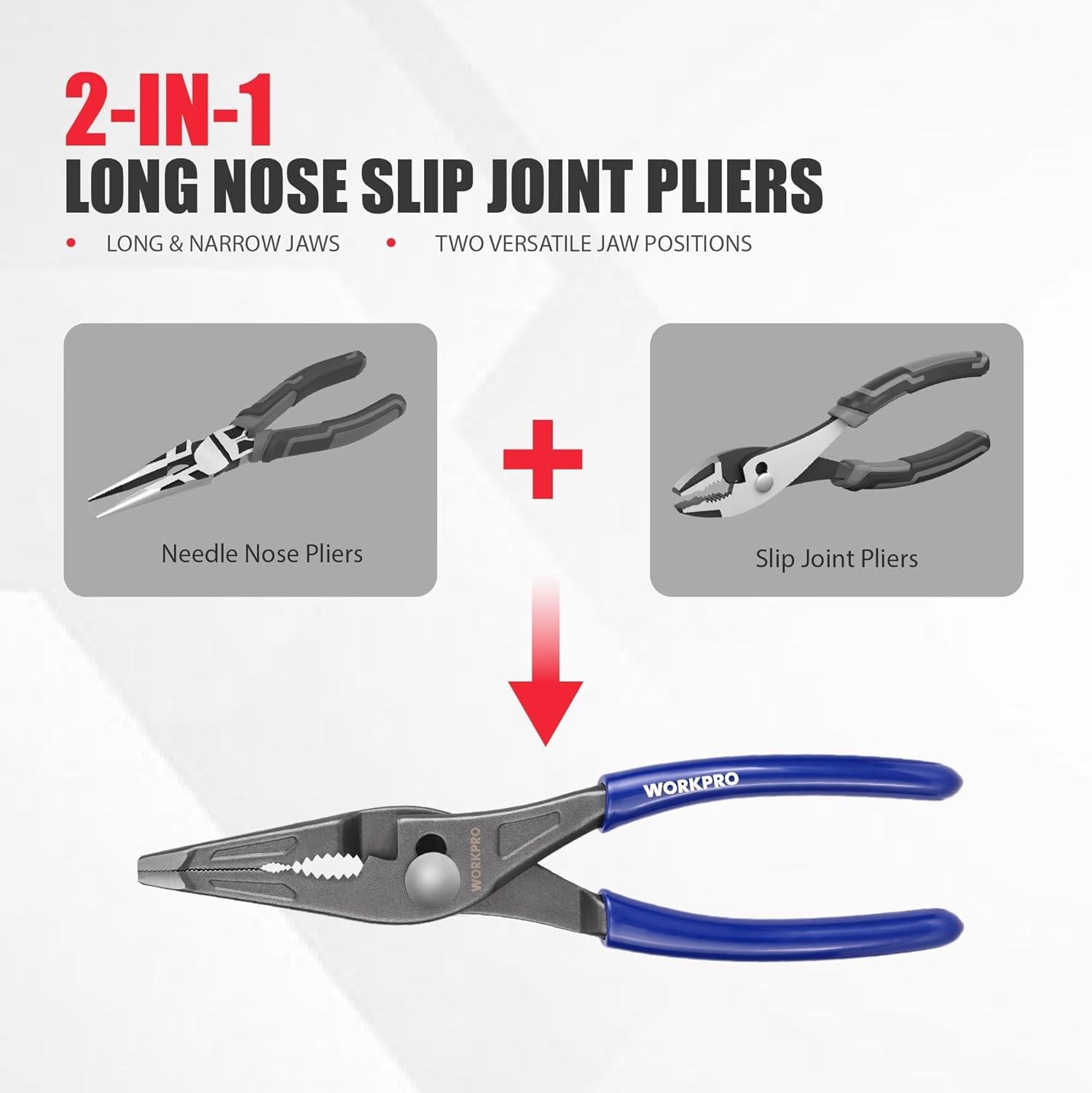
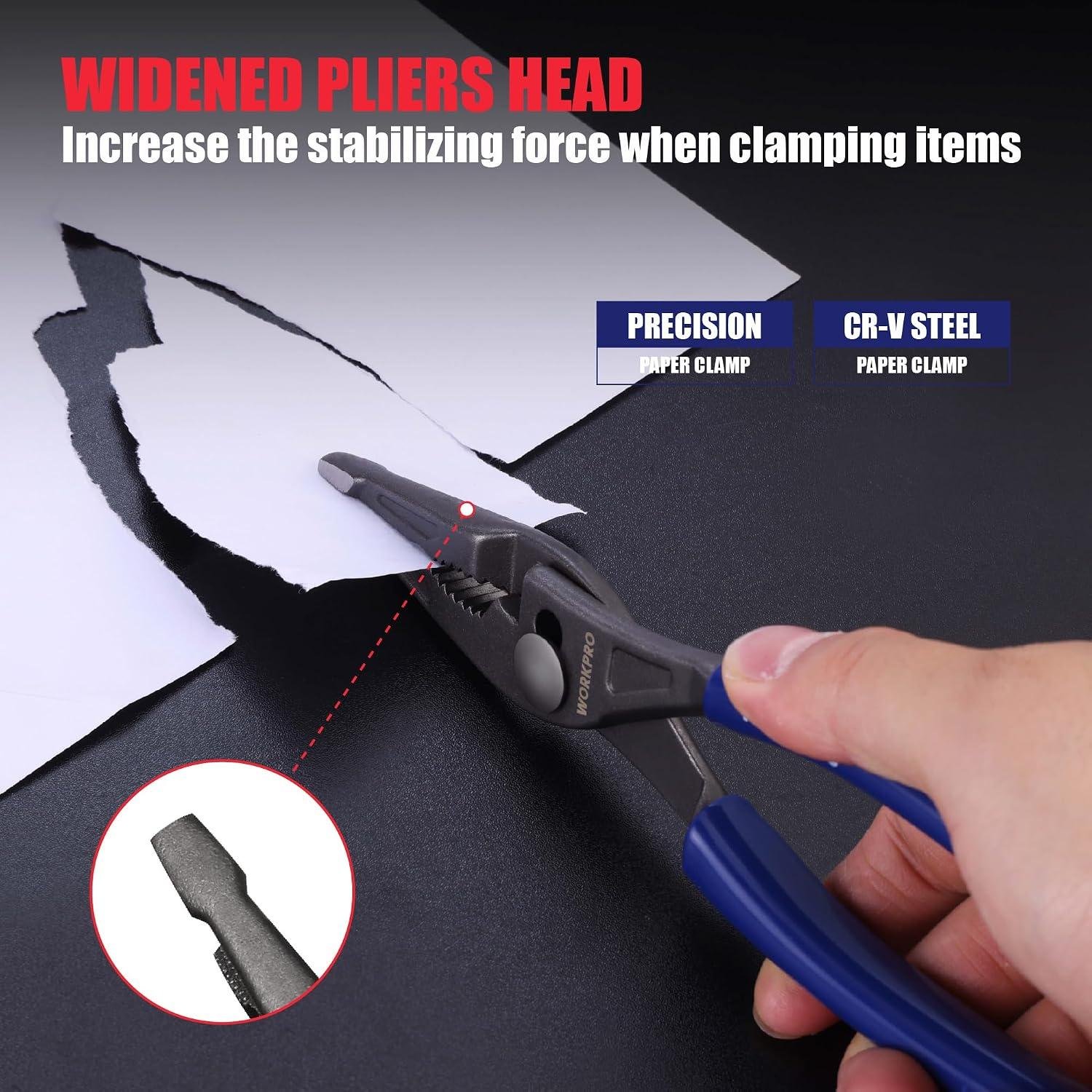
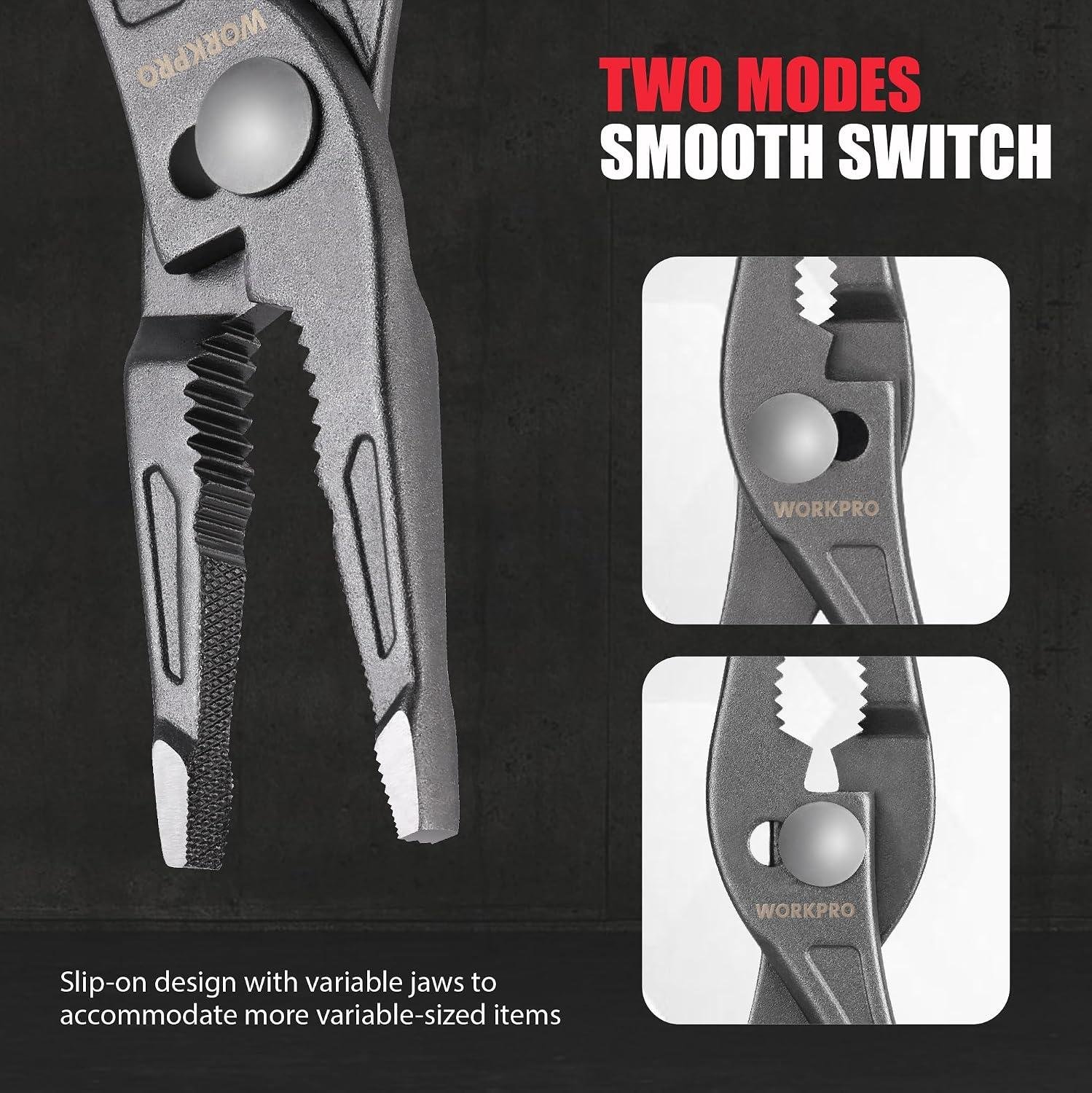
The most useful spec is the jaw design. This is a slip joint plier with a long, narrow nose, so it covers some needle nose work too. The head is widened to steady the grip on a partand the joint has two jaw positions for small and larger work.
| Length | 8 inches |
| Body material | CR-V steel with special heat treatment |
| Handles | Plastic dipped, ergonomic, non-slip |
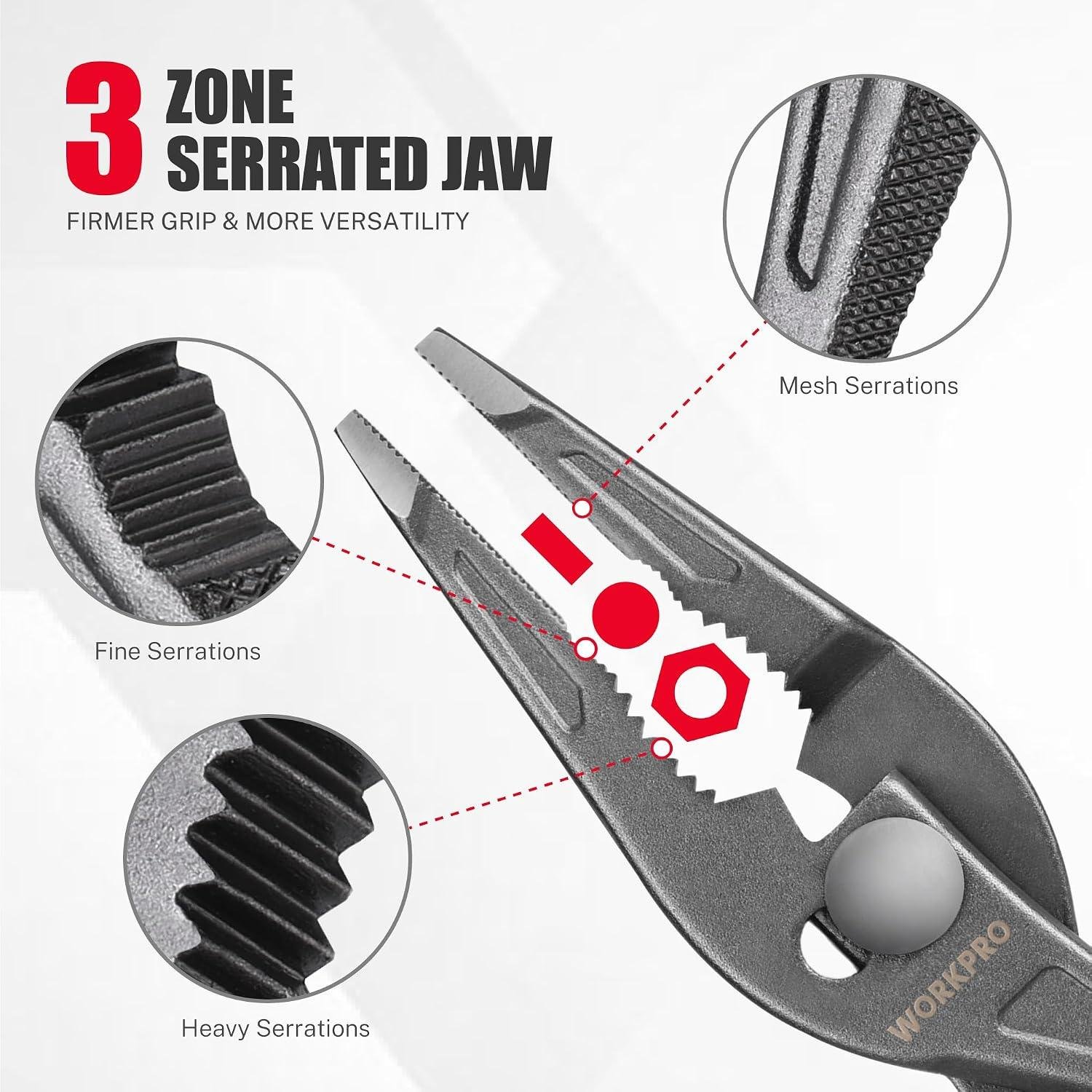
| Jaw serrations | Three zones: mesh at the nose, fine and heavy serrations inward |
| Jaw positions | Two, via the slip joint |
| Cutter | Wire cutting shear at the bottom of the jaws, rated for iron wire |
| Color | Blue |
On a job, the serration zones matter more than the steel name. Mesh teeth at the tip hold small parts and wire. Heavy teeth further back bite on round stock and nuts. The wire size for the cutter is cut off in the description I have, so check the listing before you count on it for anything thick.
The description lists nothing in the box besides the pliers themselves. No sheath, case or extra tools are mentioned, so don’t plan around any.
How Well Does the Long Nose Reach in Tight Spaces?
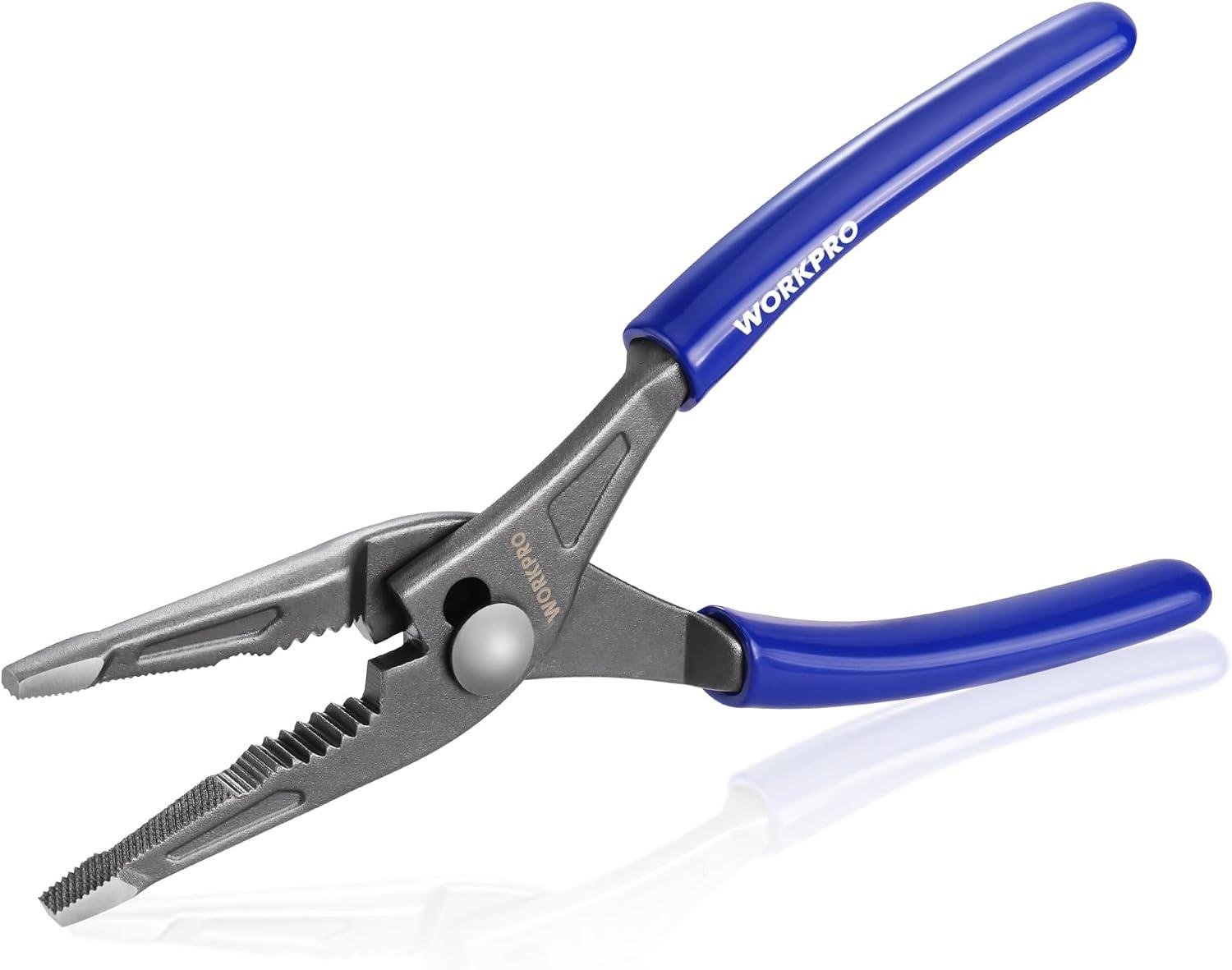
The reach comes from the jaw shape. The jaws are narrow and slender, so these work like needle nose pliers while keeping the slip joint. At 8 inches long, the nose can get past obstructions that would stop a standard slip joint head. One reviewer says they get into tight places and still grip nicely.
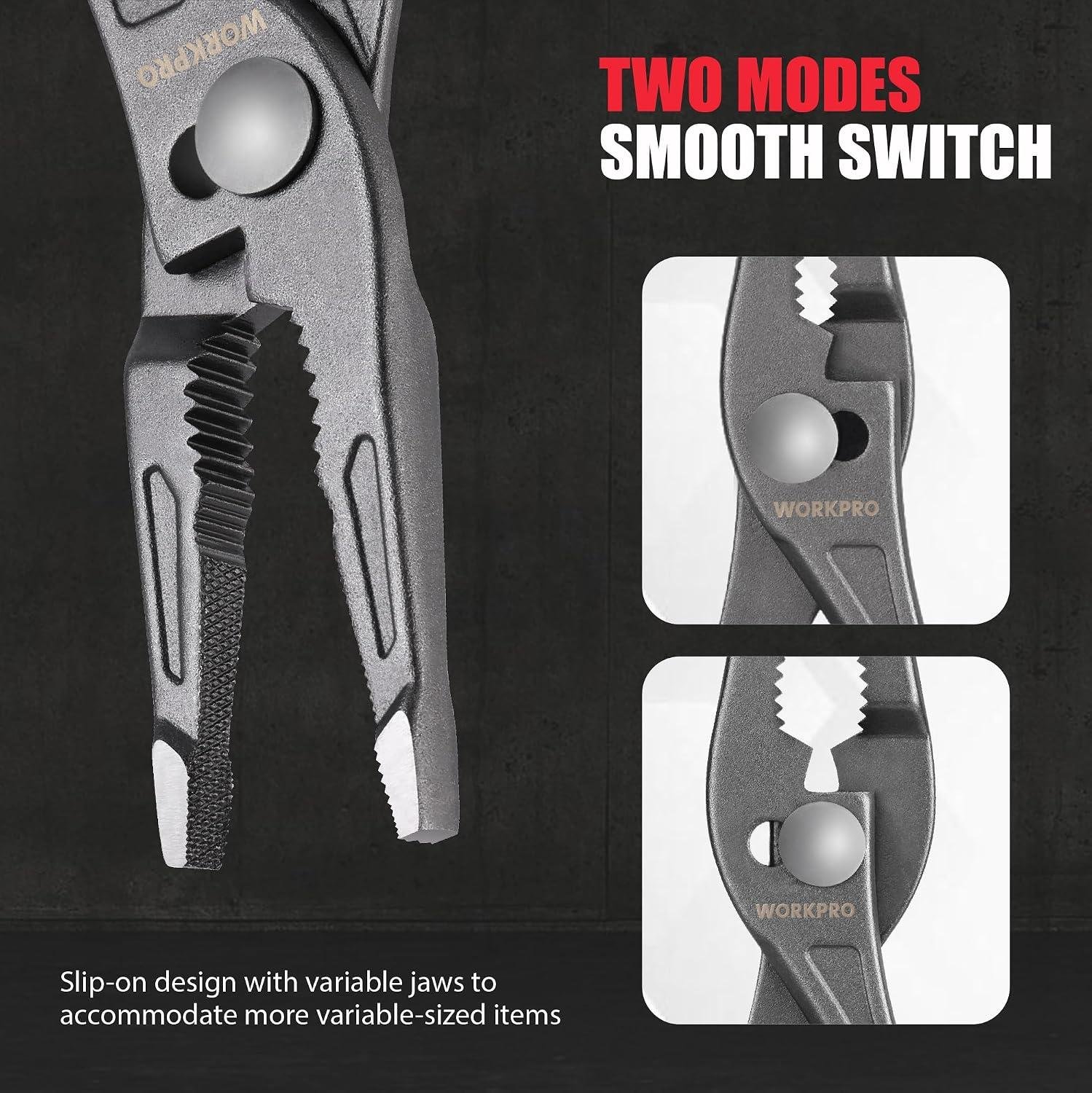
Once the tip is in the space, it has to bite. The nose has mesh serrations, with fine and heavy serrations further back. The head is widened for stability when clamping, so check that it doesn’t crowd the opening you work in. The two jaw positions let you go from thin wire to a larger bolt without switching tools.
Alignment is where reach can fall apart. Tips that don’t meet cost you on bending and windingand a long nose magnifies any gap. Reviews are split on this:
- Of 14 jaw alignment comments, 7 are positive and 7 are negative.
- One buyer says the jaws line up well, while another says they don’t.
- One reviewer found alignment worse in the second, more open position.
- One buyer reported a jaw with no teeth at all.
Inspect the tips as soon as they arrive.
How Durable Is the CR-V Steel Build on a Jobsite?
The steel is not the weak point on paper. The maker says the body is CR-V steel with special heat treatment, which is meant to give high strength and long service life. Reviewers back that up in part. Of the 16 who mention durability, 12 are positiveand one says these pliers don’t bend or twist under pressure.
On a jobsite, the steel is rarely what quits first. Slip joint pliers usually wear out at the pivot or at the jaw teeth. That is also where the complaints land here.
- One reviewer found the joint loose in the second, more open position, which hurts jaw alignment.
- One reviewer got a jaw with no teeth at all, which points to a machining miss and not wear.
- One reviewer reported chlorine leaving a patina on the metaland said it buffs out.
- Another reported no signs of wear or damage after use.
Treat this as a budget tool with decent steel and uneven quality control. Four negatives out of 16 is a small sample, but the defects described are the kind you can catch in the first minute. Check the jaw teeth, the joint play and the alignment right when it arrives, before it goes in the truck.
Which Wire Gauges and Materials Can These Pliers Handle?
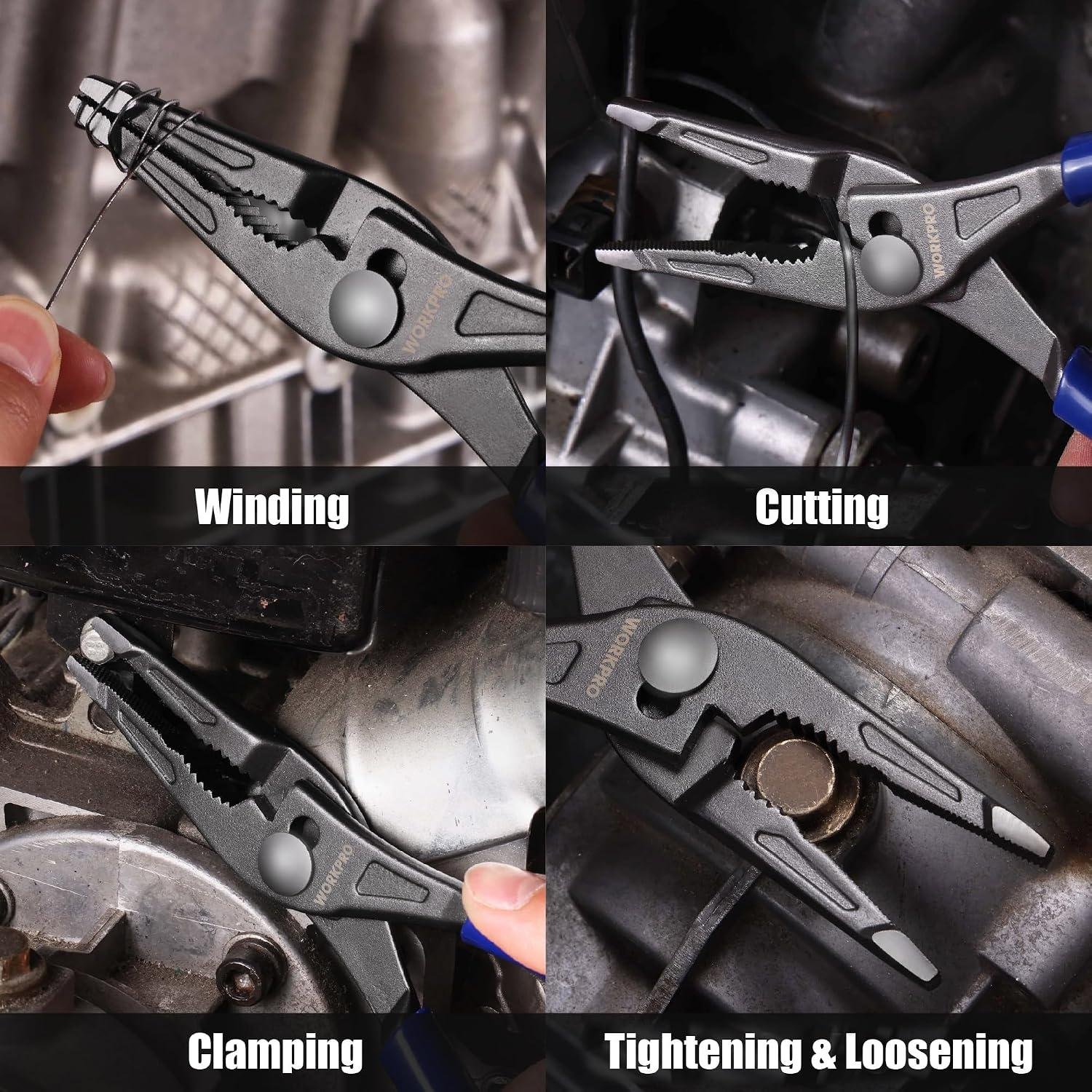
The listing says the built-in cutter is for iron wire, but the maximum diameter is cut off in the description. That means I can’t give you a gauge number. Check the packaging or the manufacturer’s page for the rating before you count on it.
Here is what the description does confirm:
- A wire cutting shear sits at the bottom of the jaws, intended for iron wire.
- The nose has mesh serrations for holding, with fine and heavy serrations further back.
- Two slip joint positions let you go from thin wire to larger bolts without switching tools.
- The body is CR-V steel with special heat treatment.
- Listed uses include clamping, bending, winding and cutting.
In practical terms, treat the shear as a light-duty cutter for soft iron wire. The description names no other metals, so I would not assume it handles hardened wire, spring steel or stainless. Those jobs belong to a dedicated cutterand forcing a shear past its rating is how you end up with chipped edges. For holding and bending thin wire, the slender nose and mesh serrations are the right features to have. For bolts, the wider jaw position and heavier serrations do that work.
WORKPRO vs Standard Needle Nose Pliers for Everyday Use
The big difference is the slip joint. A standard needle nose pliers has one fixed opening, while the WORKPRO 8-Inch Long Nose Slip Joint Pliers offer two jaw positions. That lets you go from thin wire to a larger bolt without grabbing a second tool, which matters when your bag space is tight.
The jaws are still narrow for tight spots, but the head is widened to add stability when clamping. The nose has mesh serrations, with fine and heavy serrations further back and a wire cutting shear at the base of the jaws. A basic needle nose usually gives you a tip and a cutter. This one gives you more grip zones for odd shapes.
Here is what I would weigh before choosing one over a standard pair:
- Slip joint pliers add a pivotand any pivot can develop play. Check how tight the joint feels in both positions.
- Jaw alignment and tooth quality decide whether the tips actually hold a small part. Close the jaws and look for gaps or missing teeth.
- The 8 inch length gives reach, but a longer tool is clumsier on fine work than a short precision pair.
- The plastic dipped handles are meant to cut down hand fatigue on longer jobs.
Best Jobs and Users for the WORKPRO Slip Joint Pliers
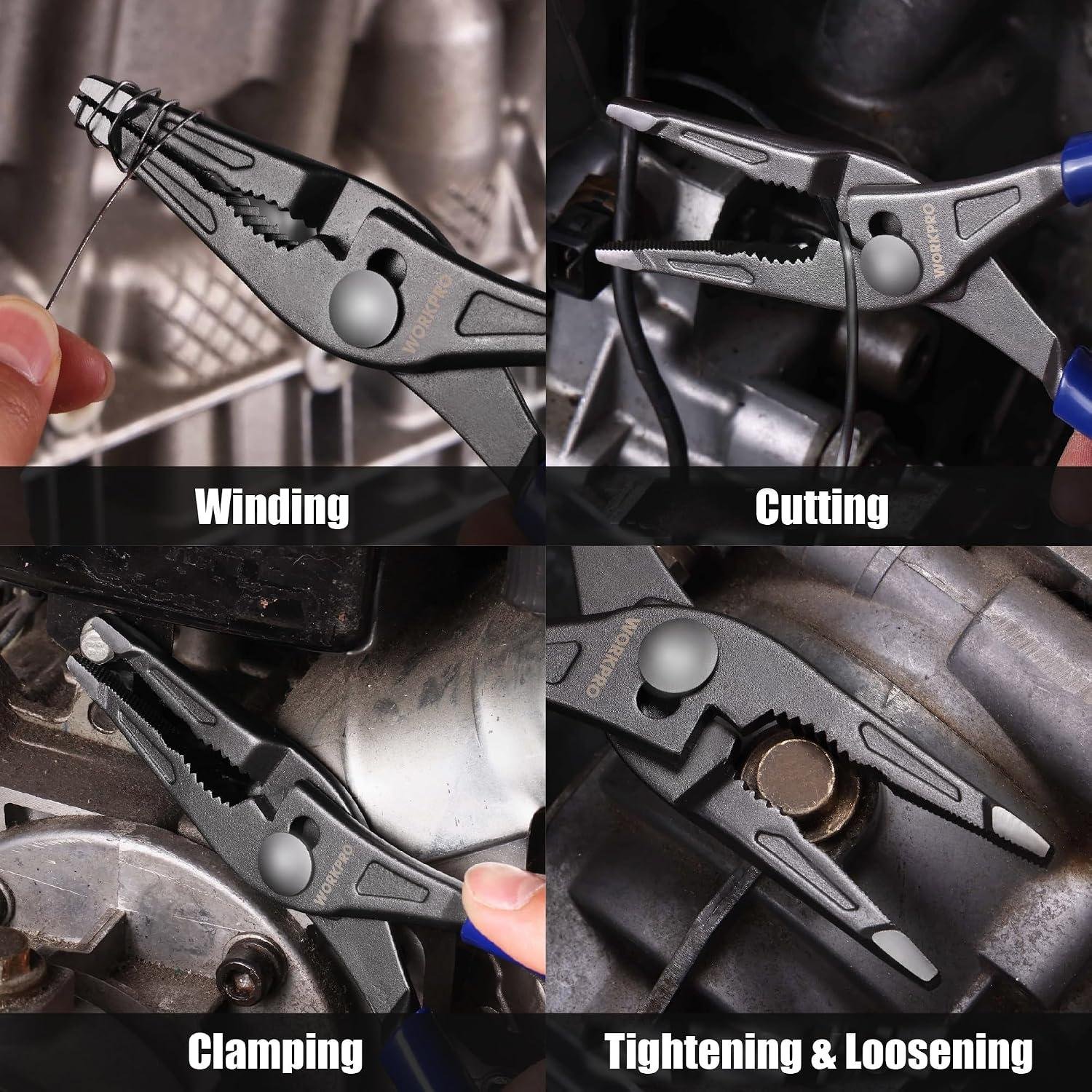
The best use for these pliers is reaching into tight spots to hold, bend or place small parts. The long, slim jaws work like needle nose pliers. The slip joint gives two jaw openings, so you can go from thin wire to a larger bolt without changing tools.
- Holding small fasteners or parts in narrow spaces
- Bending and winding wire
- Cutting iron wire with the shear at the base of the jaws
- Tightening or loosening light hardware with the three serrated zones
- General home repair and DIY work
The best fit is a homeowner, DIYer or handyman who wants a spare pair for the tool bag. Reviewers call them handy in a toolbox and good value for the money. Many say they became a go-to tool. That points to a backup or secondary pair more than a primary one.
I would not hand these to anyone who needs guaranteed jaw alignment every time. Reviews are split on alignment and grip. One buyer reported a jaw with no teeth. Inspect the jaws as soon as they arrive. Don’t count on them for hard daily production work.
Pros & Cons
Pros and Cons
| Pros | Cons |
|---|---|
| Slip joint gives two jaw positions for thin wire and larger bolts | Some buyers report jaws that do not line up |
| Three-zone serrated jaws include mesh, fine and heavy teeth | One reviewer got a jaw with no teeth at all |
| Long narrow nose reaches tight spots and doubles as needle nose | Grip gets mixed feedback, with some saying it lacks bite |
| CR-V steel body with heat treatment aimed at durability | Fit and finish varies, so expect some quality control risk |
| Reviewers consistently call it good value for the money | Some call it cheaply madeand one noted a loose or sticky hinge |
Skip it if: you need guaranteed jaw alignment and consistent tooth quality every time, since a premium brand like Knipex is a safer buy for daily professional use.
Frequently Asked Questions
Are WORKPRO 8-Inch Long Nose Slip Joint Pliers good for tight spaces?
Yes, the narrow, slender jaws are meant for narrow and hard to reach places. The description says they handle clamping, bending, winding and cutting. The head is widened to add stability when clamping. The pliers are 8 inches long. Check the fit on your own jobs, since some buyers report alignment problems.
What are the WORKPRO long nose slip joint pliers made of?
The body is made of CR-V steel with special heat treatment. WORKPRO says that gives high strength and a long service life. The handles are plastic dipped and shaped for comfort and a non-slip hold. Reviewers mostly describe the build as solid, but a few call it cheaply made, so inspect the jaws and joint when it arrives.
Do WORKPRO long nose slip joint pliers cut wire?
Yes, there is a wire cutting shear at the bottom of the jaws for cutting iron wires. The listing text cuts off before giving the maximum wire diameter, so check the listing or WORKPRO for that number. For heavy cutting I would still keep dedicated diagonal cutters, since a shear on a combination plier is a secondary feature.
What problems do people report with WORKPRO 8-Inch Long Nose Slip Joint Pliers?
Quality control is the main complaint. Of 14 reviewers who mention jaw alignment, 7 were positive and 7 negative. One reviewer reported a jaw with no teeth and another said the jaws did not line up. Others praised the fit and finish. Inspect the jaws, teeth and joint right away and return the pair if something is off.
What are the two jaw positions on WORKPRO needle nose slip joint pliers?
The slip joint lets you shift the jaws between two positions for a wider range of openings. That means you can switch from clamping thin wires to large bolts without a second tool, according to the description. Some reviewers say the joint is tight and others say it is loose, so expect some variation between pairs.
Final Verdict
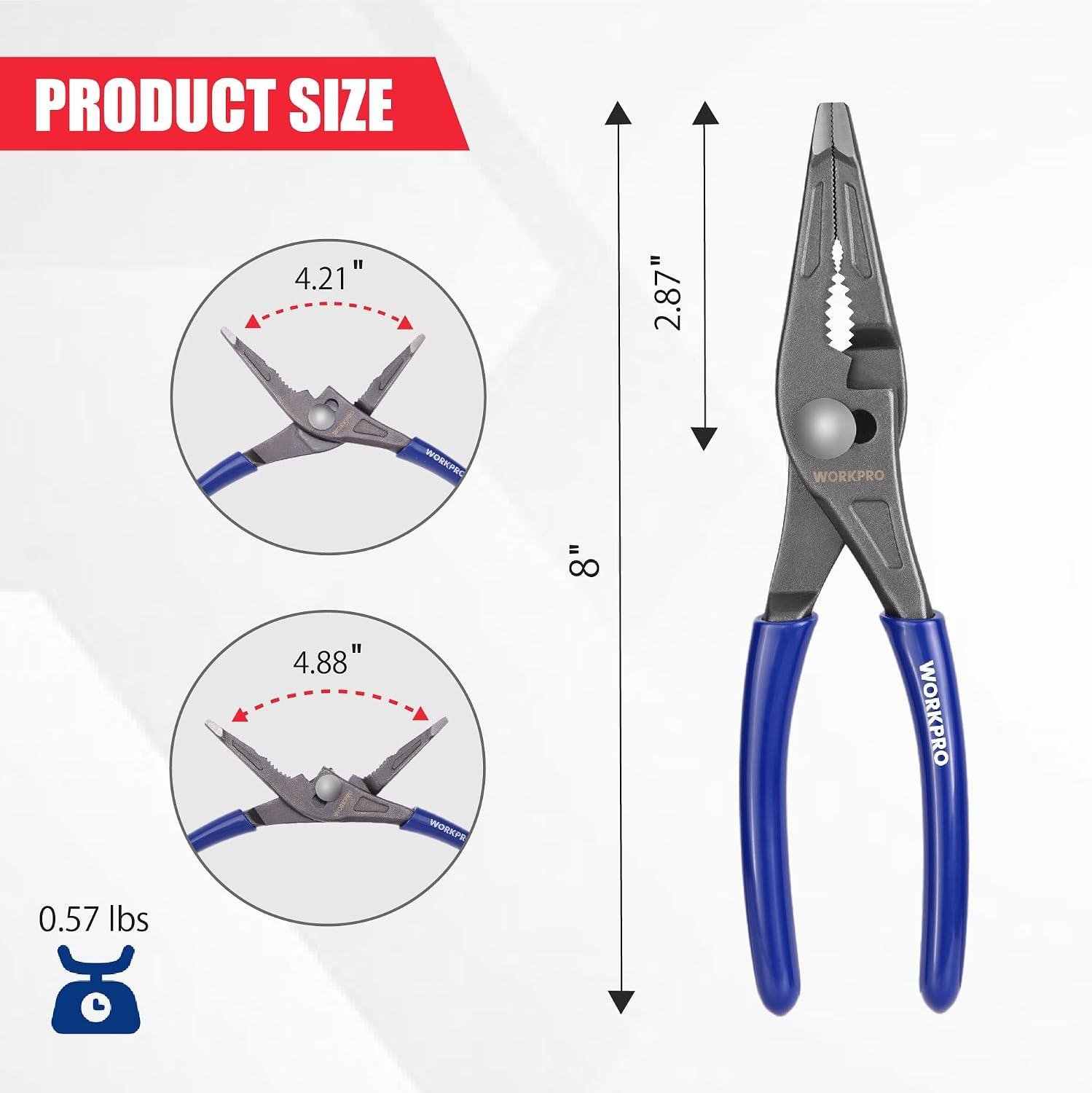
Bottom line: this is a budget slip joint long nose plier that looks good for the money. Buyers mostly praise the value. The 8-inch length, two jaw positions and wire cutting shear make it a handy reach tool. The catch is quality control. Some buyers report jaws that do not line up or a jaw with no teeth. On a tool this cheap, that is the risk, so check it right out of the box and return it if it is off.
It is the right buy for a homeowner or serious DIYer who wants one pair in the tool bag for tight spaces, light clamping and bending. A working tech who leans on pliers all day should look at something else, since mixed feedback on grip and build means you want proven consistency. Also, this is not a precision needle nose for fine electronics work. The jaws are widened for stability. The slip joint adds some play.