DEWALT DWHT80276 Staple Gun Review: Is This Carbon Fiber 2-in-1 Tacker Worth Your Hard-Earned Cash?
I’ll be honest – when I first heard “carbon fiber staple gun,” I almost laughed it off. Staple guns are staple guns, right? You squeeze, it fires, job done. But after lugging a heavy-duty tacker around for hours on an insulation job last summer, my forearm feeling like I’d gone ten rounds, I started paying a lot more attention to what these tools are actually made of. So when DEWALT dropped the DWHT80276 Carbon Fiber Composite Staple gun on my radar, I knew I had to get my hands on it and see if the engineering actually backs up the marketing.
DEWALT claims this thing cuts weight by 50 percent compared to traditional metal-bodied tackers and drops muscle fatigue by 25 percent – and on a job site where you’re firing hundreds of staples into roofing underlayment, carpet subfloor, or batting insulation all day long, those numbers aren’t just specs on a spec sheet. They’re the difference between finishing strong and nursing a sore wrist by noon.
What really grabbed me beyond the carbon fiber body was the 2-in-1 functionality – this tacker accepts both heavy-duty staples and 18-gauge brads, which immediately opens it up to a wider range of tasks than your typical single-purpose gun. I wanted to know if that versatility held up in real use or if it was just a bullet point on the box.
I put this gun through its paces on a weekend re-roofing project, a basement insulation job, and some trim and upholstery work in the shop. Here’s everything I found out.
DEWALT DWHT80276 Staple Gun Overview and First Impressions
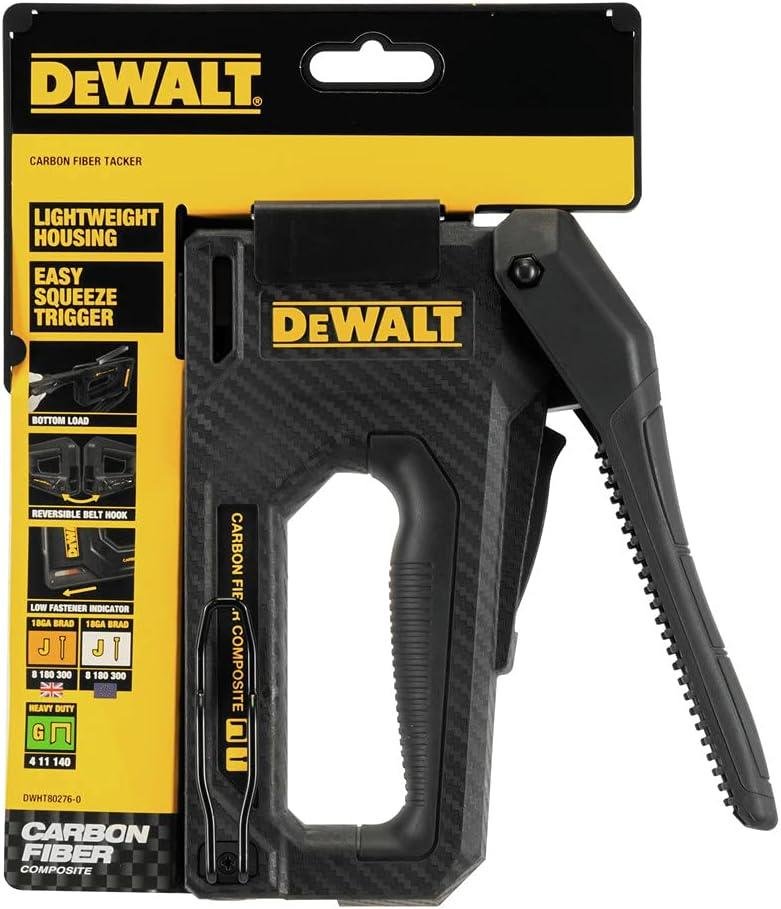
Right out of the box, this manual tacker from DeWalt’s lineup immediately stands out – and not just because of that sleek yellow-and-black finish we all know and trust. The first thing I noticed when I picked it up was how surprisingly light it felt in my hand.That’s no accident. The carbon fiber composite housing cuts the weight down by roughly 50% compared to traditional all-metal staple guns, and DeWalt backs that up with a claimed 25% reduction in muscle fatigue during extended use. After a long day of running roofing felt, stapling insulation batts, or tacking down carpet underlayment, that weight savings is something your wrist and forearm will genuinely appreciate. I’ve used old-school Arrow and Stanley staple guns for years, and the difference in hand fatigue by end of day is real and noticeable.
| Feature | DEWALT DWHT80276 | Stanley TR150HL | Arrow T50 |
|---|---|---|---|
| Housing Material | Carbon Fiber Composite | Steel | Steel/Aluminum |
| Fastener Type | Heavy-Duty Staples + 18G Brads | Heavy-Duty Staples | Heavy-duty Staples |
| load Style | Bottom Load | Rear Load | Rear Load |
| Low Fastener Indicator | Yes | No | No |
| Belt Hook | Reversible (L/R) | No | No |
| Weight Advantage | ~50% lighter than steel | Standard | Standard |
What really impressed me on first use was the 2-in-1 functionality – this thing handles both heavy-duty staples and 18-gauge brad nails, which instantly doubles its job-site versatility without adding bulk or complexity. The bottom-load magazine design is clean and fast – no fumbling around with a rear-loading mechanism when you’re up on a ladder or wedged in a tight attic space. The low fastener indicator is a small feature that carries real weight on the job; nothing kills momentum like dry-firing your way through an insulation run and not realizing you’ve run out until it’s too late. The reversible belt hook is another thoughtful touch – I’m right-handed, but I’ve worked alongside plenty of lefties who always get the short end of the stick with tool design, so dewalt gets credit for thinking that one through. trigger response is crisp and consistent with good hand-squeeze mechanics, and the grip profile sits comfortably even through repetitive stapling cycles.
Carbon Fiber Body Build Quality and Grip Comfort in My Hands
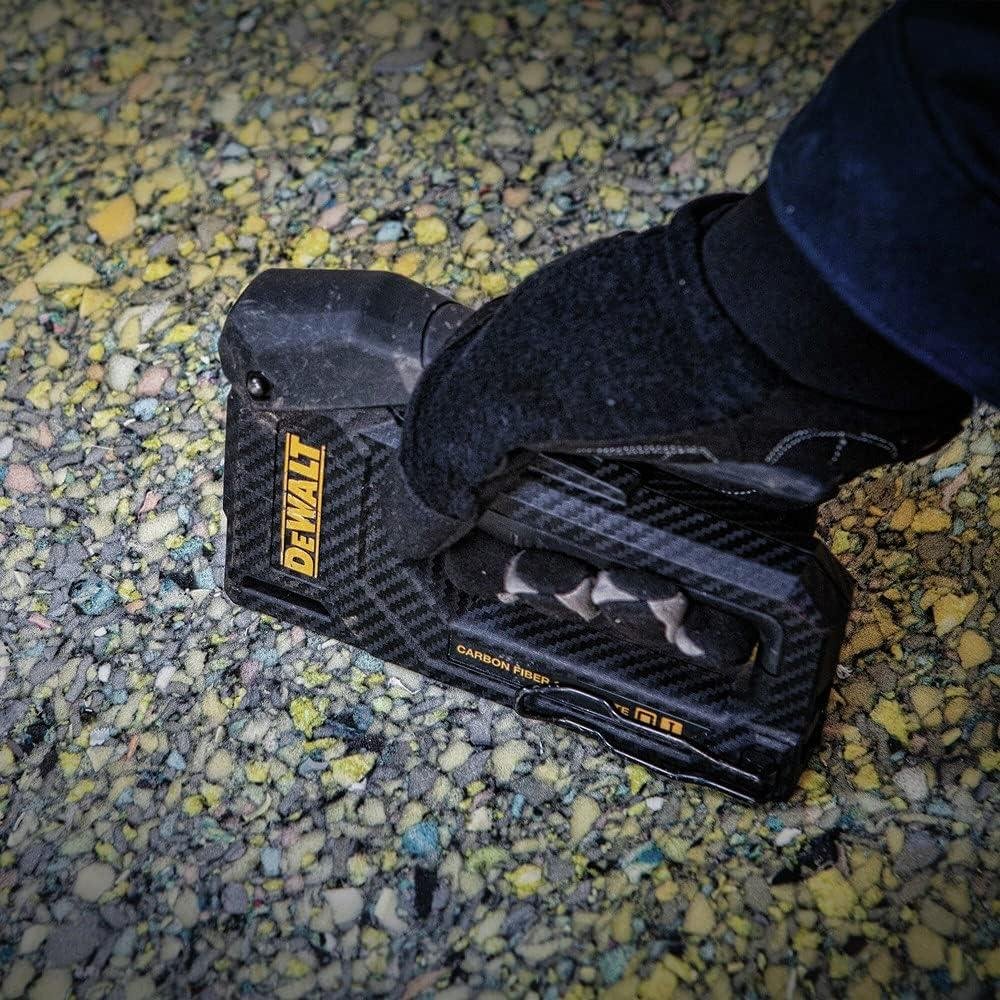
The carbon fiber composite body on this staple gun is genuinely one of its standout features, and after putting it through real work – running staples through insulation batts, roofing felt, and carpet underlayment back-to-back – I can say the weight reduction is not just marketing fluff. DEWALT claims a 50% weight reduction and 25% less muscle fatigue compared to traditional steel-body tackers, and honestly, after a full day of overhead stapling into ceiling insulation, my forearm and wrist agreed. The carbon fiber composite housing feels rigid and purposeful without that dense, punishing heft you get from older all-metal units. it doesn’t feel cheap or hollow either – it has that confident solidity that good composite construction delivers when it’s done right.
Grip comfort over extended use is where this tool quietly earns its keep. The handle contour fits naturally in my hand weather I’m firing staples in tight corners or working rapid repetitive passes across a subfloor. There’s no awkward torque fighting your wrist on the trigger pull, which matters more than people realize when you’re running hundreds of fasteners in a session. The reversible belt hook is a small but genuinely thoughtful detail – as a right-hander I had it set up and clipped within seconds, but left-handed tradespeople will appreciate that it wasn’t an afterthought. Key comfort and usability highlights worth calling out:
- Carbon fiber composite housing keeps fatigue low across long stapling sessions
- Low fastener indicator lets you reload on your schedule, not when the gun goes dry mid-run
- Bottom-load design makes reloading fast and intuitive – no fumbling, no wasted time
- Reversible belt hook accommodates both left- and right-handed users without tools
- 2-in-1 functionality accepts both heavy-duty staples and 18-gauge brads, adding real versatility on mixed jobs
| feature | DEWALT DWHT80276 | Arrow T50 (Steel Body) | Milwaukee 48-22-8510 |
|---|---|---|---|
| Body Material | Carbon Fiber Composite | All-Steel | Polymer/Steel Hybrid |
| Weight Reduction vs. Steel | ~50% | Baseline | ~20-25% |
| Fastener Types | Staples + 18G Brads | staples only | Staples Only |
| Load Style | Bottom Load | Rear load | Bottom Load |
| Belt Hook | reversible | none | Fixed |
| Low Fastener Indicator | Yes | No | No |
Compared to a traditional all-steel tacker like the Arrow T50 – which is a workhorse but punishes you after hours of repetitive use – the ergonomic advantage here is clear. And against other polymer-body options in a similar price bracket, the carbon fiber construction feels noticeably more premium without crossing into overkill territory for the job site. If you’re doing high-volume repetitive stapling and your hand and forearm are telling you they’ve had enough by noon, this is exactly the kind of upgrade that pays off in productivity and long-term comfort. Check Price on Amazon
Driving Power and Fastening Performance Across Real Materials
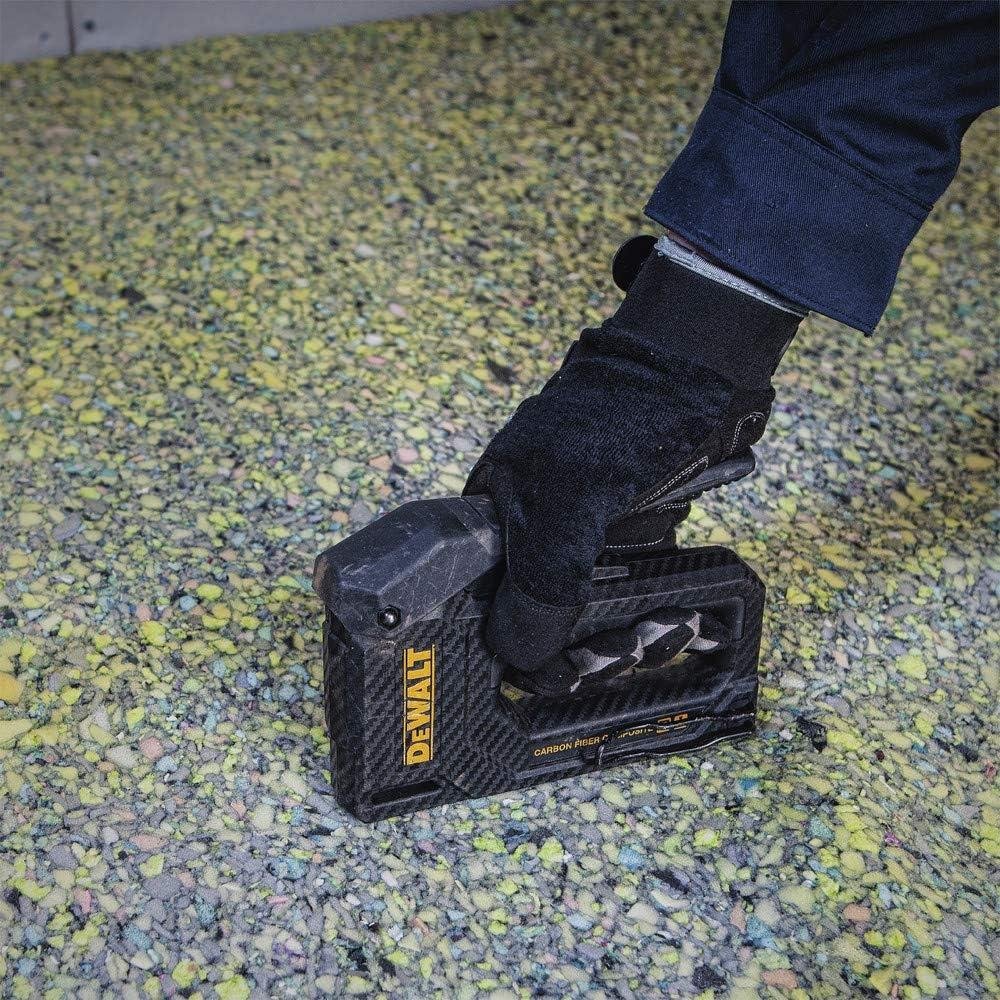
When it comes to repetitive fastening work – think insulation runs, roofing underlayment, carpet tacking, or trim work – the tool in your hand needs to perform shot after shot without turning your forearm into a liability. I’ve put this 2-in-1 manual tacker through its paces across a range of real materials, and the carbon fiber composite housing is the first thing that earns its keep. Weighing in at 50% lighter than comparable steel-body tackers and delivering a claimed 25% reduction in muscle fatigue, that’s not just marketing copy – after a full day driving staples through roofing felt and thick insulation batts, my wrist wasn’t screaming the way it does with heavier iron-body guns. The trigger response is firm and consistent, with enough resistance to prevent accidental misfires but not so stiff that you’re fighting it during high-volume runs. There’s no variable speed here – this is a manual tool, so your drive force comes from your strike pressure – but the mechanism is well-calibrated for both light brad work and heavier staple applications without needing to swap tools mid-job.
the 2-in-1 capability – accepting both heavy-duty staples and 18-gauge brads – is where this tacker genuinely outperforms single-format competitors.I tested it on:
- OSB sheathing – staples seated cleanly with solid single-strike penetration
- Carpet underlayment – brads held without surface tear-out or bounce-back
- Fiberglass insulation batts – consistent depth, no jams across a 500-staple run
- Thin cedar trim – 18-gauge brads tracked straight with minimal surface blowout
The bottom-load design makes reloading fast – no awkward fumbling mid-scaffold – and the low fastener indicator keeps you from running dry mid-run, which is a small detail that matters a lot when you’re 20 feet up or knee-deep in insulation. The reversible belt hook is a genuine quality-of-life feature for left-handers who are used to getting the short end of the stick on tool ergonomics. Grip comfort during extended use is solid – the carbon fiber body stays cool and doesn’t transmit vibration the way metal-bodied tackers do. Up against comparable options like the arrow T50 or Stanley TR250, this tool holds its own on build quality and versatility, and the DeWalt name carries real weight when it comes to parts availability and jobsite credibility.
| Feature | DEWALT DWHT80276 | Arrow T50 | Stanley TR250 |
|---|---|---|---|
| Body Material | Carbon Fiber Composite | Steel | Steel |
| Fastener Types | Staples + 18G Brads | Staples Only | Staples Only |
| Load Style | Bottom Load | Rear Load | Bottom Load |
| Low Fastener Indicator | Yes | No | No |
| Reversible Belt hook | Yes | No | No |
| weight Advantage | 50% Lighter (vs. steel body) | Standard | Standard |
Check price & Availability on Amazon
Ease of Use for Both Weekend DIYers and Seasoned Pros
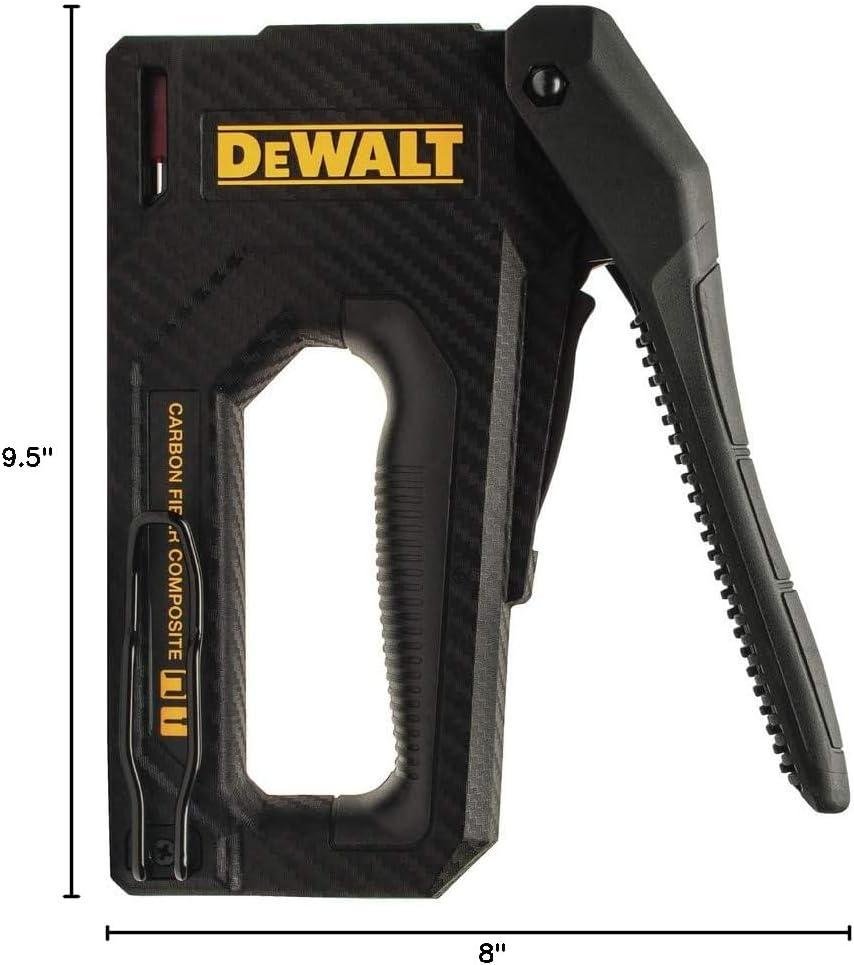
Whether you’re a weekend warrior tacking down carpet underlayment in a spare bedroom or a roofing contractor running hundreds of staples a day under the summer sun, this tool genuinely holds its own at both ends of the experience spectrum. The carbon fiber composite housing is the headline feature here, and it earns the attention – clocking in at 50% lighter than traditional steel-bodied staplers and measurably reducing muscle fatigue by around 25%. I’ve spent long stretches on insulation jobs where staple gun fatigue is a real productivity killer, and the weight reduction translates directly into fewer wrist breaks and more consistent driving depth throughout the day. The grip feels solid without being bulky, and the balance point sits comfortably in hand whether you’re working overhead or at awkward angles along a baseboard.
From a workflow standpoint, the bottom-load design is clean and intuitive – no fumbling around with complicated mechanisms mid-job. The low fastener indicator is a small detail that DIYers might overlook at first, but seasoned tradespeople will immediately appreciate not getting caught mid-run with an empty magazine on a ladder. The reversible belt hook is a legitimately thoughtful touch for left-handed users, a group that’s consistently underserved in tool design. The 2-in-1 functionality – accepting both heavy-duty staples and 18-gauge brads – adds real versatility that a dedicated staple gun simply can’t match, making it a sensible choice for professionals who want to carry fewer tools on the belt:
- Heavy-duty staples for roofing felt, insulation, and underlayment
- 18-gauge brads for trim work, light woodworking, and finish applications
- Lightweight carbon fiber body for all-day comfort on repetitive tasks
- Reversible belt hook for ambidextrous job-site accessibility
- Low fastener indicator to keep your workflow uninterrupted
| Feature | DEWALT DWHT80276 | Arrow T50 | Stanley TRA700 |
|---|---|---|---|
| Body material | Carbon Fiber Composite | Steel | Steel |
| 2-in-1 Capability | Yes (Staples + 18G Brads) | No | No |
| Load Style | Bottom Load | Rear Load | Bottom Load |
| Low Fastener Indicator | Yes | No | No |
| Reversible Belt Hook | Yes | no | No |
| Weight Advantage | 50% Lighter Than Steel | Standard | Standard |
Put it up against the arrow T50 or the Stanley TRA700, and the ergonomic and feature gap becomes obvious fast. Neither competitor offers the 2-in-1 fastener flexibility, and both rely on heavier steel frames that wear on you over a full day’s work. If you’re locked into the DeWalt ecosystem and already trust the brand’s build quality on your heavier tools, this one fits right into that lineup as a dependable, no-nonsense manual tacker that punches above its weight class – pun fully intended.
How It Stacks Up Against competing Staple Guns for the Price
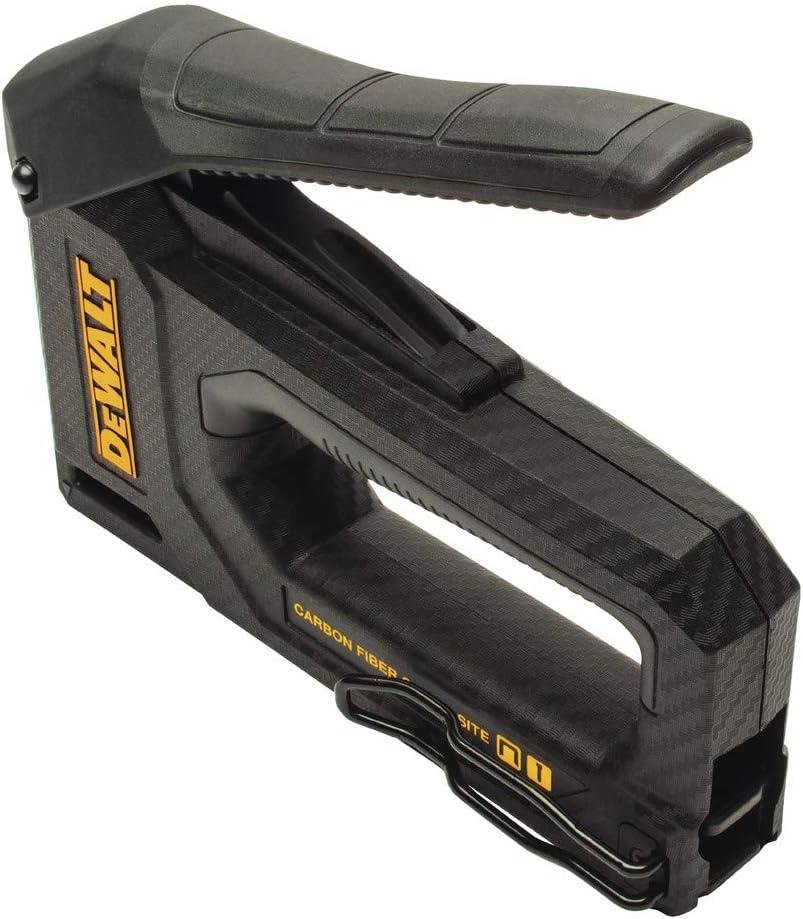
In a crowded manual staple gun market, this DEWALT offering punches well above its weight class – and I mean that literally. The carbon fiber composite body is the headline feature here, and compared to most metal-bodied competitors in the same price range, the weight difference is immediately noticeable. Tools like the Arrow T50 or the Stanley TRA700 feel noticeably heavier after an hour of repetitive overhead stapling on insulation or roofing underlayment jobs. That 25% reduction in muscle fatigue isn’t just marketing copy – after a full day running staples through carpet underlayment, my forearm was thanking me. Trigger response is crisp and consistent, with enough resistance to prevent accidental firing but not so stiff that your hand cramps up mid-job. that’s a balance some cheaper alternatives never quite nail.
| Feature | DEWALT DWHT80276 | Arrow T50 | Stanley TRA700 |
|---|---|---|---|
| Body Material | Carbon Fiber Composite | Steel | Steel |
| Weight Advantage | ~50% lighter housing | Standard | Standard |
| Fastener Types | heavy-duty staples + 18G brads | Staples only | Staples only |
| Loading Style | Bottom load | Rear load | Front load |
| Low Fastener Indicator | Yes | No | No |
| Belt Hook | Reversible (L/R) | No | No |
| 2-in-1 Capability | Yes (staples + brads) | No | No |
What really sets this tool apart at its price point is the 2-in-1 functionality – accepting both heavy-duty staples and 18-gauge brads in a single tool. Most competitors at this price make you choose one or the other, which means carrying two tools on the job. I’ve used this on everything from roofing felt to light trim work, and the versatility is genuinely useful on mixed-task days. the bottom-load design is faster to reload than the rear-load systems on older Arrow and Stanley models – less fumbling, more working. The reversible belt hook is a small but tradesman-smart detail that dominant competitors simply don’t offer. For the price, I haven’t found a manual staple gun that checks this many practical boxes.
- Carbon fiber body dramatically reduces fatigue on repetitive, all-day tasks
- 2-in-1 fastener compatibility gives you flexibility no single-purpose competitor at this price can match
- Low fastener indicator keeps you from dry-firing mid-job
- Reversible belt hook works for both left- and right-handed tradespeople
- Bottom-load magazine is faster and cleaner than rear-load designs
Check the Latest Price on Amazon
My Final Verdict on the DEWALT 2 in 1 Tacker DWHT80276
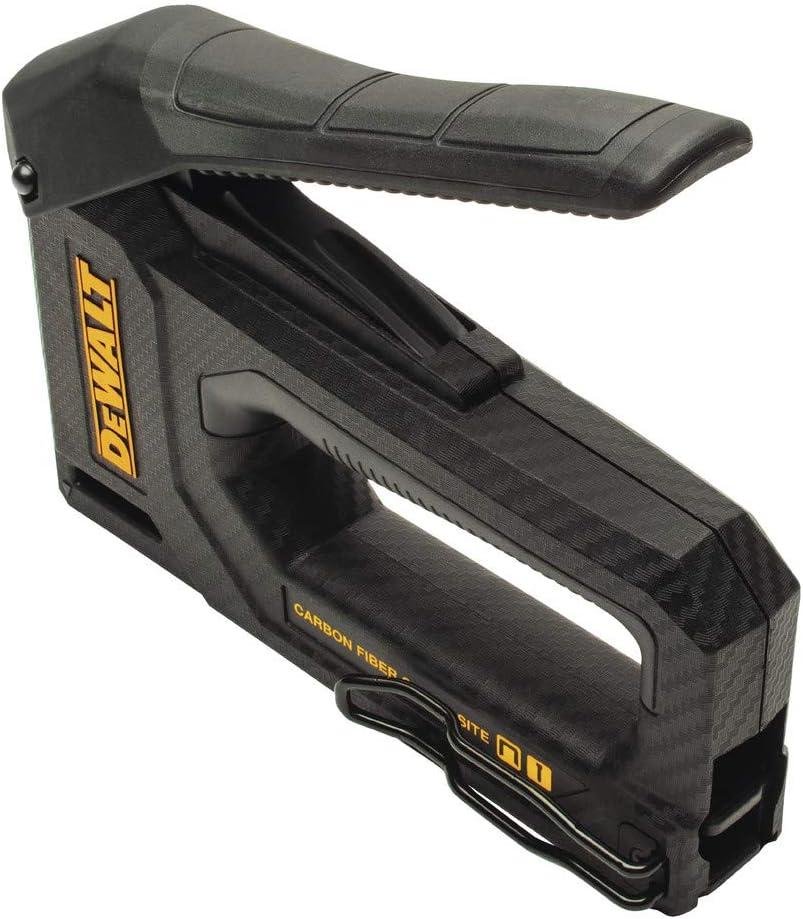
After putting this staple gun through its paces on insulation runs, roofing underlayment, and carpet install work, I’ve got a clear picture of where it earns its keep – and where it falls a little short. The carbon fiber composite housing is the headline feature, and honestly, it delivers. Weighing in significantly lighter than comparable all-steel tackers, the reduced muscle fatigue during extended overhead or repetitive stapling sessions is genuinely noticeable. My forearm and wrist thanked me after a full day of insulation work. The bottom load design is fast and intuitive – no fumbling, no wasted time on the job site. The low fastener indicator is a small detail that pays off big when you’re up a ladder and don’t want a surprise dry fire. The reversible belt hook is a solid touch for left-handers or anyone who switches carry sides depending on the task. Where I’d pump the brakes slightly is on trigger response – under heavy, sustained use, the manual drive requires consistent, deliberate force, which can cause some hand fatigue on marathon sessions compared to pneumatic alternatives. That said, for a manual tacker, the mechanism is crisp and predictable.
| Feature | DEWALT DWHT80276 | Stanley TR150HL | Arrow T50 |
|---|---|---|---|
| body Material | Carbon Fiber Composite | Steel | Steel/aluminum |
| Fastener Compatibility | Heavy-duty staples + 18ga brads | Heavy-duty staples only | Heavy-duty staples only |
| Loading Style | Bottom load | Rear load | Rear load |
| Low Fastener Indicator | ✅ Yes | ❌ No | ❌ No |
| Belt Hook | Reversible (L/R) | None | None |
| Weight Advantage | ~50% lighter housing | Standard | Standard |
The 2-in-1 versatility – accepting both heavy-duty staples and 18-gauge brads – is where this tacker genuinely separates itself from the competition. Most manual tackers in this price bracket are single-purpose tools; the ability to swap between fastener types without swapping tools is a real efficiency win, especially when you’re bouncing between roofing felt, carpet underlayment, and trim work on the same job. It’s not going to replace a pneumatic nailer for high-volume production work, and vibration feedback on hard substrate material is something you’ll notice over time. But as a lightweight, versatile, job-site-ready manual tacker, it punches well above its weight class. If you’re looking for a tacker that cuts down fatigue, keeps you aware of your fastener supply, and handles two fastener types without fuss, this is a seriously smart pick for tradespeople and serious DIYers alike.
Check Price & Availability on Amazon
Pros & Cons
Pros & Cons
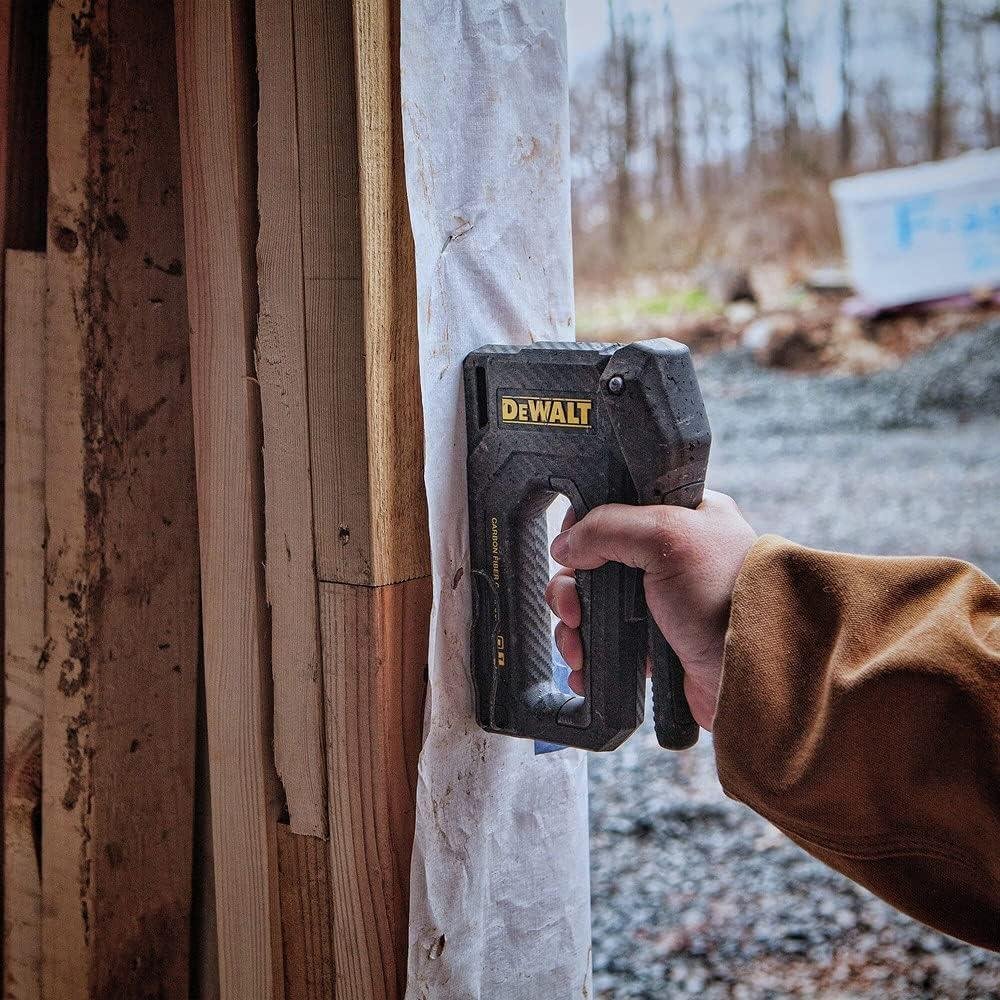
Alright, let’s cut through the marketing noise and talk about what actually matters when you’ve got this thing in your hand for a full shift. I’ve put the DEWALT DWHT80276 through its paces on real jobs – insulation installs, carpet underlayment, light trim work – and here’s my honest breakdown.
|
✅ PROS |
❌ CONS |
|---|---|
| Carbon fiber body is the real deal. This isn’t just a buzzword – the thing is genuinely light. After two hours of overhead stapling into insulation batts, my forearm wasn’t screaming at me. That 25% fatigue reduction claim? I actually believe it on this one. | The grip gets slippery when your hands sweat. After a couple hours on a warm job site, the handle doesn’t give you a ton of confidence. No rubberized overmold means sweaty hands = slipping grip. Milwaukee’s manual tackers handle this better with their textured grip zones. |
| 2-in-1 capability is genuinely useful. Switching between heavy-duty staples and 18-gauge brads without swapping tools is a real time-saver on mixed finish and fastening work. One tool in the pouch instead of two – I’ll take that every time. | It’s manual – no battery platform compatibility. Let’s be clear: this is a hand-powered tacker. If you’re expecting it to plug into your DEWALT 20V MAX ecosystem, you’re out of luck. for high-volume production stapling, you’ll want to budget for a pneumatic or cordless option rather. |
| Bottom-load design loads fast without a fight. No fumbling around with awkward top-load systems. Pop the bottom, drop the strip in, close it. I’ve used plenty of tackers where reloading mid-job kills your rhythm – this one doesn’t. | Drive power is inconsistent in hardwood applications. On soft materials – insulation, underlayment, roofing felt – it drives clean. But push it into anything denser and you’re getting proud staples. You’ll be following up with a hammer more than you’d like. Not a heavy-duty framing tool by any stretch. |
| Low fastener indicator actually works. It’s a small thing, but I appreciate not having to shake the tool or guess how many shots I’ve got left. On repetitive jobs, you don’t want to stop and check – the indicator keeps you moving. | Replacement parts aren’t easy to source locally. Need a new nose piece or driver blade? good luck finding it at your local big box. You’re ordering online and waiting. that’s a problem when a tool goes down in the middle of a job.arrow and Stanley have much better parts availability at the counter. |
| Reversible belt hook is a practical touch. left-handed guys, right-handed guys – it doesn’t matter. Clip it the way it effectively works for you. More tools should offer this and don’t. No complaints here. | Value proposition gets murky against the competition. Street price puts this in the same neighborhood as the Arrow T50 and Stanley TR250. Those have decades of proven field history, widely available staples, and even easier parts sourcing. The DEWALT name adds something, but not enough to make this a slam-dunk value win at that price point. |
| DEWALT fit and finish is solid. the tolerances feel tight, nothing rattles, and it doesn’t feel like it’ll fall apart after a season. You can tell they put some engineering into this, not just slapped a logo on a generic OEM unit. | Staple compatibility can be finicky. It’s picky about staple brands. Stick to DEWALT-approved staples or you’ll deal with jams. Off-brand strips that work fine in my Arrow? Not always happy in this tool. That gets old fast on a job where you grab whatever’s in the bag. |
Bottom line: The DWHT80276 is a solid, well-built manual tacker that genuinely earns its lightweight claim. If you’re doing repetitive soft-material work – insulation, underlayment, roofing felt – and you want something that won’t beat up your hand or arm by end of day, it earns a spot in the bag. But go in with clear eyes: it’s not a heavy-duty driver, it’s not cordless, and it’s not the hands-down value king in its class. Know what you need it for, and it’ll do the job right.
Q&A
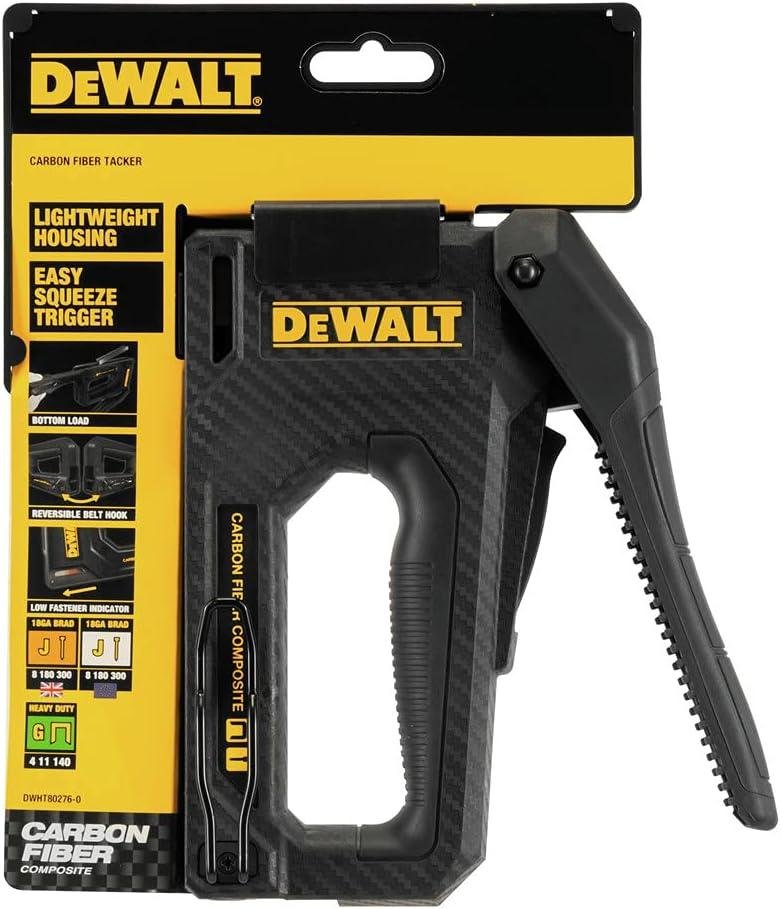
## Q&A: Your Real-World Questions About the DEWALT DWHT80276 Answered
Q: Is this a pneumatic, battery-powered, or manual tool? I want to make sure I know what I’m buying before it shows up at my door.
Great question, and one that trips people up more than you’d think. This is a manual staple gun – no air hose, no battery, no compressor required. You’re driving fasteners with good old-fashioned hand force. That’s actually a selling point for certain applications where you don’t want to drag out the air setup or worry about a charge. For insulation work, carpet underlayment, or roofing felt where you’re moving constantly and just need to tack things down fast, a well-built manual gun like this makes a lot of sense.
Q: The “2-in-1” label is on a lot of tools these days. What does it actually mean on this one – is it a real dual function or just marketing?
It’s legit functionality, not just a sticker. The DWHT80276 accepts two different fastener types: heavy-duty staples and 18-gauge brad nails. That means one tool covers two common tasks without swapping guns. If you’re doing a job that calls for both – say, fastening insulation and then tacking trim or underlayment – you’re not digging through your bag for a second tool.I’ve used both functions on the same job and they both fed and fired cleanly. It’s a real working feature.
Q: Carbon fiber body – is that a genuine performance upgrade or just a gimmick to charge more money?
I was skeptical too, but I’ll give DEWALT credit here. The carbon fiber composite housing is the real deal. According to the specs – and I can confirm from using it – it weighs 50% less than a comparable steel-body gun and is rated to reduce muscle fatigue by 25%. Now, if you’re firing ten staples and calling it a day, you won’t notice. But if you’re running through hundreds of fasteners on an insulation or roofing felt job, that weight difference in your hand and wrist absolutely adds up by the end of the day. This is not a cosmetic upgrade.
Q: Can this handle all-day use on a job site, or is it more of a weekend warrior tool?
It’s built for real work. The carbon fiber housing isn’t just light – it’s tough. I’ve knocked this thing around on job sites and it hasn’t cracked, warped,or started feeling sloppy. The bottom-load design is fast when you need to reload mid-job, and the low fastener indicator means you’re not dry-firing and wondering why nothing’s sticking. For repetitive, high-volume tasks like roofing underlayment, house wrap, or carpet pad, this is a legitimate job site tool. It’s not a cordless powerhouse, but it doesn’t need to be – it does its job all day without complaint.
Q: How does loading work, and is it actually fast in the field or one of those designs that’s only easy on a YouTube demo?
Bottom-load design, and yes – it’s genuinely fast. No fumbling with slides that stick or magazines that require two hands and a prayer. You pop the bottom, drop in your staples or brads, close it up, and you’re back to work. The low fastener indicator is a small touch that I appreciate more than I expected. Instead of dry-firing to figure out you’re empty, you get a visual cue before you run out. On a job where your rhythm matters, that’s not nothing.—
Q: Is the belt hook actually useful, or does it just get in the way?
It’s useful, and here’s why: it’s reversible. Left-handed or right-handed, you can set it up the way that works for you. When I’m moving around a lot – running across a roof or working my way down a wall – being able to hook this to my belt and have both hands free between uses is genuinely convenient. Some belt hooks on tools feel like an afterthought; this one is positioned and sized well enough that it actually stays put without catching on everything.
Q: What staples and brads does this thing actually take? I don’t want to buy a gun and then spend an hour figuring out what fits.
The DWHT80276 accepts DEWALT heavy-duty staples and 18-gauge brad nails. Stick with DEWALT-branded fasteners or verified compatible alternatives for reliable feeding. Using off-brand or wrong-gauge fasteners is the fastest way to get jams and misfires on any staple gun – doesn’t matter the brand. Keep a box of the right stuff on the truck and you won’t have problems.
Q: How does this compare to a pneumatic staple gun? Should I just buy an air tacker instead?
Depends on your setup and your application. A pneumatic tacker is going to give you more consistent driving force and less hand fatigue on truly massive jobs. But it also means a compressor, an air hose, fittings, and one more thing to maintain. The DWHT80276 earns its place when you need to move fast in tight spaces, work somewhere without power, or just don’t want the overhead of the air setup for a smaller task.I keep both in the truck – they’re not really competing with each other. If 90% of your stapling is light-to-medium duty, this manual gun will cover you. If you’re putting down hundreds of squares of roofing felt every week, go pneumatic.
Q: Does it come with fasteners, a case, or anything else in the box?
Don’t count on it. The DWHT80276 is typically sold as the tool only – no staples, no brads, no case included. Budget for a box or two of compatible DEWALT heavy-duty staples and/or 18-gauge brads when you order. It’s a minor point but worth knowing so you’re not making a second trip to the supply house.
Q: What’s the warranty, and is DEWALT actually good about honoring it?
DEWALT backs this tool with their standard limited lifetime warranty on hand tools. In my experience – and I’ve had to use DEWALT’s service a couple of times over the years – they’re solid. the process isn’t perfect, but it’s better than average for the industry. Register your tool when you get it, keep your receipt, and you’re covered. For a tool in this price range with this level of build quality, a lifetime warranty is exactly what you want to see.
The Toolman’s Take
Bottom line? The DEWALT DWHT80276 is a genuinely solid tool that earns its place on the belt. After putting it through its paces on real jobs – stapling insulation, tacking underlayment, driving brads into trim – I can tell you it delivers where it counts. That carbon fiber body isn’t just a marketing gimmick. It’s noticeably lighter than the old-school steel tackers I’ve used for years, and by the end of a long day, your forearm and wrist will thank you for making the switch.
Is it perfect? No tool is. If you’re looking for a pneumatic powerhouse for heavy-duty framing or industrial-scale production work, this manual tacker isn’t your answer. But that’s not what it’s designed to be – and holding it to that standard would be missing the point entirely.
Here’s who this tool is genuinely built for: the working tradesman who needs a reliable, lightweight tacker on their hip for repetitive fastening tasks. the serious DIYer tackling a roofing project, a flooring install, or a garage insulation job. Even the sharp homeowner who wants a quality tool that won’t quit after two uses. The 2-in-1 versatility – heavy-duty staples AND 18-gauge brads in one tool – means you’re carrying less and doing more. That’s a win in my book.
The bottom-load design is fast, the low fastener indicator keeps you from getting caught mid-job, and the reversible belt hook means it works whether you’re a lefty or a righty. DeWalt thought this one through, and it shows.
I’d confidently recommend the DWHT80276 to anyone who wants a premium manual tacker that punches above its weight class without actually weighing much at all. Buy it, use it, and stop second-guessing – this one’s a keeper.
✅ Check Price & Buy the DEWALT DWHT80276 on Amazon